A microcurrent facial device uses tiny electrical currents to boost cellular ATP, improve blood flow and activate facial muscles. Below are the device features that most influence results and practical guidance for safe, consistent use.
Key Takeaways
- Gradual improvements — Microcurrent raises cellular ATP and gently retrains facial muscles, producing subtle lifts that accumulate over weeks with consistent sessions.
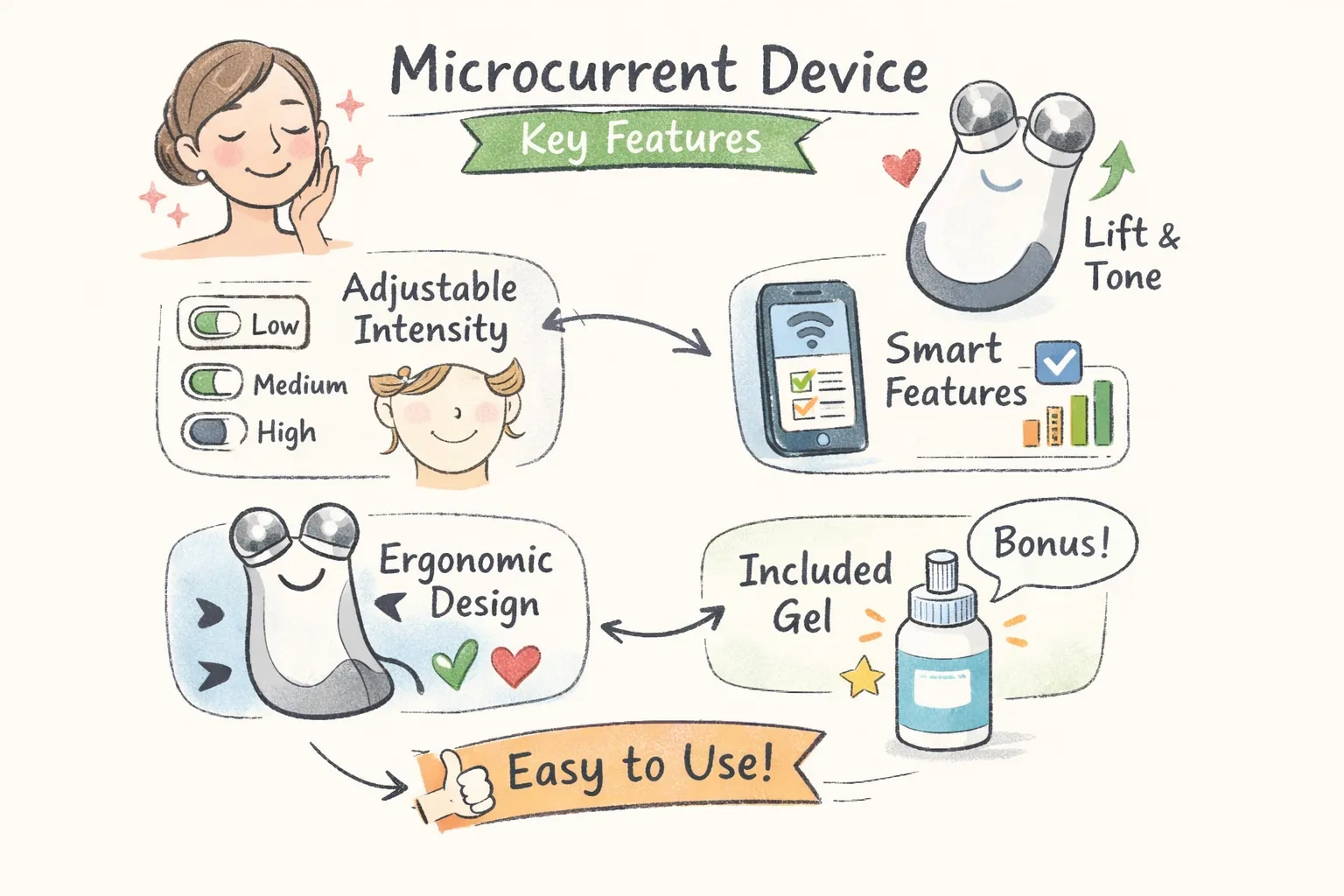
- Adjustable intensity matters — Look for devices that publish microamp ranges and offer adjustable intensity so you can start low (roughly 50–200 μA) and raise the setting slowly to avoid irritation.
- Commit to a routine — Begin with 3–5 sessions per week of 5–10 minutes for 4–8 weeks, using full-face glides and short holds on the jawline and cheekbones to build lift. After reaching your target, move to 1–2 maintenance sessions weekly.
- Know the contraindications — Avoid microcurrent if you have a pacemaker, epilepsy, pregnancy, recent surgery or certain implants; consult a clinician for medical concerns.
- Buy smart — Buy FDA-cleared models from authorized sellers that publish specs, conductivity guidance and warranty details.
How Microcurrent Sculpts and Tones Your Face
Low-dose electrical currents measured in microamps boost cellular energy and increase localized blood flow. That metabolic lift supports collagen synthesis while neuromuscular activation trains the muscles beneath the skin, producing firmer contours. Muscle retraining alters underlying shape, and structural collagen changes refine surface texture over time.
Clinical studies show measurable but modest gains with repeated treatments. For example, a 12-week NMES trial reported an 18.7% increase in facial muscle thickness by weeks five to six, and several small trials found improved texture and reduced wrinkles versus controls. Trials that combine microcurrent with radiofrequency or LED have also reported visible tightening after a handful of sessions, and at-home devices like NuFACE or ZIIP tend to deliver gradual, cumulative effects when used consistently.
What to Look for When Choosing a Microcurrent Facial Device
Pick a model that lists microamp ranges and lets you change settings so you can begin at the lowest level and increase slowly. Units with five or more levels offer finer control and reduce the risk of overstimulation.
Narrow probes or small spheres make under-eye and temple work easier, while wider flat plates cover cheeks and the jaw faster. Consider weight and grip — lighter devices minimize hand fatigue, while heavier models feel steadier for slow, intentional glides.
Use manufacturer-approved conductive gel for consistent contact and minimal irritation. Avoid dry or alcohol-based serums that interrupt conductivity or sting. Pads give broad coverage while probes allow targeted stimulation.
FDA clearance indicates regulatory review. Useful attachments include dedicated eye and lip probes. Combination technologies such as LED or radiofrequency add options but increase cost and complexity.
How to Use Microcurrent at Home: Routine, Timeline and Realistic Expectations
Aim for 3–5 sessions per week of 5–10 minutes per session, using full-face gliding passes and short, targeted holds along the jawline and cheekbones to emphasize lift. Use the lowest comfortable intensity and keep a simple log of intensity, duration and any redness or sensitivity after each session.
Once you reach a target lift, move to a maintenance cadence of 1–2 sessions per week to preserve results. Brief daily quick-touches of 1–3 minutes can freshen tone before events.
Expect an immediate subtle lift that softens over 48–72 hours and measurable contour changes after 4–8 weeks of consistent use. Results vary by age, baseline skin laxity and device specifications — track progress with photos taken in consistent light.
Safety, Contraindications and Common Side Effects
Follow strict electrode placement rules to prevent unintended stimulation. Avoid passing current across the front of the neck or over the thyroid region, and never route current transcranially or place probes over the eyes. Use the manufacturer's diagrams and training materials as your primary guidance.
Mild side effects usually resolve quickly and include temporary redness, localized soreness and occasionally a metallic taste from electrochemical reactions. Start at low intensity, keep sessions short and patch test a small area first. Stop and seek medical care for severe pain, burns, dizziness, fainting, chest discomfort or irregular heartbeat.
Best Microcurrent Devices by Category
Here are top microcurrent choices by category, selected for clear user fit and documented performance:
| Device | Best For | Key Feature | Price Range (SAR) |
|---|---|---|---|
| NuFACE Trinity+ | Consistent toning | FDA cleared, established protocol | ~SAR 1,101–1,468 |
| SolaWave 4-in-1 | Travelers & value buyers | Microcurrent + red light + massage + cooling | ~SAR 294–551 |
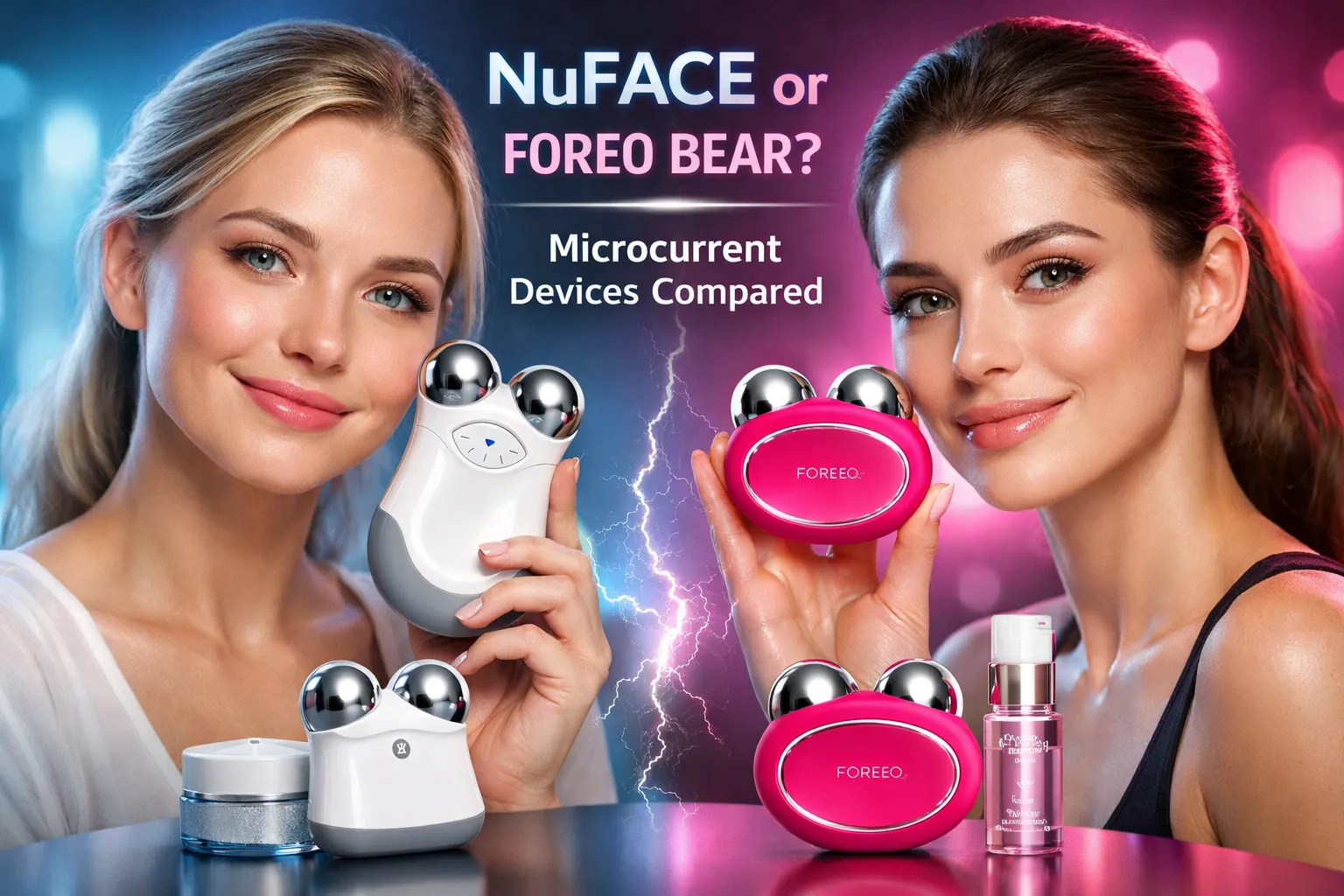
| Foreo Bear | Sensitive skin | Precise metering, anti-shock system | ~SAR 918–1,285 |
| Therabody TheraFace Pro | Multi-modality users | Microcurrent + LED + percussive massage | ~SAR 918–1,468 |
Match a device to your skin type and budget by prioritizing the specs that matter to you — intensity control, probe design and conductivity requirements. Always check warranty length, return policies and buy from authorized sellers so you receive genuine hardware and reliable after-sales support.
Pro Tips and Troubleshooting to Get Better Results
Apply a generous, even layer of conductive gel so probes glide smoothly, and reapply as needed during the session. Skimping causes poor conductivity and stinging.
Pressing too hard reduces contact area and limits effectiveness. Use light, continuous glides so the entire probe stays in contact and the current distributes evenly.
Raise one notch every few sessions and pause if redness or soreness persists; a short rest week can help skin settle before you resume.
Apply peptide or hydrating serums before a session, avoid metal-based masks during use and wait 24–48 hours after strong chemical peels before resuming microcurrent. LED complements microcurrent well, but always follow the manufacturer's guidance before stacking modalities.
Care for your device by wiping probes with an alcohol-free disinfectant, storing gel in a cool place and replacing pads or probes per the maker's schedule. Register with serial number and receipt for warranty claims.
Final Thoughts on Choosing a Microcurrent Facial Device
Microcurrent raises cellular energy and retrains facial muscles, so plan for gradual, cumulative improvements rather than instant transformations. Track consistent sessions and photos over 4–8 weeks to evaluate progress and adjust your routine based on results, age and baseline skin laxity.
Compare specs online at GLOWERA to find the best microcurrent device for your routine — with free Saudi delivery on orders over SAR 500 and expert support from our beauty tech advisors.