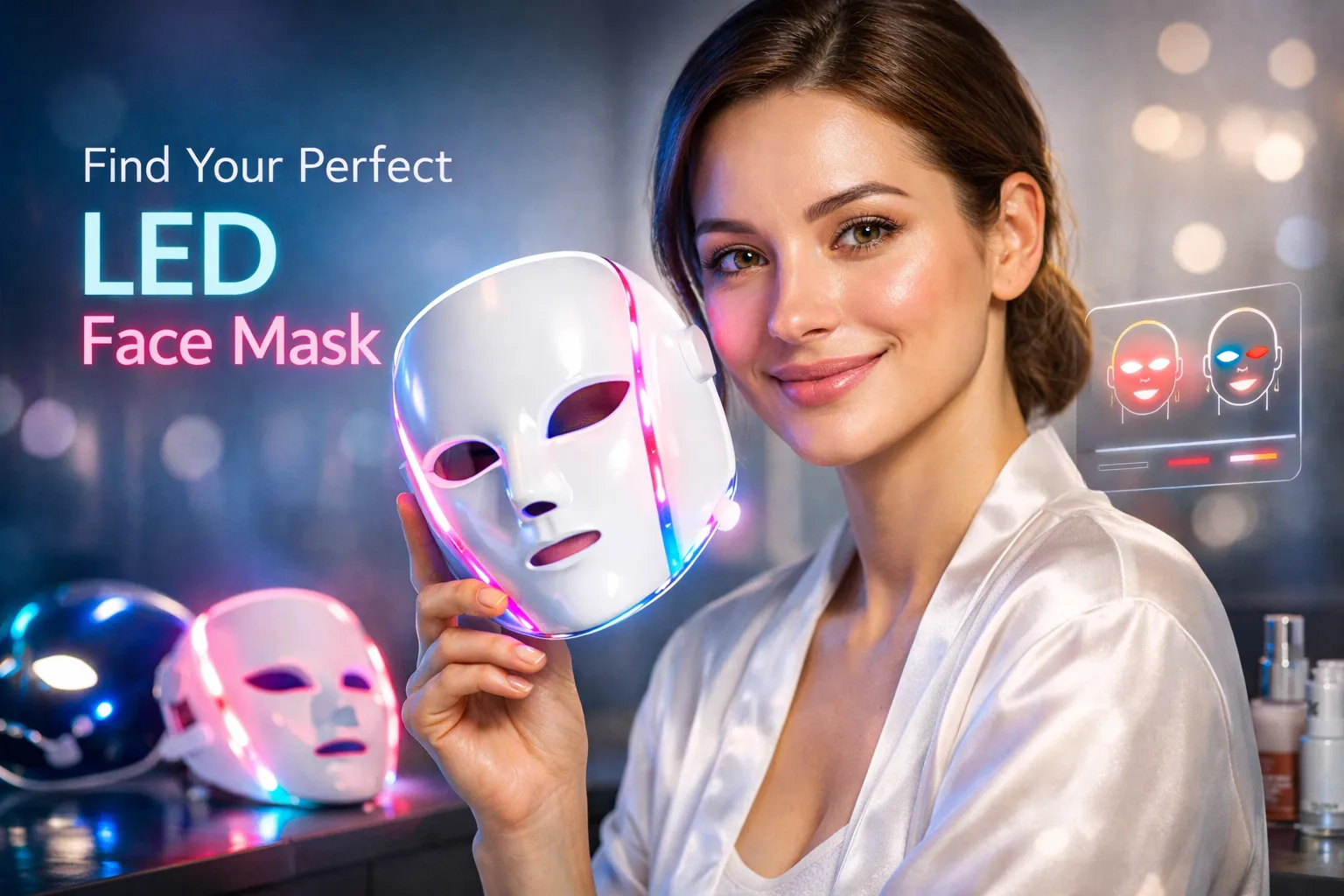
Choosing the best LED face mask means matching wavelengths, power and fit to your skin goals, not chasing the flashiest ad. LED masks range from true phototherapy tools with measurable irradiance and clinical support to low-power gadgets that mainly offer cosmetic light effects. The device you pick affects anti-aging results, acne clearance and how much time you spend on treatments, so match the technology to your routine and budget.
Quick Verdict
Best Overall Pick
For most users the CurrentBody Skin LED Red Light Therapy Face Mask Series 2 is the best overall pick because it combines red, near-infrared and deep near-infrared wavelengths with measurable irradiance, clinical data and full-face silicone coverage. Sessions are about 10 minutes and the device sits in a mid-to-high price range.
- Inflammatory acne: Choose a blue-plus-red model such as CurrentBody blue series or Dr. Dennis Gross
- Budget shoppers: Consider RevitaGlow or LifePro
- Sensitive skin: Prefer silicone masks or lower-irradiance options like Sun Home Radiant
Quick Summary
Key Decision Points
- Pick by wavelength: Blue light targets acne-causing bacteria, red light reduces inflammation and supports collagen, and near-infrared reaches deeper tissue for circulation and firmness
- Check irradiance: Documented power output and clinical data matter more than bells and whistles. Measured irradiance and dose predict results better than marketing claims
- Prioritize clearance: Opt for FDA-cleared, clinically backed masks with published session protocols to reduce safety risk and guesswork
- Match fit and routine: Full-face coverage, comfortable fit and short session times (10–15 minutes) increase the chances you'll use the device consistently
- Mind safety and expectations: Avoid LED use with photosensitizing medications, during pregnancy, soon after aggressive procedures or if you have epilepsy. Expect gradual changes over weeks
How to Choose a LED Mask: The Specs That Actually Matter
Wavelength
Start with wavelength because it determines the biological effect. Blue light (roughly 405–460 nm) targets Cutibacterium acnes and can reduce inflammatory lesions, with many studies showing improvements over 6–12 weeks. Red light (about 630–660 nm) lowers inflammation and stimulates fibroblasts, which often translates to improved fine lines and texture after 8–12 weeks, while near-infrared (around 830–1072 nm) penetrates deeper to support circulation and longer-term collagen remodeling over months.
Power and Dose
Power and dose matter as much as wavelength. Irradiance, measured in mW/cm², describes how much light reaches the skin; dose in J/cm² equals irradiance multiplied by time. Higher irradiance shortens session time or increases delivered dose — for example, a device at 30 mW/cm² used for 10 minutes (600 seconds) delivers roughly 18 J/cm².
Clinic panels typically offer higher irradiance than at-home masks, so consistent use and realistic timelines are key for home treatments. A recent hospital review also highlights that properly designed at-home devices can be safe and effective when used according to protocol — see Mass General Brigham's overview of at-home LED research.
Fit and Materials
Flexible silicone masks conform to the nose, cheeks and under-eye area and minimize gaps, while hard-shell masks that sit off the skin lose effective irradiance where light leaks. Before purchase, check return policies, consider weight and straps, and remember that excellent specs mean little if you do not wear the device regularly.
Convenience Features
Battery versus corded power, app presets, auto shutoff and cleaning ease change whether a device fits your routine, so pick features that match your habits. Verify warranty terms and buy from an authorized retailer to ensure genuine inventory and reliable aftercare support.
Top FDA-Cleared and Editor-Recommended Masks
Here are FDA-cleared models and editor favorites with compact specs, clinical notes and purchase checks. For consumer-focused roundups and buying guidance you can compare editor picks from recognized outlets, such as this Good Housekeeping buyer guide for LED masks.
CurrentBody Series 2 — Pro-Grade, FDA-Cleared
This model lists multiple wavelengths and measured output suitable for consistent at-home dosing and uses a silicone fit for better skin contact. Sessions are roughly 10 minutes, and recommended frequency runs three to five times per week.
Specs
- LEDs: ~236
- Wavelengths: near 633 nm, 830 nm and 1072 nm
- Irradiance: near 30 mW/cm²
- Session time: 10 minutes
- Fit: Silicone
Clinical note: The red and near-infrared combination targets epidermal and dermal layers for collagen stimulation and recovery when supported by the manufacturer's 510(k) listing.
Pros & Cons
Pros: Multiwavelength penetration, short sessions, documented clearance
Cons: Higher cost, need to confirm warranty specifics with seller
Ideal for: Users seeking clinic-style phototherapy dosing at home
Sun Home Radiant Face Mask — Flexible, Multiwavelength
This mask emphasizes comfort and trialability with a soft fit and travel-friendly design, and some sellers offer a generous return window. It reportedly includes red and near-infrared wavelengths, but public data on measured irradiance and precise wavelength distribution is limited.
Pros & Cons
Pros: Comfortable fit, travel-friendly design with a reasonable return policy
Cons: Sparse public data on irradiance and wavelength breakdown; don't assume clinical dosing without verification
Ideal for: Trial-focused buyers and people who prioritize comfort over pro-level specifications
Editor Favorites and Reliable Budget Options
Consumer models include well-built, easy-to-use units from Dr. Dennis Gross and lower-cost starters like RevitaGlow and LifePro. These deliver approachable routines and portability, though power and documentation are often limited compared with pro-grade devices.
- Dr. Dennis Gross: Polished consumer experience with convenient routines; fewer published clinical specs
- RevitaGlow / LifePro: Affordable starters that are travel-ready but typically lower in power and documentation
- iRestore Illumina: Marketed as a higher-dose home option; verify irradiance and FDA status independently
Top Pick: GLOWERA's Recommended Mask
GLOWERA's top pick is the CurrentBody Skin LED Red Light Therapy Face Mask Series 2, selected to prioritize reproducible results over hype. The criteria included verified wavelengths, measurable irradiance, a comfortable silicone fit and a clear session protocol so users know frequency and duration. Warranty terms, aftercare support and inventory authenticity were also key factors.
Match a Mask to Your Skin and Budget
Oily or Inflammatory Acne
Prioritize blue wavelengths around 405–420 nm to target acne-causing bacteria. Pair blue with low-dose red to reduce inflammation and speed recovery, and aim for 10–15 minute sessions three to five times per week. A common approach is a short blue treatment followed by a red cooldown to limit irritation while clearing lesions within four to eight weeks. Several peer-reviewed clinical reports document improvements in inflammatory acne with targeted blue-light protocols — for example, see this peer-reviewed study on blue light for acne.
Aging Concerns
For fine lines and crepey texture, choose masks that combine red (630–660 nm) and near-infrared (around 810–830 nm) with validated irradiance claims. Higher irradiance and a good facial seal improve deeper stimulation of collagen and firmness over months, so expect visible texture changes after about eight to twelve weeks with regular use. For a broader look at photobiomodulation and skin rejuvenation evidence, consult this review of photobiomodulation for skin.
Sensitive Skin
Select a flexible, low-power mask with adjustable intensity and shorter session options so you can ramp up slowly. Patch-test a small area, start with five to seven minute sessions every other day, and increase only if there is no flare. Avoid high-heat or high-irradiance devices and aggressive blue-only protocols until tolerance builds.
Budget Tiers
- Under SAR 735: Typically single-wavelength with lower irradiance — suits occasional users or beginners
- SAR 735–1,468: Commonly adds dual wavelengths, better fit and timers — usually shows results in 8–12 weeks with consistent use
- Over SAR 1,468: Higher irradiance, red plus NIR combinations and stronger warranty terms — for committed users
Choose by how often you will use the device: daily users should lean toward mid-range or pro units, while occasional users can start on a budget model and upgrade later.
Safety, Realistic Expectations and Usage Checklist
Stop Use and Consult a Clinician If You:
- Take photosensitizing drugs
- Have epilepsy
- Are pregnant
- Have open wounds
- Recently underwent laser or chemical procedures
- Are on blood thinners
Session Checklist
- Cleanse the skin thoroughly
- Remove reflective jewelry
- Close your eyes or wear the supplied goggles
- Follow the manufacturer's timing exactly
- After the session, apply a gentle, non-photosensitizing moisturizer
- Avoid strong actives (retinoids, concentrated AHAs/BHAs, prescription oral photosensitizers) around treatments
- Patch-test new serums before pairing them with light therapy
Results Timeline
- Weeks 1–4: Skin acclimates to LED sessions; minor texture improvements may appear
- Weeks 4–8: Acne users may see meaningful lesion reduction with blue-light protocols
- Weeks 8–12: Fine lines and texture improvements become visible with red/NIR treatment
- Months 3+: Deeper collagen remodeling and firmness gains with consistent near-infrared use
Track results with standardized photos, a session log and patience; give any mask a fair trial of six to twelve weeks before judging effectiveness. If you experience irritation or worsening, stop immediately and consult a dermatologist.
Find the Best LED Face Mask for Your Skin
Choosing the best LED face mask comes down to a few specifications that actually change results: pick the wavelength that matches your concern, then check power output and fit to ensure the device delivers the intended dose. A mask that seals well and has published irradiance will outperform one with flashy extras. Start with short sessions, track progress and give the device at least six to twelve weeks of regular use to see meaningful changes.
Browse the GLOWERA store to find FDA-cleared LED masks — with free Saudi delivery and expert support from our beauty tech advisors.