Quality assurance in beauty tech is the systematic process that guarantees every product and device is safe, effective, and compliant before it reaches consumers. Known formally as QA, it covers everything from raw material verification to post-market surveillance. Regulatory frameworks such as the US FDA’s Modernisation of Cosmetics Regulation Act (MoCRA), the EU Medical Device Regulation 2017/745 (EU MDR), and standards including ISO 9001 and ISO 22716 define the minimum requirements manufacturers must meet. Without QA, no beauty device or skincare formulation can reliably deliver the results it claims, and no brand can sustain consumer trust over time.
What is quality assurance in beauty tech, and why does it matter?
Quality assurance is the backbone of every credible beauty technology product. It is a structured set of processes that verifies a product meets defined safety, performance, and regulatory criteria at every stage of its lifecycle. The term “quality control” is often used interchangeably, but QA is broader. Quality control catches defects after they occur; QA prevents them from occurring in the first place.
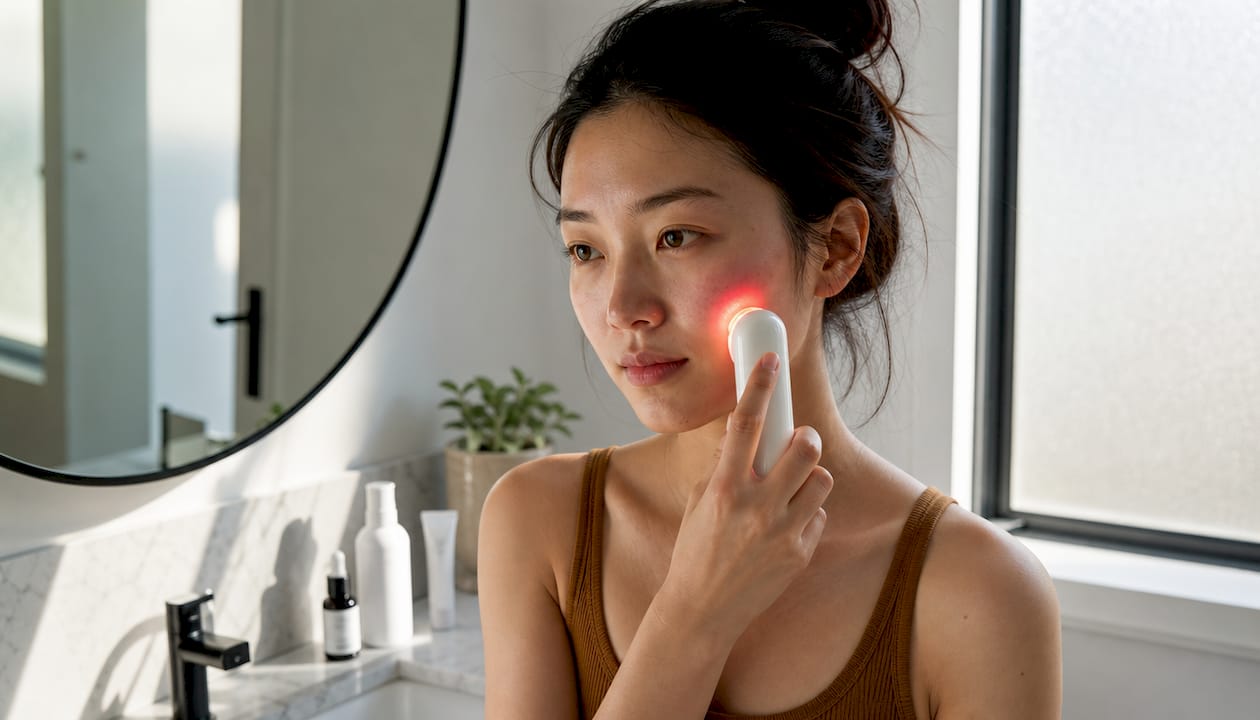
The importance of quality assurance in beauty cannot be overstated. A microcurrent facial device that delivers inconsistent electrical output can cause skin irritation or fail to produce results. An LED therapy mask with substandard components may degrade rapidly or emit wavelengths outside the therapeutic range. Both scenarios destroy consumer confidence and expose brands to legal liability.
Integrated quality systems also reduce the administrative burden of compliance. Automated QA documentation cuts regulatory documentation labour by 40–55%. That reduction means fewer errors, faster product releases, and more time spent on genuine quality improvement rather than paperwork.
What are the core quality assurance processes in beauty tech manufacturing?
Beauty tech quality control operates across four distinct stages, each building on the last to create a complete quality firewall.
Supplier qualification and raw material verification
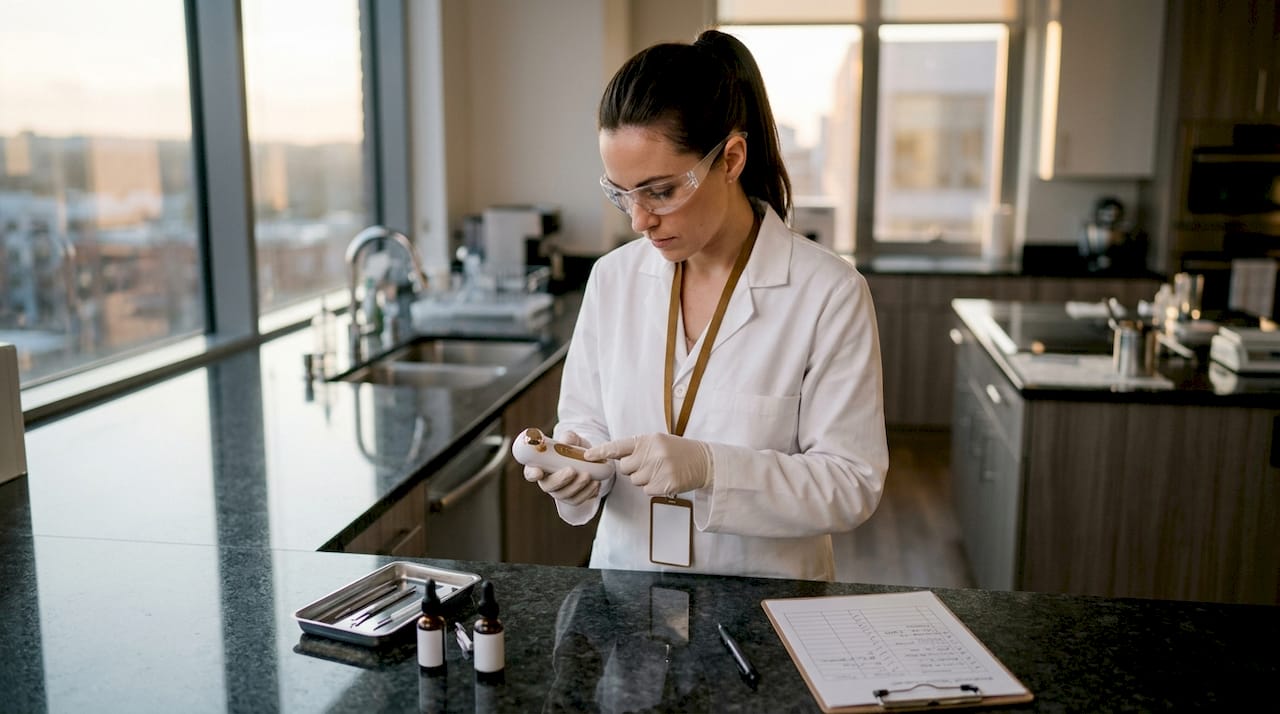
No QA programme is stronger than its inputs. Manufacturers must qualify every supplier and verify every raw material before it enters production. Supplier Certificates of Analysis (COAs) are a starting point, but they are not sufficient on their own. Internal labs using HPLC and GC-MS provide an independent verification step that catches contaminated or mislabelled inputs before they compromise a batch. This internal testing layer acts as a quality firewall that COAs alone cannot replicate.
In-process controls
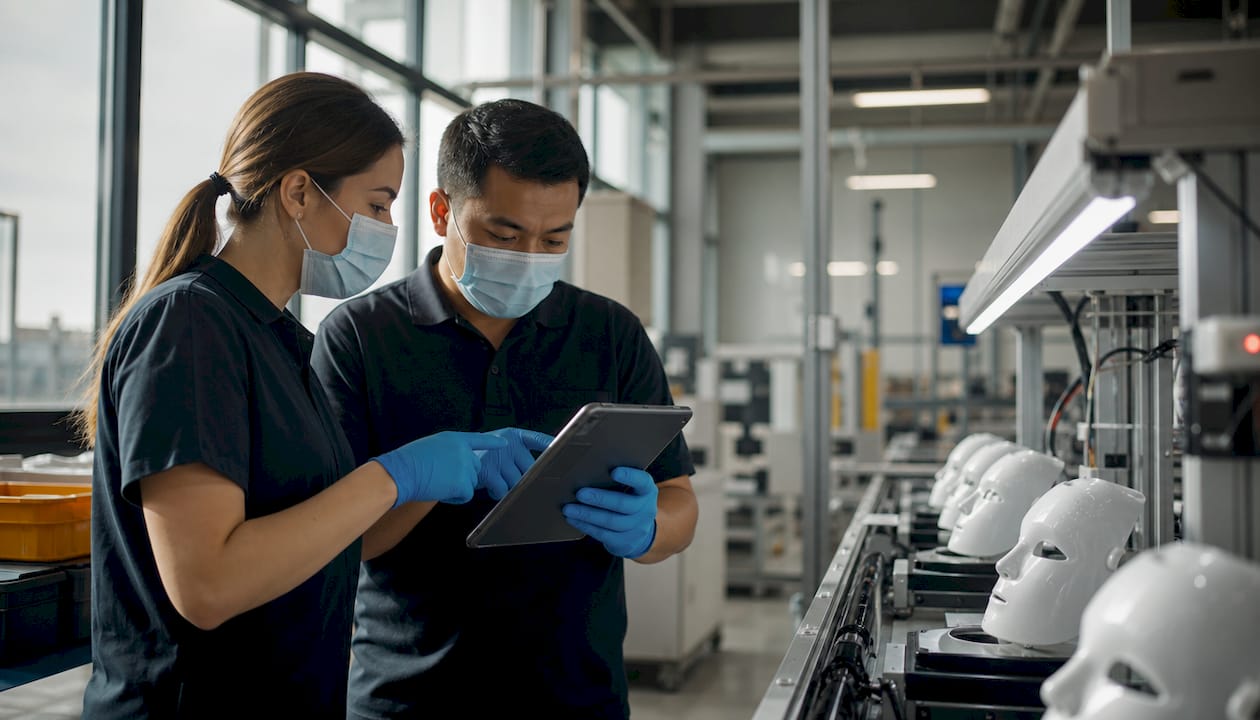
During manufacturing, QA teams monitor parameters including viscosity, pH, temperature, and mixing time at defined intervals. For electronic beauty devices, in-process checks cover electrical output calibration, component fit, and firmware validation. Deviations caught at this stage cost a fraction of what a finished-product recall would.
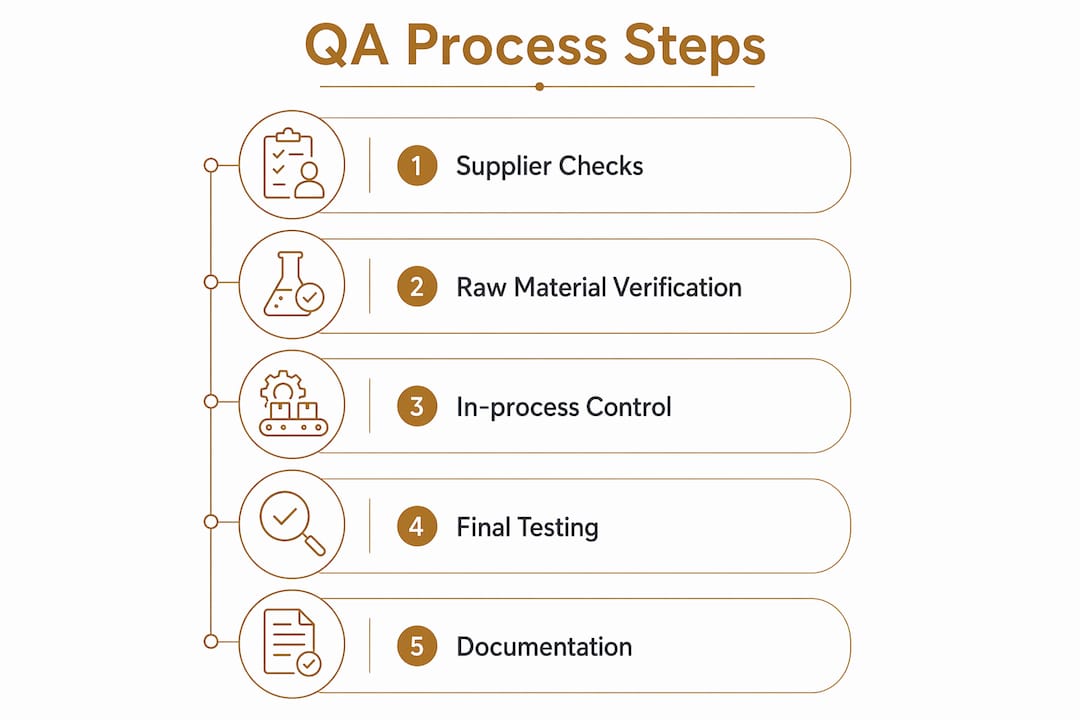
Finished product testing
Before release, every batch undergoes a full battery of assessments:
- Microbiological testing: confirms the product is free from harmful bacteria, yeast, and mould
- Chemical analysis: verifies active ingredient concentrations and checks for prohibited substances
- Physical assessment: evaluates texture, colour, viscosity, and packaging integrity
- Functional testing: for devices, confirms electrical safety, output accuracy, and durability under simulated use conditions
- Stability testing: exposes products to heat, light, and humidity to predict shelf life and prevent in-market degradation
Documentation and quality management systems
Every test result, deviation, and corrective action must be recorded in a traceable quality management system. ISO 9001 provides the framework for this documentation structure. Electronic quality management systems (eQMS) aligned with regulatory expectations allow manufacturers to retrieve audit-ready records instantly, rather than scrambling through paper files during an inspection.
Pro Tip: Integrate your eQMS with your production line data capture from day one. Retrofitting documentation systems after launch is significantly more expensive and error-prone than building them in at the start.
How is technology transforming quality assurance in beauty tech?
Modern technology has changed what quality assurance can achieve. The shift from manual inspection to AI-assisted monitoring is the most significant development in beauty tech quality control over the past five years.
-
AI visual inspection: AI-based inspection systems deliver 80% defect detection accuracy from day one, improving continuously as models train on production data. Manual inspectors, by contrast, experience fatigue-related accuracy drops after relatively short periods on the line.
-
In-process AI vision: AI cameras detect subtle defects such as decoration drift, fill-level errors, label misalignments, and closure faults at full line speed, catching issues that human eyes routinely miss during high-volume runs.
-
Automated COA ingestion: Software now reads and validates supplier COAs automatically, flagging discrepancies against specification limits without manual data entry. This removes a significant source of transcription error from the incoming materials process.
-
Batch release automation: Digital QA platforms compile test results, deviation reports, and approval signatures electronically. Batch release workflows that once took days now complete in hours.
-
Real-time quality dashboards: Production managers see live quality metrics across multiple lines simultaneously. Deviations trigger alerts before they escalate into full batch failures.
The future direction of beauty tech QA points toward autonomous data-driven manufacturing that minimises human variability and raises product consistency to levels previously achievable only in pharmaceutical production. For beauty professionals evaluating devices, this shift means the gap between professional-clinic quality and at-home device quality is narrowing measurably.
Pro Tip: When evaluating a beauty tech brand, ask whether their manufacturing partner uses automated in-process monitoring. Brands that can answer this question with specifics are far more likely to deliver consistent results batch after batch.
What regulatory standards govern quality assurance for beauty tech?
Regulatory compliance is not optional. The frameworks that govern quality assurance practices for beauty products and devices vary by market, but the core requirements converge on the same principles: documented safety, traceable manufacturing, and post-market accountability.
US FDA MoCRA
MoCRA, which came into full effect in 2023, requires cosmetic manufacturers to register facilities, maintain safety substantiation records, and report serious adverse events. For beauty tech brands selling into the US market, MoCRA means that quality assurance practices for beauty products must be formally documented and retrievable on demand.
EU MDR 2017/745
The EU MDR applies to aesthetic devices that make medical or diagnostic claims. Post-Market Surveillance and Clinical Follow-Up plans are mandatory for CE marking under this regulation. Manufacturers must collect real-world performance data after launch and use it to update their safety documentation continuously.
ISO 9001 and ISO 22716
ISO 9001 is the baseline quality management certification for beauty devices, with certificates valid for three years and annual surveillance audits required. ISO 22716 provides Good Manufacturing Practice (GMP) guidelines specifically for cosmetics. Together, these two standards form the quality management foundation that regulators and retailers expect to see.
Medical-grade versus consumer wellness devices
Products making diagnostic claims face significantly stricter regulatory scrutiny than consumer wellness gadgets. A device that claims to diagnose a skin condition must meet the same data substantiation standards as a medical instrument. A device that claims to improve skin appearance sits in a different regulatory category. Understanding this distinction matters enormously when assessing the clinical evidence behind beauty devices and the QA rigour required to support those claims.
Reproducibility of test results across different regulatory environments is more critical than speed. A result that cannot be replicated under different laboratory conditions provides no real safety assurance, regardless of how quickly it was generated.
How does quality assurance protect consumers and brand reputation?
Quality assurance is a strategic investment, not a cost centre. Brands that treat QA as a box-ticking exercise consistently face higher recall rates, regulatory penalties, and customer attrition than those that embed it into their product development culture.
Proactive stability testing for heat, light, and humidity exposure prevents the kind of in-market product failures that generate negative press and trigger regulatory action. A single high-profile recall can erase years of brand equity in weeks.
The practical benefits of strong QA practices include:
- Batch-to-batch consistency: consumers who repurchase a product expect the same texture, colour, scent, and performance every time. Inconsistency is the fastest route to negative reviews.
- Microbiological safety: contaminated products cause adverse skin reactions. Robust preservative efficacy testing and microbiological release testing prevent these events before products ship.
- Regulatory clearance: documented QA records prevent import holds and market withdrawal notices, which are both costly and reputationally damaging.
- Long-term consumer confidence: brands with certified quality standards attract repeat customers and command premium pricing because consumers trust the consistency of what they are buying.
- Early-stage cost savings: catching a formulation instability during development costs a fraction of addressing it after launch. QA integrated from the earliest development stage consistently reduces total product lifecycle costs.
For beauty professionals recommending devices to clients, understanding a brand’s QA credentials is as important as understanding the device’s technology. A well-marketed device with poor QA behind it is a liability, not an asset.
Key takeaways
Quality assurance in beauty tech is the non-negotiable foundation that separates reliable, safe products from those that carry real risk to consumers and brands alike.
| Point | Details |
|---|---|
| QA prevents, not just detects | Quality assurance stops defects before they occur; quality control catches them after. |
| Regulation is market-specific | MoCRA, EU MDR, ISO 9001, and ISO 22716 each set distinct requirements depending on your target market. |
| AI raises the accuracy bar | AI visual inspection achieves 80% defect detection accuracy from day one, outperforming fatigued manual inspectors. |
| Documentation is non-negotiable | Traceable eQMS records are required for audit readiness and batch release under current regulatory frameworks. |
| QA protects brand equity | Proactive stability and microbiological testing prevents recalls that can erase years of consumer trust. |
Why I think the beauty industry still underestimates QA
The beauty tech sector has an uncomfortable habit of treating quality assurance as a compliance formality rather than a product development discipline. I have watched brands invest heavily in marketing a device’s technology while allocating minimal resource to verifying that the technology actually performs consistently across production batches. The result is predictable: early adopters report great results, later batches disappoint, and the brand spends more managing the fallout than it ever saved by cutting QA corners.
What genuinely excites me about the current moment is that AI and digital integration are making rigorous QA accessible to brands that previously could not afford it. Automated in-process monitoring and AI visual inspection are no longer exclusive to pharmaceutical manufacturers. Beauty tech brands of all sizes can now implement quality systems that would have required a dedicated team of specialists five years ago.
The regulatory environment is also raising the floor. MoCRA and EU MDR are forcing brands to document what they previously left informal. That is a good thing. Higher documentation standards mean more consistent products and fewer adverse events. Beauty professionals and tech enthusiasts who understand how beauty tech innovation connects to QA rigour will make far better purchasing and recommendation decisions than those who focus on marketing claims alone.
The brands that will lead this industry over the next decade are those treating QA as a strategic asset today. Not a checkbox. Not an afterthought.
— Adam
Certified beauty tech devices at Glowera
Glowera sources beauty tech devices exclusively from manufacturers who hold ISO and CE certifications, giving you confidence that every product on the platform has passed documented quality and safety verification.
Whether you are looking for microcurrent facial devices or LED light therapy masks, every device in the Glowera catalogue comes from brands with traceable manufacturing standards and post-market accountability. Glowera’s editorial team also publishes guidance on after-sales device support so you understand what happens if a device needs attention after purchase. Browse the full Glowera beauty tech collection and shop with the assurance that quality has already been verified before the device reaches you.
FAQ
What does quality assurance mean in beauty tech?
Quality assurance in beauty tech is the structured set of processes that verifies every product and device is safe, effective, and compliant before it reaches consumers. It covers raw material testing, in-process monitoring, finished product assessment, and post-market surveillance.
How does AI improve beauty tech quality control?
AI-based visual inspection systems achieve 80% defect detection accuracy from the first day of deployment and improve continuously with additional training data, outperforming manual inspection over extended production shifts.
Which certifications should a beauty tech device have?
ISO 9001 is the baseline quality management certification for beauty devices, and ISO 22716 covers Good Manufacturing Practice for cosmetics. Devices sold in the EU that make medical or aesthetic claims also require CE marking under EU MDR 2017/745.
What is the difference between QA and quality control in beauty?
Quality assurance is proactive and prevents defects by building quality into every stage of production. Quality control is reactive and identifies defects in finished products. Effective beauty tech programmes require both, but QA delivers the greater return on investment.
Why does post-market surveillance matter for beauty devices?
Post-market surveillance collects real-world performance data after a device launches and feeds it back into safety documentation. Under EU MDR, documented PMS and Clinical Follow-Up plans are mandatory for CE marking and must be updated continuously throughout a device’s commercial life.