
Beauty device battery technology is defined as the specialised engineering of power cells, charging systems, and protective circuits that enable modern skincare gadgets to deliver consistent, safe, and reliable performance. Understanding what beauty device battery technology means is not a minor technical detail. It is the difference between a device that delivers professional-grade results at home and one that fades, overheats, or fails within months. Portable beauty devices now ship over 200 million units annually, with battery performance cited as a primary reliability factor. Glowera curates devices built on these engineering principles, making this knowledge directly relevant to every purchase decision.
What does beauty device battery technology mean for performance?
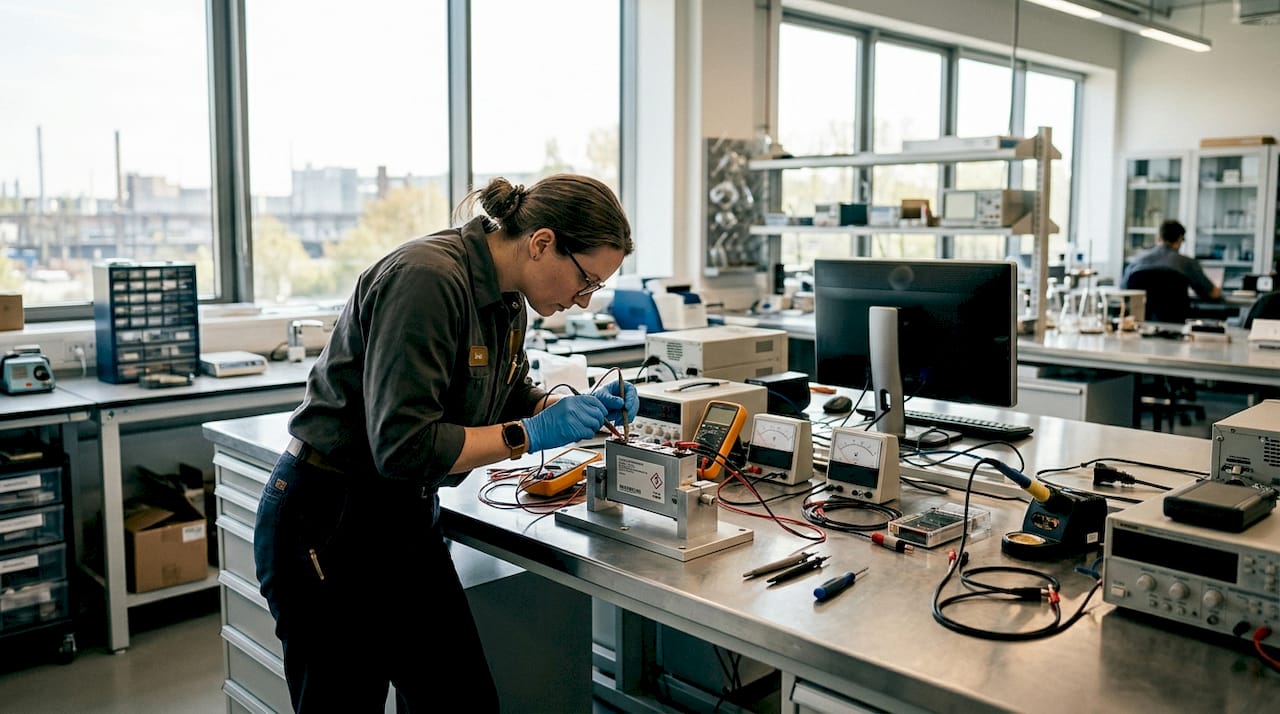
The industry standard for beauty gadgets is the lithium polymer (Li-Po) cell, and the reason is straightforward. Li-Po cells combine high energy density with a flexible pouch format, which means manufacturers can shape the battery to fit the device rather than building the device around a rigid cylinder. The result is the slim, lightweight handsets that make daily skincare routines genuinely comfortable.
Lithium polymer batteries operate stably between -30°C and 80°C, covering every climate from a cold bathroom in winter to a warm treatment room in summer. That thermal range matters because beauty devices are used in humid, temperature-variable environments where lesser cells would degrade quickly.
A second chemistry worth knowing is lithium cobalt oxide. These high-rate cells deliver a flat discharge curve, which means the device outputs the same vibration intensity or mist pressure at 80% charge as it does at 15%. For treatments like microcurrent or LED therapy, where consistent energy output directly affects skin results, this characteristic is not a luxury. It is a clinical requirement.
| Battery type | Key advantage | Best suited for |
|---|---|---|
| Lithium polymer (Li-Po) | Flexible shape, high energy density | Handheld facial tools, massagers |
| Lithium cobalt oxide | Flat discharge curve, stable output | Microcurrent, LED therapy devices |
| Standard lithium-ion (cylindrical) | Lower cost, widely available | Entry-level beauty gadgets |
The battery drives micro-motors and LEDs that are central to skincare efficacy. A weak or inconsistent power supply does not just shorten beauty device battery life. It reduces the therapeutic output that justifies the device’s price.
Pro Tip: When comparing devices, look for Li-Po or lithium cobalt oxide specifications in the product sheet. If the battery chemistry is not listed, treat that as a signal about the manufacturer’s transparency.
How do battery management systems enhance safety and device longevity?
A Battery Management System (BMS) is the circuit board layer that sits between the battery cell and the rest of the device. Its job is to monitor and regulate every charge and discharge cycle. Without a BMS, a lithium cell is genuinely dangerous.
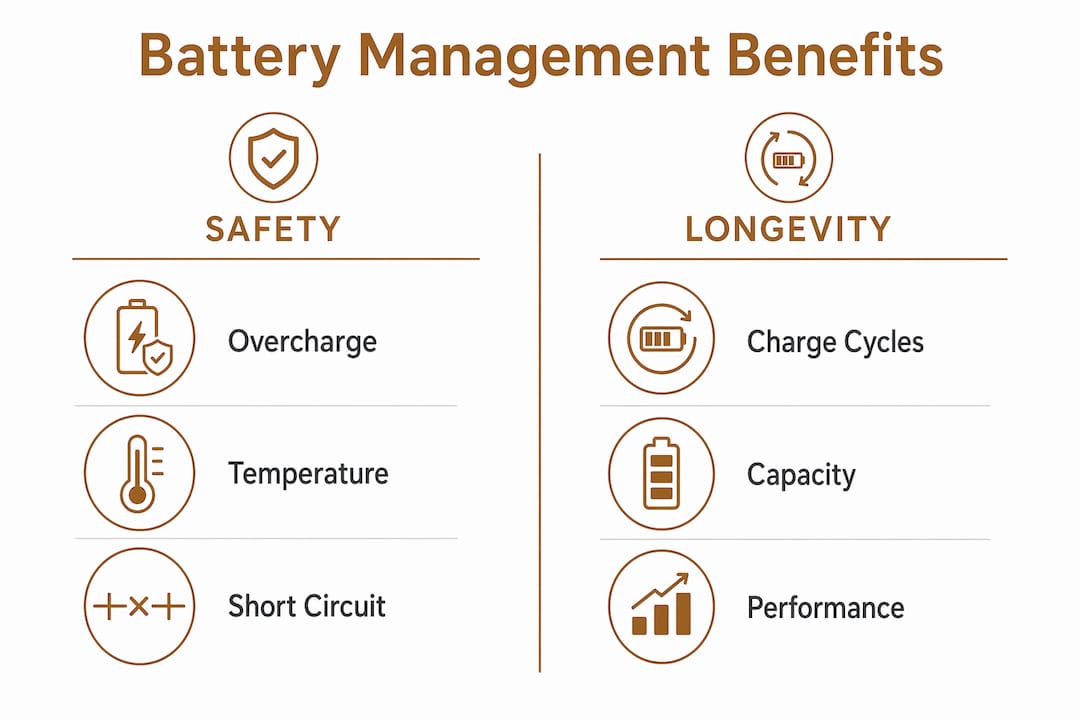
A dedicated BMS protects beauty devices from overcharge, short-circuit, and overheating, and this is what separates premium devices from lower-cost alternatives. Overcharging a lithium cell without protection causes the electrolyte to break down, generating heat and, in extreme cases, gas expansion. A BMS cuts the circuit before that process begins.
The practical benefits for consumers include:
- Overcharge protection: The BMS stops charging automatically when the cell reaches full capacity, preventing heat build-up.
- Over-discharge protection: It disconnects the load before the cell drops to a damaging voltage, preserving long-term capacity.
- Short-circuit protection: Instant current cutoff prevents damage from faulty cables or connector faults.
- Temperature monitoring: The BMS halts operation if internal temperature exceeds safe limits, protecting both the device and the person using it.
Lower-end devices often omit a full BMS to reduce manufacturing costs. The consequence is faster capacity loss, unpredictable behaviour, and a genuine safety risk in a device used near the face and neck. Med spa safety standards increasingly reference BMS compliance as a baseline requirement for professional-grade tools, and the same logic applies to at-home devices.
Pro Tip: If a device gets noticeably warm during charging, not just slightly warm, that is a sign the BMS may be absent or underspecified. Stop using it and contact the retailer.
In what ways does battery design influence device ergonomics?
Battery shape and weight distribution determine how a device feels in the hand, and that affects whether people actually use it consistently. A device that feels heavy or awkward gets left on the shelf. Flexible pouch battery designs enable lightweight, ergonomic handheld beauty devices, which is why the best tools on the market feel balanced and effortless to hold for a full treatment session.
The charging method is equally consequential. Traditional pin-based charging contacts are exposed to bathroom humidity every time the device is stored near a sink or shower. Contact oxidation on charging pins caused by bathroom humidity blocks charging and mimics battery failure. Many people discard a perfectly functional device because they assume the battery has died, when the actual fault is a corroded charging pin.
Premium beauty devices use wireless inductive charging or gold-plated contacts to prevent this problem. Inductive charging eliminates the physical contact point entirely, which removes the oxidation risk and makes the device fully sealed against moisture. Gold plating on contacts resists corrosion far longer than standard nickel or tin finishes.
The table below shows how charging design choices affect the user experience over time:
| Charging method | Oxidation risk | Moisture resistance | Long-term reliability |
|---|---|---|---|
| Standard pin contacts | High | Low | Moderate |
| Gold-plated contacts | Low | Moderate | High |
| Wireless inductive charging | None | High | Very high |
Understanding how beauty batteries work in relation to their physical design helps you make a more informed choice. A device’s charging port is not a minor detail. It is a structural vulnerability that the best manufacturers have already solved.
Pro Tip: Store your beauty device in a drawer or dry cabinet rather than on a bathroom shelf. Even devices with good moisture resistance benefit from reduced humidity exposure between uses.
What are best practices for maintaining battery health in beauty devices?
Battery health in beauty devices degrades faster from poor habits than from normal use. The good news is that the most damaging habits are easy to change once you know what they are.
-
Avoid continuous charging. Keeping a device plugged in continuously strains the battery chip and degrades battery chemistry through heat damage. Charge to full, then unplug. This single habit extends battery lifespan significantly.
-
Charge before full depletion. Proper battery health depends on charging near 20% rather than running the device to zero. Deep discharge cycles accelerate capacity loss in lithium cells.
-
Store away from humidity. Bathrooms are the worst storage environment for beauty devices. Moisture penetrates charging ports, corrodes contacts, and accelerates cell degradation even when the device is switched off.
-
Recognise degradation early. Signs that a battery is losing capacity include noticeably shorter run times, the device switching off before the indicator suggests it should, and the body of the device becoming warm during use rather than only during charging.
-
Use the original charger. Third-party chargers often deliver incorrect voltage or current profiles. A BMS can compensate to a degree, but sustained use of an incompatible charger will shorten the cell’s life regardless.
The advantages of battery tech built into premium devices are only fully realised when the device is maintained correctly. A well-engineered battery in a well-maintained device can sustain consistent performance for years. The same cell in a device left plugged in on a humid bathroom shelf will degrade in months.
Key takeaways
Beauty device battery technology defines device safety, performance consistency, and longevity, making it the single most important engineering factor in any advanced skincare tool.
| Point | Details |
|---|---|
| Battery chemistry matters | Lithium polymer and lithium cobalt oxide cells deliver the stable output that skincare treatments require. |
| BMS is non-negotiable | A Battery Management System prevents overcharge, overheating, and short-circuit faults in premium devices. |
| Charging design affects lifespan | Wireless inductive charging eliminates oxidation risk and outperforms standard pin contacts over time. |
| Habits determine longevity | Avoiding continuous charging and humid storage preserves battery capacity far longer than any single specification. |
| Flat discharge curve equals consistent results | Lithium cobalt oxide cells maintain treatment intensity from full charge to near depletion. |
The part of your beauty device you never see but always feel
Battery technology is the one component that beauty marketing almost never discusses, and that silence costs consumers money. I have spent years reviewing and testing advanced skincare devices, and the pattern is consistent: the devices that disappoint after six months are almost always the ones with underspecified power systems, not inferior motors or weaker LEDs.
The most common misunderstanding I encounter is that battery life means how long a device runs on a single charge. That is run time. Battery life is how many charge cycles the cell can complete before its capacity drops below useful levels. Those are entirely different metrics, and confusing them leads people to buy the wrong device.
The industry is moving in the right direction. Manufacturers are adopting smaller, safer lithium polymer cells with integrated BMS circuits as standard, and wireless charging is becoming the norm rather than the exception in the premium tier. Devices like those in Glowera’s curated collection reflect this shift, prioritising engineering quality that you feel in consistent performance rather than see in a specification sheet.
My honest advice: before you assess a device’s treatment modes or intensity settings, ask what battery it uses and whether it has a BMS. If the brand cannot answer that question, the device is not worth the price.
— Adam
Advanced beauty tech with battery engineering you can trust
Glowera’s collection of premium beauty tech devices is built around one principle: every device should perform as well on day 300 as it does on day one. That standard is only achievable with the battery engineering this article describes.
From LED therapy masks with wireless charging to microcurrent devices powered by lithium polymer cells with full BMS protection, Glowera stocks tools from brands that publish their battery specifications and stand behind their longevity claims. Every product ships to Saudi Arabia with authentic documentation and expert support. If you want devices that deliver consistent, professional results at home, the engineering starts with the battery.
FAQ
What does beauty device battery technology mean?
Beauty device battery technology refers to the specialised design of power cells, Battery Management Systems, and charging circuits that enable skincare gadgets to operate safely and consistently. It covers battery chemistry, thermal stability, charge cycle management, and physical form factor.
How do beauty batteries work in LED and microcurrent devices?
Lithium polymer or lithium cobalt oxide cells supply regulated current to micro-motors and LED arrays, with a BMS controlling charge and discharge to maintain stable output. A flat discharge curve in lithium cobalt oxide cells keeps treatment intensity consistent from full charge to near depletion.
Why does beauty device battery life degrade faster in some devices?
Battery life degrades fastest when devices are kept continuously plugged in, stored in humid environments, or charged with incompatible chargers. These habits cause heat damage and chemical breakdown in the cell, reducing capacity over successive charge cycles.
What is a Battery Management System in a beauty device?
A Battery Management System (BMS) is a protective circuit that monitors and regulates charging, discharging, temperature, and current flow in a beauty device battery. It prevents overcharge, short-circuit, and overheating, and is the primary feature distinguishing premium devices from lower-cost alternatives.
Is wireless charging better for beauty device batteries?
Wireless inductive charging eliminates physical contact points entirely, removing the oxidation risk that affects standard pin-based chargers in humid bathroom environments. Premium devices with wireless charging consistently show longer connector lifespan and fewer charging failures over time.