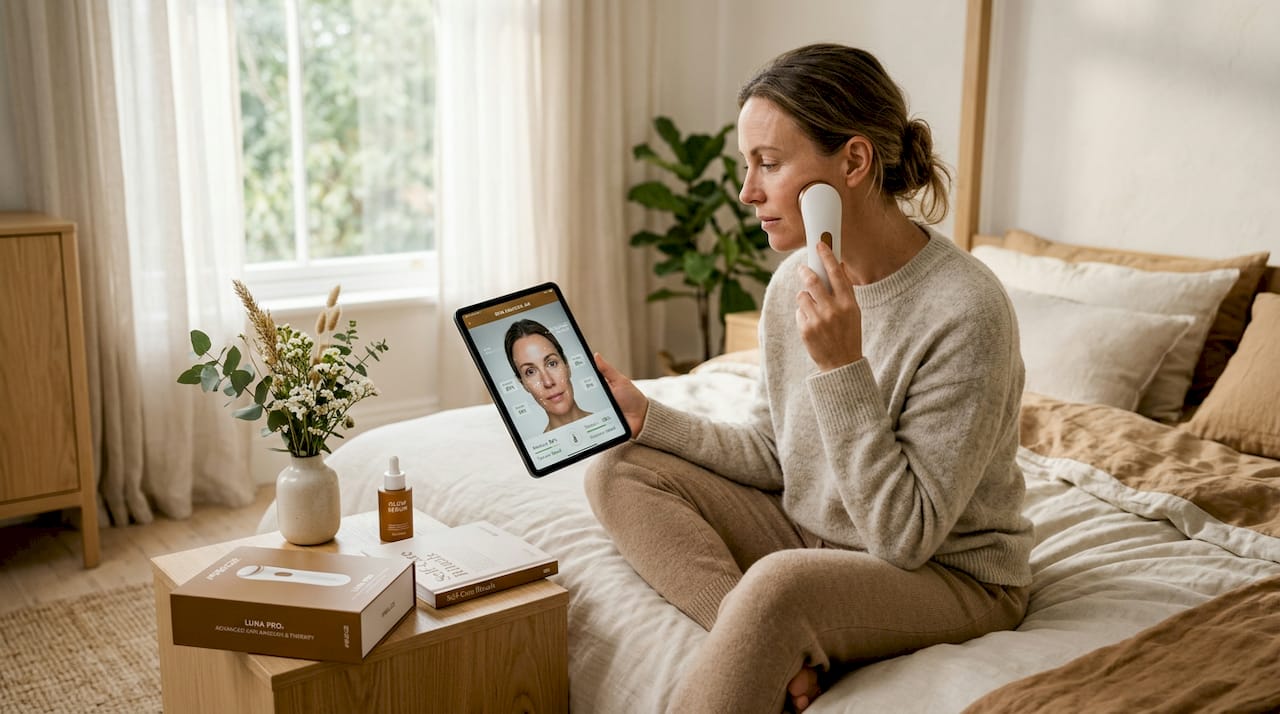
Piezoelectric technology in beauty devices is defined as the application of materials that convert electrical energy into precise mechanical vibrations, delivering ultrasound waves or micro-vibrations directly to skin tissue. This physical principle, known as the piezoelectric effect, underpins a growing class of at-home and clinical skincare tools that stimulate collagen production, improve skin elasticity, and reduce visible signs of ageing. Devices from brands such as FOREO and Medicube use piezoelectric ceramics as their core components, and 2026 clinical research now confirms measurable outcomes when these tools are used consistently alongside topical skincare regimens.
How do piezoelectric beauty devices work?
Piezoelectric beauty devices operate through two complementary physical mechanisms. The direct piezoelectric effect converts mechanical pressure into electrical signals, while the inverse effect converts electrical energy into mechanical movement. In a beauty device, the inverse effect is the one doing the work: an electrical current passes through a piezoelectric ceramic element, causing it to vibrate at precisely controlled frequencies. Those vibrations are then transmitted into the skin as ultrasound waves or surface micro-vibrations.
Bulk piezoelectric transducers operate bidirectionally as both transmitters and receivers, which means the same ceramic element that delivers energy can also sense tissue response. This dual function is what separates piezoelectric devices from simpler vibration tools. The frequency range matters enormously. Ultrasound-based facial devices typically operate between 1 MHz and 3 MHz, which allows energy to penetrate beyond the epidermis into the dermis where collagen fibres reside.
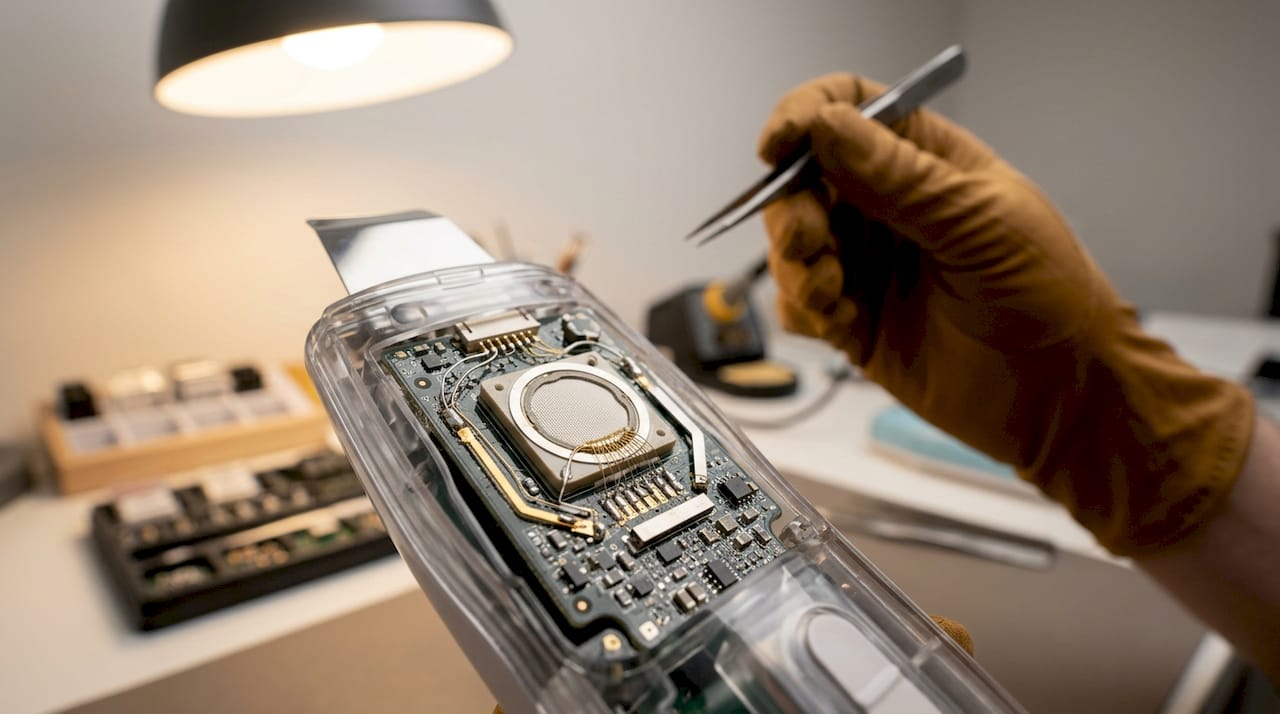
Micro-vibration devices, by contrast, operate at lower frequencies and work primarily at the skin surface, improving circulation and product absorption. Both types rely on piezoelectric ceramics to generate the vibrations, but the clinical outcomes differ depending on frequency, intensity, and treatment depth.
More recently, engineers have developed piezoelectric micromachined ultrasonic transducers, or PMUTs, which use thin-film piezo layers for lower power consumption and more precise array control. This miniaturisation is what makes it feasible to build professional-grade ultrasound capability into a handheld home device.
Pro Tip: When selecting a piezoelectric device, check whether it specifies ultrasound frequency in MHz. A device operating at 1 MHz or above is penetrating the dermis; one that only mentions “vibration” without frequency data is likely a surface tool with more limited clinical effect.
What are the proven benefits of piezoelectric beauty technology?
The clinical evidence for piezoelectric beauty technology has strengthened considerably. A 2026 study found that an integrated ultrasound and topical regimen reduced facial skin laxity by 44% over 12 weeks, with 94% of participants showing significant improvements in skin tightening and wrinkle reduction. That figure is not a marketing claim. It comes from a controlled clinical trial with baseline measurements and longitudinal assessment. The implication is clear: piezoelectric ultrasound, when combined with the right topical products, delivers results that rival many in-clinic procedures.
The mechanism behind these results involves several biological processes:
- Collagen stimulation. Ultrasound waves create micro-mechanical stress in dermal tissue, which triggers fibroblast activity and new collagen synthesis.
- Enhanced product absorption. Vibration temporarily increases skin permeability, allowing active ingredients such as retinol, hyaluronic acid, and peptides to penetrate more deeply.
- Improved microcirculation. Repeated micro-vibrations increase local blood flow, supporting cellular repair and a more even skin tone.
- Tissue remodelling. Focused ultrasound at depth promotes structural changes in the dermis, contributing to firmer, more elastic skin over time.
“Longitudinal clinical studies with placebo or baseline controls deliver superior evidence for piezoelectric device efficacy in aesthetics compared to isolated or single-session claims.” — Clinical efficacy of a flavo-proxylane topical regimen
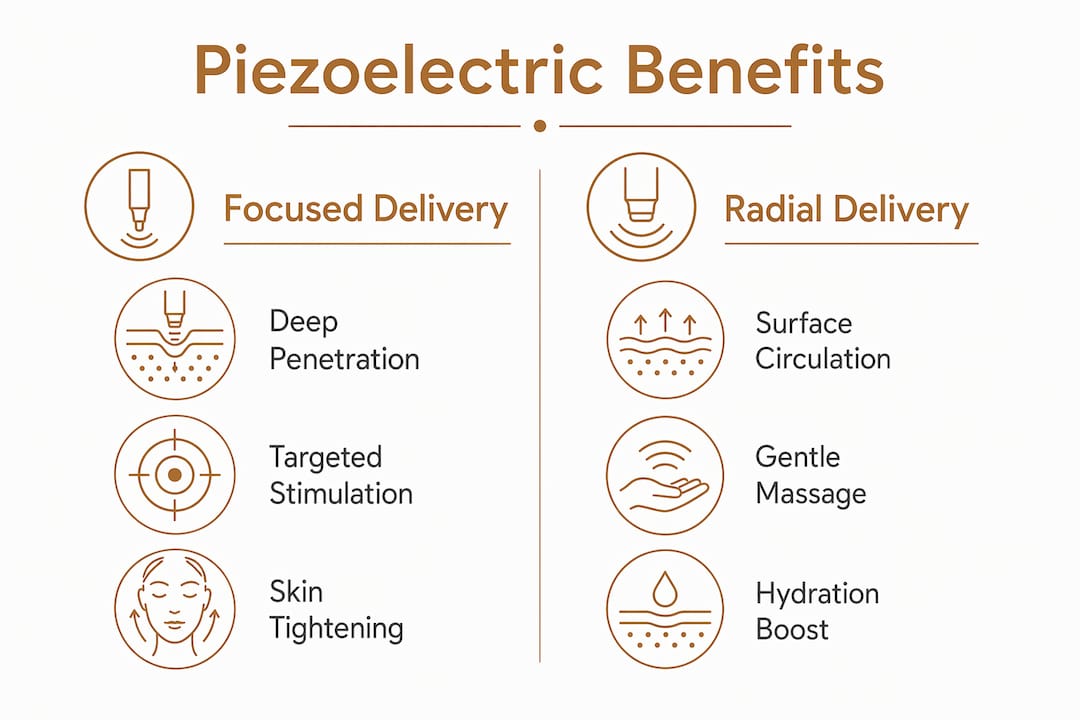
One distinction worth understanding is the difference between focused and radial delivery. Focused piezoelectric ultrasound delivers convergent waves to depths of up to 8 cm with precision, while radial devices disperse energy more broadly with a shallower, less targeted effect. For facial rejuvenation, focused delivery produces more consistent clinical outcomes and greater patient comfort. Clinical outcomes from these devices also emerge over repeated sessions. A single treatment produces minimal lasting change. The best evidence consistently supports integrated protocols assessed over 12 weeks or longer, which is the timeframe you should use to evaluate any device you invest in.
How does piezoelectric technology compare with other beauty device technologies?
Understanding where piezoelectric devices sit relative to other technologies helps you choose the right tool for your specific skin concern. The table below compares the four most common at-home device technologies across the factors that matter most.
| Technology | Penetration depth | Primary mechanism | Best suited for | Key limitation |
|---|---|---|---|---|
| Piezoelectric ultrasound | Deep (dermis, up to 8 cm focused) | Mechanical wave stimulation | Skin laxity, collagen, product absorption | Requires consistent use over weeks |
| Radiofrequency (RF) | Mid-depth (dermis) | Thermal energy via electrical resistance | Skin tightening, fine lines | Heat-based; not suitable for all skin types |
| LED therapy | Superficial (epidermis) | Photobiomodulation | Acne, redness, surface tone | No mechanical or thermal tissue effect |
| Microcurrent | Superficial to mid-depth | Low-level electrical stimulation | Muscle tone, facial contouring | Minimal collagen remodelling effect |
Piezoelectric ultrasound is the only technology in this group that delivers mechanical energy at depth without relying on heat. This matters because thermal-based approaches such as radiofrequency carry a higher risk of discomfort or adverse effects on sensitive or darker skin tones. LED therapy and microcurrent devices, such as the CurrentBody RF device, address different layers and mechanisms entirely. They are not inferior technologies; they simply target different concerns.
For a deeper comparison of how these technologies perform in at-home settings, the beauty device technology guide on Glowera covers the practical differences in detail.
The practical advice is straightforward. If your primary concern is skin laxity, loss of firmness, or deep wrinkle reduction, piezoelectric ultrasound offers the most clinically supported mechanism. If your concern is surface tone, redness, or muscle definition, LED or microcurrent devices may be more appropriate. Many experienced users combine technologies across their weekly routine rather than relying on a single device.
What safety standards apply to piezoelectric beauty devices?
Safety is where many consumers make avoidable mistakes. The FDA classifies ultrasound-based devices under specific categories that require non-clinical performance testing, and thermal safety verification via IEC 60601 standards is a key requirement for devices operating in ultrasound modalities. This standard tests whether a device generates unsafe levels of heat during normal operation, which is particularly relevant for devices used repeatedly on facial skin.
The following factors distinguish a well-designed, safe piezoelectric device from an unverified one:
- IEC 60601 compliance. This international standard governs the electrical and thermal safety of medical and aesthetic electrical equipment. Any device claiming ultrasound function should reference compliance with this or an equivalent standard.
- Biocompatible materials. PZT ceramics, the most common piezoelectric material in beauty devices, require encapsulation strategies to prevent direct skin contact with potentially toxic ceramic compounds. Reputable manufacturers address this in their device design.
- Frequency and intensity disclosure. Legitimate devices specify operating frequency in MHz and output intensity in mW/cm². Devices that omit these figures cannot be independently assessed for safety or efficacy.
- Clinical testing documentation. Look for devices supported by published clinical studies or independent dermatological testing, not just manufacturer-commissioned reports.
Pro Tip: Before purchasing any piezoelectric or ultrasound beauty device, search for its IEC 60601 certification or FDA clearance number. If neither is publicly available, treat the safety claims with scepticism regardless of how the device is marketed.
Non-surgical skin treatments that use verified piezoelectric technology carry a strong safety profile when used as directed. The risk profile increases when devices are used at excessive intensity, on contraindicated skin conditions such as active acne or rosacea, or without adequate coupling gel for ultrasound transmission.
Key takeaways
Piezoelectric beauty devices deliver measurable skincare benefits through mechanical wave stimulation at depth, with clinical evidence supporting a 44% reduction in skin laxity over 12 weeks when combined with targeted topical regimens.
| Point | Details |
|---|---|
| Core mechanism | Piezoelectric ceramics convert electrical energy into precise mechanical vibrations or ultrasound waves. |
| Clinical evidence | A 2026 trial showed 44% reduction in skin laxity and 94% participant improvement over 12 weeks. |
| Focused vs radial | Focused ultrasound penetrates deeper and delivers more precise, comfortable results than radial devices. |
| Safety verification | Look for IEC 60601 compliance and biocompatible encapsulation before purchasing any ultrasound device. |
| Technology comparison | Piezoelectric ultrasound is the only at-home technology delivering mechanical energy at dermal depth without heat. |
Why I think most people underestimate piezoelectric devices
Most skincare enthusiasts I speak with have heard of LED masks and microcurrent tools, but piezoelectric ultrasound still gets treated as a professional-only technology. That perception is about five years out of date. The miniaturisation enabled by PMUT technology has brought genuine clinical-grade ultrasound into handheld devices that cost a fraction of a clinic session.
What I find more interesting is the synergy angle. The 2026 clinical data showing a 44% reduction in skin laxity did not come from ultrasound alone. It came from ultrasound combined with a targeted topical regimen. That tells me the real opportunity is not in choosing between your serum and your device. It is in using them together deliberately. Most people apply their actives and then use their device, or vice versa, without thinking about the sequencing or the mechanism. Ultrasound increases skin permeability. Apply your most potent active immediately after a session and you are working with the biology rather than against it.
The safety conversation also deserves more attention than it gets. I have seen devices sold without any frequency disclosure, IEC certification, or clinical backing, positioned alongside verified tools as if they are equivalent. They are not. The facial skincare device guide on Glowera is a useful starting point for understanding what verified devices actually look like in practice.
My honest view is that piezoelectric technology represents the most scientifically grounded at-home skincare investment available right now, provided you choose a device with proper safety credentials and commit to a consistent 12-week protocol.
— Adam
Explore piezoelectric and K-Beauty devices at Glowera
If you are ready to invest in a piezoelectric beauty device backed by clinical evidence, Glowera’s curated selection is worth exploring. The platform specialises in premium beauty technology for the Saudi Arabian market, with authentic products, local delivery, and expert guidance built into the experience.
The K-Beauty tech collection features devices from Medicube and other leading Korean skincare brands that incorporate piezoelectric and ultrasound technology designed to work synergistically with your topical routine. Every device in the range is selected for verified performance and safety credentials. You can also browse FOREO devices for piezoelectric-driven facial tools with strong clinical backing and a proven track record in skin stimulation.
FAQ
What is the piezoelectric effect in beauty devices?
The piezoelectric effect is the property of certain materials, typically ceramics, to convert electrical energy into mechanical vibrations. In beauty devices, this creates ultrasound waves or surface micro-vibrations that stimulate skin tissue at controlled depths.
How long does it take to see results from piezoelectric facial treatment?
Clinical evidence shows that meaningful results, including reduced skin laxity and improved elasticity, emerge over 12 weeks of consistent use rather than after a single session. Single treatments produce minimal lasting change.
Are piezoelectric beauty devices safe for home use?
Devices with IEC 60601 certification, biocompatible encapsulated ceramics, and disclosed operating frequencies are considered safe for home use. Avoid devices that do not publish safety testing data or frequency specifications.
How do piezoelectric devices differ from radiofrequency devices?
Piezoelectric ultrasound delivers mechanical energy at depth without heat, while radiofrequency devices use thermal energy via electrical resistance. Piezoelectric technology carries a lower risk of heat-related adverse effects and is suitable for a broader range of skin types.
Can piezoelectric devices improve product absorption?
Yes. Ultrasound vibrations temporarily increase skin permeability, allowing active ingredients such as hyaluronic acid, retinol, and peptides to penetrate more deeply into the dermis. Applying serums immediately after a session maximises this effect.