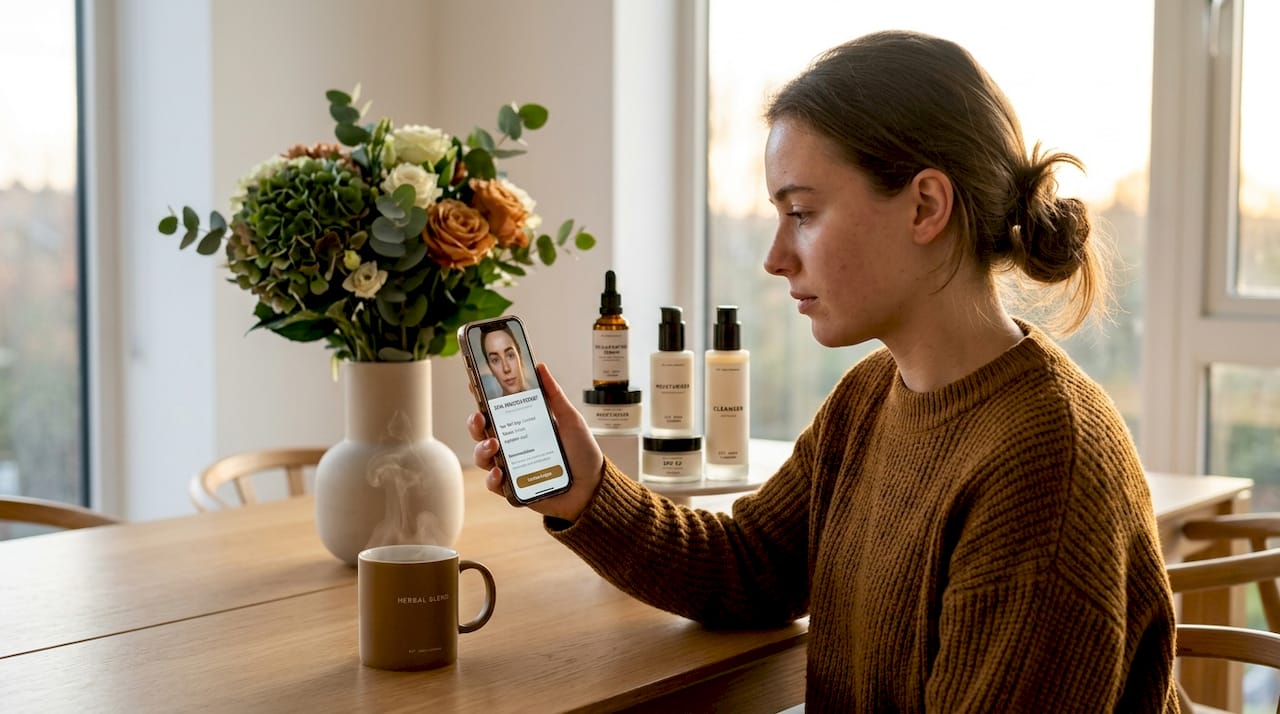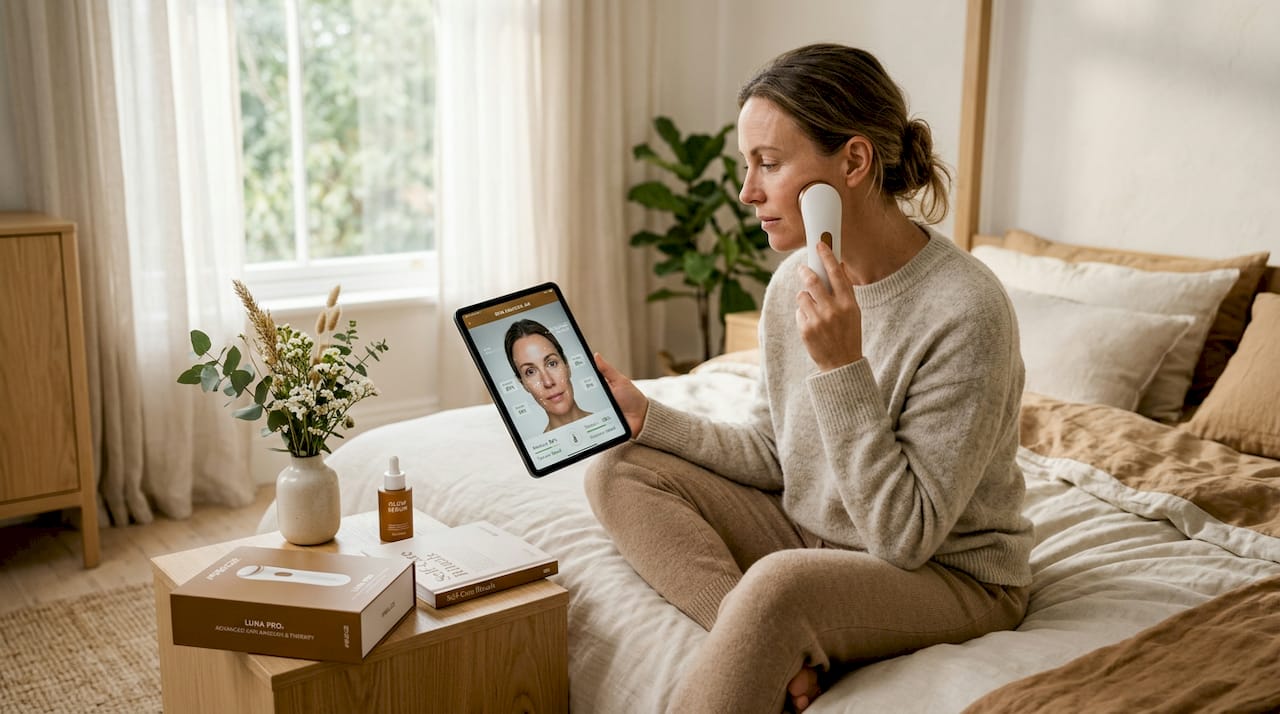
Most people assume that a beauty device works the same way for everyone. You press a button, light comes on, and the device does its thing. But that assumption is what separates a mediocre skincare gadget from one that genuinely transforms your skin. Understanding why beauty device algorithms personalise treatment is where the real science begins. Advanced devices today use what the industry calls adaptive treatment protocols, an algorithmic pipeline that reads your skin data and selects the precise settings your skin actually needs. Not your friend’s. Not a model’s. Yours.
Table of Contents
- Key takeaways
- Why beauty device algorithms personalise treatment
- How algorithms select light wavelengths
- Benefits of personalised algorithms over generic settings
- Challenges with diverse skin types
- How to choose and use personalised beauty devices
- My perspective on where algorithmic beauty is headed
- Find your ideal personalised device at Glowera
- FAQ
Key takeaways
| Point | Details |
|---|---|
| Algorithms read your skin data | Sensors, imaging, and questionnaires feed individual data into a treatment pipeline that selects personalised settings. |
| Wavelength selection is deliberate | Red and blue light penetrate skin at different depths, so algorithms match wavelengths to specific skin concerns and goals. |
| Personalisation improves over time | AI platforms track skin changes across sessions, enabling dynamic adjustments that improve results progressively. |
| Data quality affects accuracy | Poor lighting or inconsistent imaging conditions can reduce how reliably an algorithm recommends the right treatment. |
| Inclusivity remains an active challenge | Algorithm accuracy is currently lower for darker skin tones, making diverse training data a pressing concern for the industry. |
Why beauty device algorithms personalise treatment
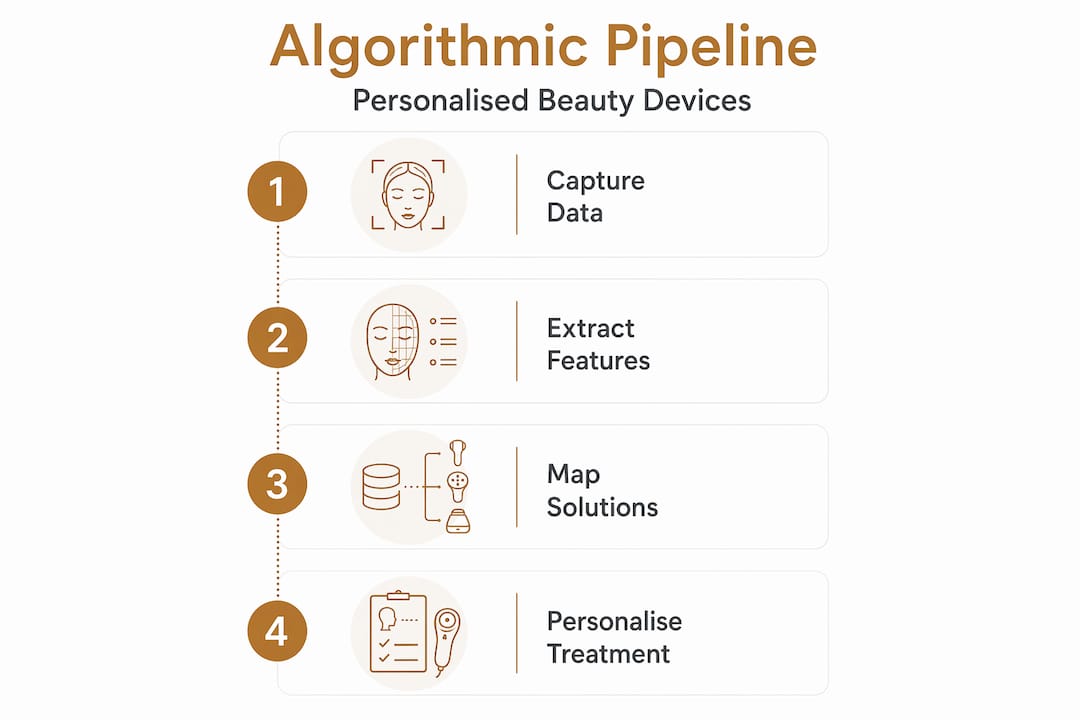
The concept of personalisation in skincare is not new. What is new is the technological infrastructure behind it. Modern beauty devices use a structured algorithmic pipeline to turn raw skin data into a specific treatment plan. Think of it as a four-stage process.
- Data capture. The device, or its companion app, collects information about your skin. This might come from a high-resolution skin scan, built-in sensors measuring hydration or sebum levels, or a detailed onboarding questionnaire about your concerns, age, and skin history.
- Feature extraction. The algorithm identifies key characteristics from that data: skin tone, texture, pore size, pigmentation, and hydration levels. Each feature is mapped to a numerical value the algorithm can process.
- Treatment mapping. The extracted features are compared against a clinical database to select the optimal device settings. This includes selecting mode, intensity, duration, and wavelength where applicable.
- Safety gating. Before any treatment begins, the algorithm checks for contraindications. Certain conditions or skin sensitivities trigger modified protocols or warning flags. Advanced algorithms in cosmetic dermatology personalise treatments by diagnosing conditions and predicting treatment responses rather than applying broad, generalised defaults.
This pipeline is why two users picking up the same device in the same room can receive meaningfully different treatment sessions.
Pro Tip: When setting up a new device, complete every field in the companion app’s profile section. The algorithm is only as good as the data you feed it, and incomplete profiles push it toward generic defaults.
How algorithms select light wavelengths
Light-based devices are where algorithmic personalisation becomes especially compelling. The difference between red and blue light therapy is not just marketing language. It is physics with real clinical consequences.
Red light penetrates skin up to approximately 6 mm, reaching the dermis where collagen and elastin fibres live. This makes it effective for anti-ageing, wound healing, and reducing inflammation in deeper tissue. Blue light, by contrast, penetrates to roughly 1 mm, targeting the uppermost skin layers where acne-causing bacteria, specifically Cutibacterium acnes, are most active. These are not interchangeable tools, and they should not be applied indiscriminately.
| Wavelength | Penetration depth | Primary targets | Best suited for |
|---|---|---|---|
| Red (630–700 nm) | Up to 6 mm | Dermis, collagen fibres | Anti-ageing, inflammation, healing |
| Blue (415–450 nm) | Up to 1 mm | Epidermis, sebaceous glands | Acne, excess oil, blemish control |
| Near-infrared (800+ nm) | Beyond 6 mm | Subcutaneous tissue | Deep tissue repair, circulation |
A well-designed algorithm uses your skin assessment data to determine which wavelength, or combination of wavelengths, matches your stated and observed concerns. If your skin scan flags active breakouts alongside early fine lines, the algorithm might sequence blue and red light within a single session, rather than leaving you to guess which mode to use. You can read more about personalised light therapy results to understand how these choices translate into real outcomes.

Pro Tip: If a device claims to personalise light therapy but offers only a single fixed mode, it is not truly algorithmic. Look for devices with at least two distinct wavelengths and a documented skin-matching process.
Benefits of personalised algorithms over generic settings
The most straightforward argument for algorithmic personalisation is this: skin is not uniform, so treatment should not be either. But the benefits run deeper than common sense.
AI platforms track skin changes over multiple sessions, creating a feedback loop that improves treatment accuracy progressively. After your third or fourth session, the algorithm has more data about how your skin responds. It can increase intensity, adjust duration, or shift emphasis from one concern to another. A generic device simply repeats the same session every time.
Here is what that iterative personalisation delivers in practice:
- More efficient sessions. By targeting the correct depth and mode from the outset, personalised devices avoid wasted energy on settings that do not match your skin’s needs.
- Better safety margins. Safety gating means users with sensitive skin, rosacea, or active conditions receive modified protocols rather than a full-strength setting designed for resilient skin.
- Higher user satisfaction. Personalisation that explains its reasoning and tracks visible progress builds confidence in the technology, which in turn improves consistency of use, which is the most important variable in any at-home skincare routine.
- Predictive capability. AI supports personalised approaches in predicting how your skin will respond to specific laser or light therapies, allowing proactive adjustments before problems arise.
Consider what this looks like against a non-personalised alternative. A standard LED mask might offer “mode 1” and “mode 2” with no explanation. A truly algorithmic device connects your data to a treatment decision and, critically, tells you why. That transparency is not just reassuring. It is what separates a device worth investing in from one that collects dust after a month.
Challenges with diverse skin types
This is the part of the conversation that does not appear in most marketing materials, and it matters. Algorithmic personalisation is only as equitable as the data used to build it.
AI algorithms show lower diagnostic accuracy for darker skin tones compared to lighter ones. Pooled sensitivity stands at 0.91 overall, but area under the ROC curve drops from 0.89 for light skin to 0.82 for darker complexions. That gap reflects a systemic problem: many dermatology AI models were trained predominantly on images of lighter skin, making their feature extraction less reliable for people with higher melanin levels.
“Fairness and inclusivity remain key challenges in dermatology AI, necessitating diverse data, transparency, and validation before trusting personalisation claims.” Equity and Generalizability of AI for Skin-Lesion Diagnosis
What does this mean for you as a consumer? Ask questions before you buy. Does the brand publish information about the skin tone diversity in its training data? Is the device clinically validated across a range of Fitzpatrick skin types? Data quality issues such as poor lighting, inconsistent capture conditions, and non-diverse training sets directly undermine how trustworthy any personalisation claim can be.
The industry is improving, but it has not solved this yet. Approach personalisation claims with informed scepticism, particularly if your skin tone is medium to deep.
How to choose and use personalised beauty devices
Knowing the theory is useful. Knowing what to do with it is better. Here is how to evaluate and use algorithmic beauty devices effectively.
- Check for regulatory clearance. FDA clearance or CE marking (for European standards) signals that the device has undergone clinical evaluation. These marks do not guarantee personalisation quality, but they set a baseline of safety and efficacy testing.
- Understand what the device actually measures. A device that claims to personalise based solely on a three-question app questionnaire is not doing the same job as one with a physical skin sensor or a validated imaging system.
- Control your input conditions. Robust image capture matters enormously. Use devices in consistent lighting, always clean the sensor interface, and follow the app’s guidance on distance and angle when capturing skin images.
- Integrate with professional advice. AI’s role is to support clinical decision-making, not replace it. If you have an active skin condition, consult a dermatologist before adding any device to your routine.
- Track your results systematically. Many companion apps include photo logging. Use this feature consistently. Progress is often subtle over weeks, and side-by-side comparisons provide the feedback that helps the algorithm and helps you stay motivated.
You can compare beauty device technologies to understand how different devices approach personalisation before committing to a purchase.
Pro Tip: Run your first session at the lowest recommended intensity and photograph your skin beforehand. This gives you a baseline the algorithm can compare against and protects you from starting too aggressively on unfamiliar technology.
My perspective on where algorithmic beauty is headed
I’ve spent a lot of time looking at how brands position AI in beauty devices, and here is what I’ve found: most of the confusion consumers feel comes from the word “personalisation” being applied to everything from a two-mode toggle to a genuinely adaptive treatment engine. They are not the same thing.
What I’ve come to believe is that the pipeline model, meaning the four-stage process of capture, extraction, mapping, and safety gating, is the most honest way to evaluate any device’s personalisation claims. If a brand cannot describe their product’s process in those terms, they are probably using the word “personalised” as a marketing adjective rather than a technical description.
I’m genuinely encouraged by the trend toward wearable diagnostic devices that combine real-time skin scanning with adaptive light therapies. That convergence is where the category gets interesting. But I am also alert to the equity issue. An algorithm that works brilliantly for 60% of the population and poorly for the other 40% is not a success. The brands taking inclusivity seriously in their validation processes are the ones worth paying attention to.
My honest take: buy for transparency, not promises. If a device tells you why it chose a particular setting for your session, that is the signal you want.
— Adam
Find your ideal personalised device at Glowera
If you have reached this point, you already know more about algorithmic personalisation in beauty devices than most consumers will ever learn. The next step is putting that knowledge to work with devices that actually live up to the science.
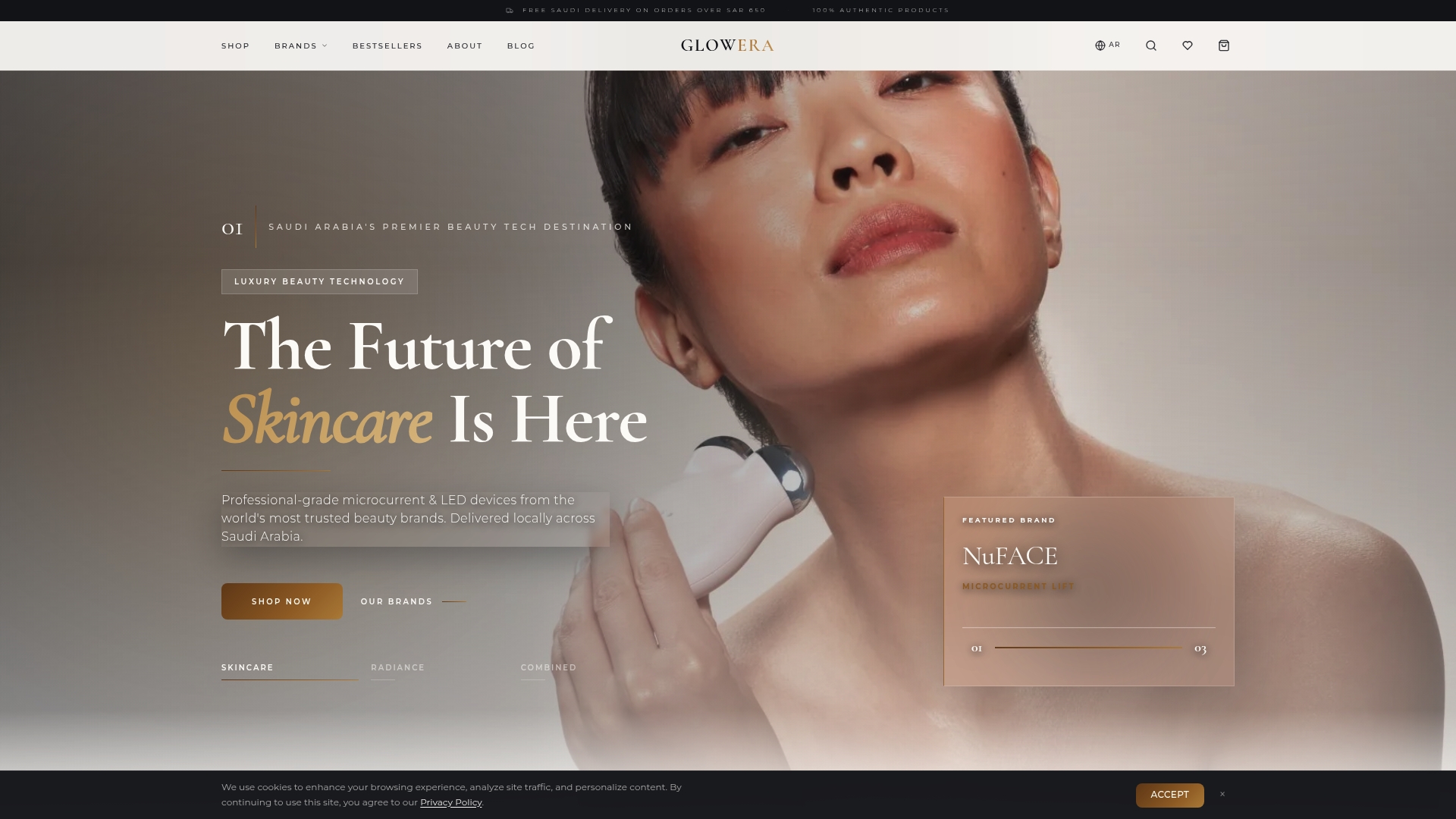
Glowera curates a selection of premium, clinically validated beauty technology devices for at-home use, delivered across Saudi Arabia with expert support. The K-beauty tech collection includes devices from brands like Medicube that use adaptive, multi-mode treatment controls built around real skin data. For light therapy specifically, the LED therapy range features red, blue, and near-infrared masks with personalised protocol settings. These are not generic gadgets. They are devices designed to work for your skin, in the way this article has described.
Browse the Glowera collection and find the device your routine has been missing.
FAQ
What does a beauty device algorithm actually do?
A beauty device algorithm analyses individual skin data, including tone, texture, hydration, and stated concerns, then maps those features to specific treatment settings such as wavelength, intensity, and duration to create a personalised session rather than a generic one.
Why does personalised light therapy produce better results?
Because red and blue light penetrate skin at different depths and target different concerns, matching the right wavelength to your specific skin needs produces more precise results than applying the same setting to every user.
Are beauty device algorithms accurate for all skin tones?
Not equally. Current research shows algorithm accuracy drops for darker skin tones due to non-diverse training data. Look for brands that publish validation data across the full Fitzpatrick scale before trusting personalisation claims.
How often should I use a personalised beauty device?
Frequency depends on the specific device and concern being treated, but most algorithmic devices recommend three to five sessions per week initially, with the algorithm adjusting intensity as it gathers more data about your skin’s response over time.
Can I use an algorithmic beauty device alongside professional treatments?
Yes, but with care. AI-driven devices work best as a complement to professional dermatological advice, not a replacement. Always inform your dermatologist about any devices you use at home, particularly if you are undergoing clinical treatments concurrently.