Most people have raised an eyebrow at a facial LED mask or a microcurrent wand and wondered whether it actually does anything. The scepticism is fair. Beauty shelves are full of products that promise transformation and deliver very little. But understanding why beauty tech innovation drives results requires looking past the marketing and into the science. From AI that continuously refines your skincare routine to at-home devices built on the same photobiomodulation principles used in clinical settings, the evidence for what this technology can genuinely do is stronger than most consumers realise.
Table of Contents
- Key takeaways
- Why beauty tech innovation drives results through AI personalisation
- At-home LED therapy: the science behind the glow
- How AI rewrites beauty product development
- Integrated beauty tech ecosystems and user outcomes
- My honest take on beauty tech’s real power
- Achieve real results with Glowera’s curated devices
- FAQ
Key takeaways
| Point | Details |
|---|---|
| AI personalisation improves adherence | Continuous AI skin monitoring adapts recommendations as your skin changes, keeping routines effective long-term. |
| LED wavelength and dose determine efficacy | Device quality and specific light parameters matter more than brand aesthetics when selecting an LED tool. |
| Virtual twins accelerate better products | AI-simulated ingredient testing reduces physical trials, meaning products reaching shelves are more thoroughly validated. |
| Ecosystem integration beats single gadgets | Beauty tech works best when AI, devices, and product recommendations work together rather than in isolation. |
| Trust in data drives consumer results | Consumers who understand the science behind their devices adhere to routines longer and see better outcomes. |
Why beauty tech innovation drives results through AI personalisation
For most of skincare’s history, personalisation meant a questionnaire at a beauty counter. You answered a few questions about oiliness and sensitivity, someone handed you a moisturiser, and that was that. The conversation ended.
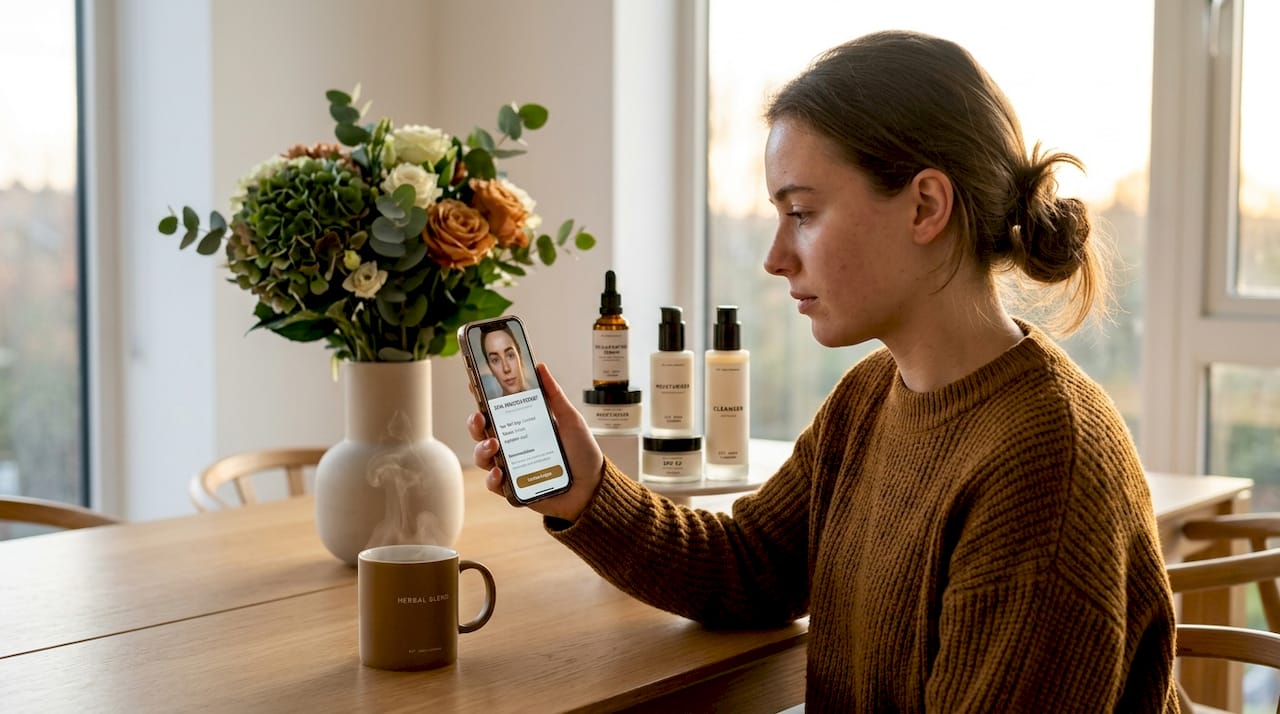
AI-driven personalisation changes the model entirely. Instead of a single snapshot assessment, longitudinal AI skin monitoring tracks how your skin evolves over weeks and months, updating recommendations based on real data rather than your memory of how your skin behaved last winter. That shift from self-reporting to objective measurement is what makes modern beauty tech meaningfully different.
The impact on adherence is significant. When people receive recommendations grounded in data they can see changing, they trust the process more. They stick to routines. And consistency, not any single product, is what actually moves the needle in skincare. Personalisation that treats skin as dynamic rather than fixed, adapting to seasonal shifts, hormonal changes, and environmental stressors, sustains results in a way that any static routine simply cannot.
Brands at the forefront of this are deploying AI not just for product matching but for ongoing skin coaching. By 2026, nearly half of all consumers were receiving AI-generated beauty recommendations, signalling that this is no longer niche technology reserved for high-end clinics. It has moved into daily life.
- Look for apps or devices that capture skin images over time rather than asking you to self-assess
- Prioritise platforms that update your routine seasonally or after detected skin changes
- Be sceptical of one-time assessments presented as permanent personalisation
Pro Tip: If an AI skin tool asks no follow-up questions after your initial profile, treat its recommendations as a starting point rather than a finished solution. Real personalisation is ongoing.
At-home LED therapy: the science behind the glow
LED therapy is possibly the most misunderstood category in beauty tech. The devices look futuristic, the claims sound vague, and the price range is enormous. Understanding the underlying biology helps you separate what works from what does not.
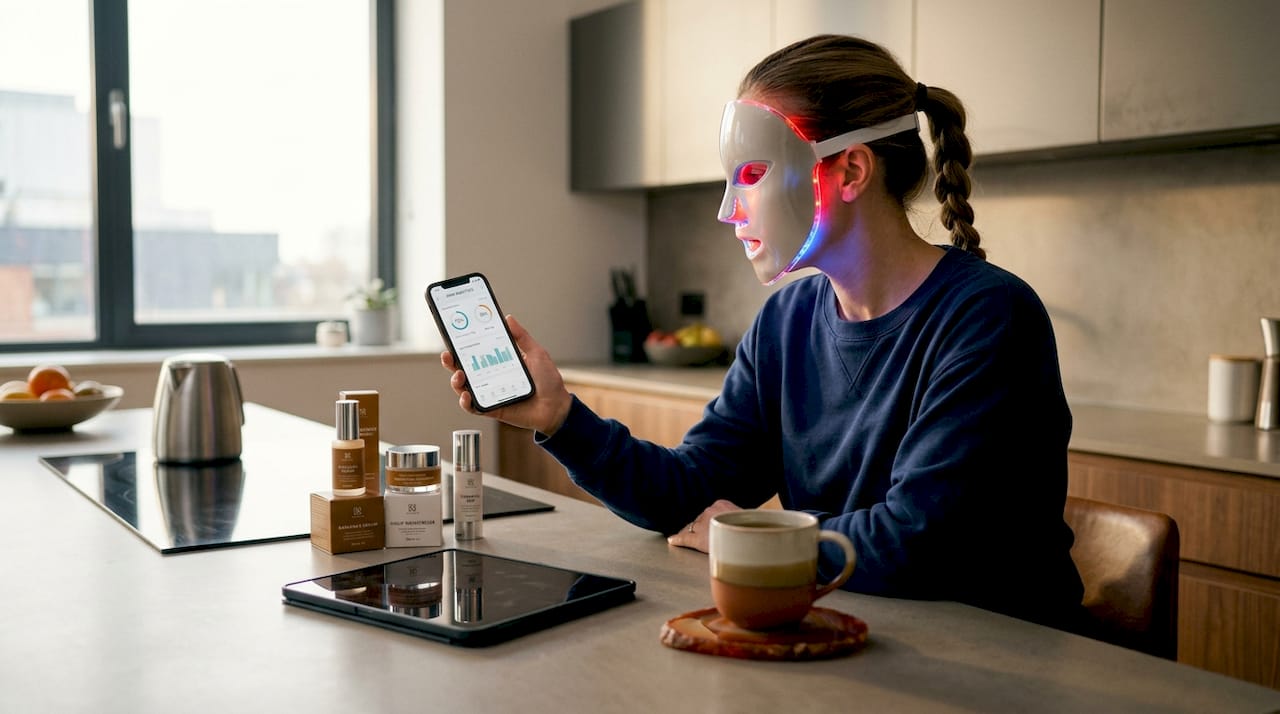
At the cellular level, specific LED wavelengths interact with mitochondrial chromophores, triggering processes that influence collagen production, inflammation, and cellular repair. This is not a cosmetic effect. Red and near-infrared LED has demonstrated consistent improvement in skin texture and reduction in fine wrinkles, while blue light targets the bacteria responsible for acne. The mechanism is measurable and reproducible in clinical settings.
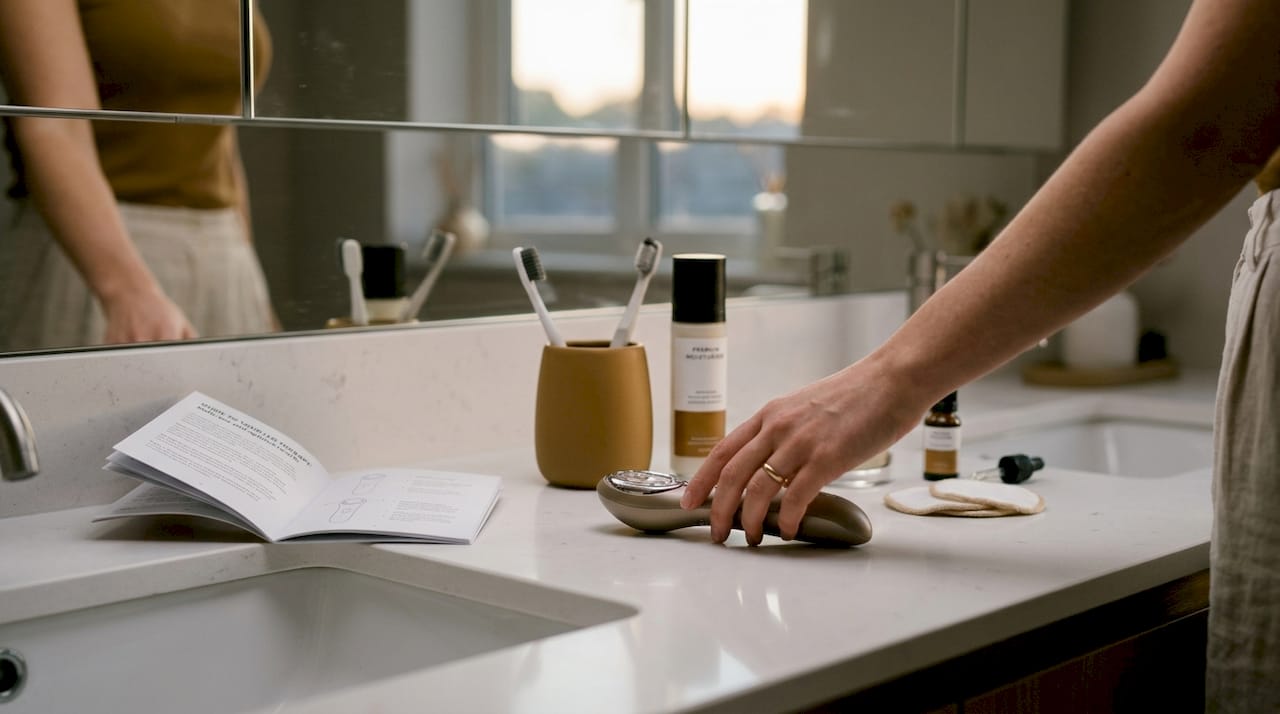
The challenge for consumers is that not all devices deliver the same output. Efficacy depends on three variables: wavelength, fluence (the dose of light energy delivered per unit area), and treatment duration. A device that does not disclose these parameters is impossible to evaluate. Marketing words like “professional-grade” mean nothing without the underlying specifications to back them up.
| Device type | Typical wavelength | Evidence strength | Best for |
|---|---|---|---|
| Red LED (home mask) | 630–700 nm | Moderate to strong | Anti-ageing, texture |
| Blue LED (home mask) | 415–450 nm | Moderate | Acne, oil control |
| Near-infrared (NIR) | 800–900 nm | Strong (clinical) | Deep tissue, collagen |
| Combined red/blue mask | Dual band | Moderate | Acne and anti-ageing |
Professional clinic systems consistently outperform consumer devices in the robustness of clinical evidence, largely because they deliver higher fluence levels. But at-home LED therapy with verified parameters and consistent use can deliver meaningful results for both acne and photoageing, particularly when used as part of a broader skincare routine rather than as a standalone fix.
When choosing a device, ask:
- Does the manufacturer state the exact wavelength in nanometres?
- Is the fluence or irradiance listed, or at least the treatment time required to achieve it?
- Is there any published clinical or third-party validation referenced?
Pro Tip: Dermatologists recommend checking that device wavelength specs match the condition you are targeting. Red light for ageing concerns, blue for breakouts. If the device blends them without explanation, find out what problem it is actually designed to solve.
How AI rewrites beauty product development
The impact of beauty tech innovation does not stop at the device you hold in your hand. Behind the scenes, AI is reshaping how the products you use alongside those devices are formulated and tested, making them more effective before they ever reach you.
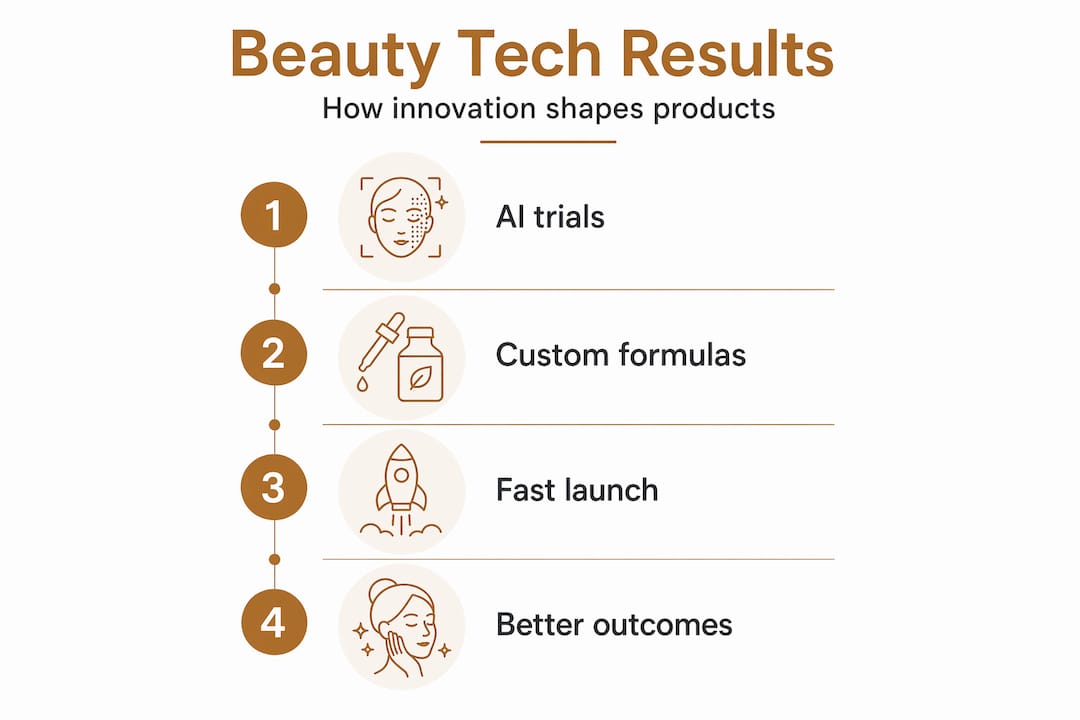
The most telling example is virtual twin technology. Developed in collaboration with cosmetics groups like Groupe Rocher, virtual twins reduce physical formulation experiments by simulating how ingredients interact with and penetrate skin before a single physical test is run. The result is less trial and error, fewer unsafe combinations making it past early stages, and more stable final formulas.
- Ingredient simulation: AI models ingredient interaction and skin absorption digitally, flagging instability or poor penetration early
- Claims validation: Virtual cohorts of thousands of simulated consumers generate efficacy predictions, reducing the need for large physical trials
- Speed to market: Unilever analyses consumer insights 60% faster using AI, compressing concept-to-formulation cycles from months to days
- Consumer alignment: Products are designed around predicted real-world behaviour rather than idealised lab conditions
| Stage | Without AI | With AI |
|---|---|---|
| Formulation trials | 30+ physical tests per formula | Reduced by approximately 20% via simulation |
| Consumer testing | Large physical panels | Virtual cohorts of thousands |
| Concept-to-product | Months | Days in some cases |
| Stability prediction | Post-formulation testing | Pre-formulation modelling |
The practical benefit for you as a consumer is straightforward. Products developed with these tools arrive on the market already having cleared a much higher bar for predicted efficacy and safety. You are not the first test of whether the formula works. The technology has already done a version of that for you.
Integrated beauty tech ecosystems and user outcomes
A single gadget sitting on a bathroom shelf, used sporadically and without any connection to the rest of a routine, is unlikely to deliver much. The reason why beauty industry innovations increasingly focus on ecosystem thinking is that human behaviour is inconsistent and skin is complex. Technology that acknowledges both of those facts consistently outperforms technology that does not.
AI embedded throughout the beauty value chain connects the discovery experience, where you learn about your skin and find suitable products, to the usage phase, where devices and formulas work in tandem, to the results phase, where data confirms what is working and adjusts what is not. This is not a gimmick. It is an architecture designed to keep you using the right tools in the right way.
The risk of generic AI experiences is real. An app that offers the same routine advice to every user with combination skin, without ever recalibrating, is not delivering the benefits of beauty technology. It is just a static recommendation with an AI label attached.
- Dynamic AI systems update recommendations based on your logged results and skin images over time
- Ecosystem platforms let your skin analysis directly influence which products or devices you use next
- Continuous engagement is what differentiates tech that drives lasting results from tech that gets abandoned after two weeks
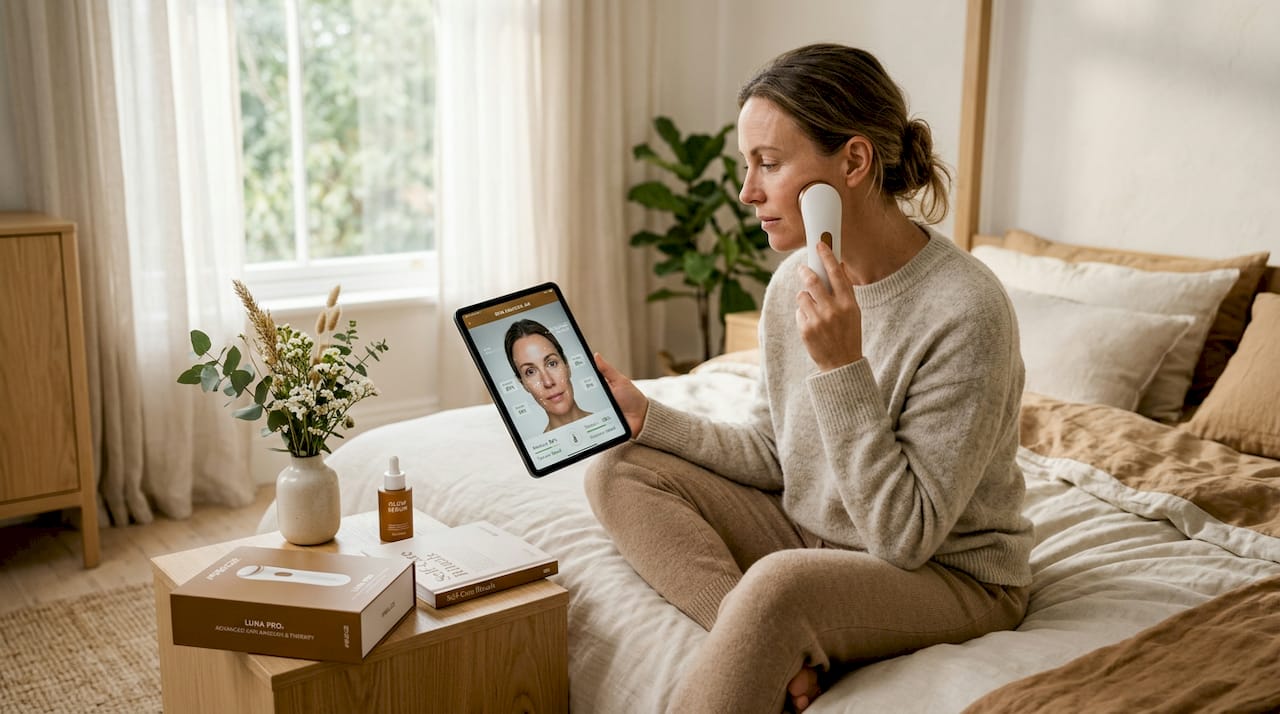
The most effective consumer approach is to treat your skincare devices and products as part of a connected system. Use devices like facial skincare tools that support rather than contradict your AI-recommended routine, and pay attention to whether the technology you invest in is designed to learn with you or simply run on repeat.
My honest take on beauty tech’s real power
I have spent years watching beauty tech get dismissed as expensive toys and watching the same people quietly convert when the results show up. What I have learned is that the gap between tech that delivers and tech that disappoints almost always comes down to two things: scientific grounding and continuity.
The biggest pitfall I see consumers fall into is trusting visual AI skin analysis that reads surface features without understanding what is underneath. AI skin analysis apps that rely purely on visible pattern matching can misread dehydration as oiliness, or flag redness without distinguishing between rosacea and a temporary reaction to an ingredient. The recommendation that follows is only as good as the analysis.
My view is that device specs and validated claims matter far more than how a product looks or what celebrities endorse it. If a brand cannot tell you the wavelength of its LED mask or reference any clinical evidence for its microcurrent waveform, that silence is informative. Non-surgical skin treatments with transparent, validated parameters are far more worth your investment than anything relying on vague claims.
Invest in technology that is honest about what it does, evolves with your skin, and sits within a routine rather than replacing one. That is where the real results are. Beauty tech works. But it works when you choose it properly.
— Adam
Achieve real results with Glowera’s curated devices
Everything discussed in this article, from wavelength-specific LED therapy to microcurrent facial toning, is available through Glowera’s curated selection of validated beauty tech devices. Every device in Glowera’s catalogue is chosen based on scientific credibility, brand reputation, and evidence of real-world efficacy. No filler, no gimmicks.
Whether you are exploring at-home LED therapy for acne and anti-ageing or considering microcurrent facial toning to support skin lifting and firmness, Glowera delivers authentic, premium devices to Saudi Arabia with expert guidance and local support. If you are not sure where to start, Glowera’s K-beauty tech range offers some of the most clinically respected at-home devices available. Your skin deserves technology that actually does what it claims.
FAQ
Why does beauty tech innovation improve skincare results?
Beauty tech innovation improves results by combining continuous AI-driven personalisation with devices that use clinically validated parameters, such as specific LED wavelengths and microcurrent waveforms. Together, these ensure your routine adapts to your actual skin rather than applying a generic approach.
How do I know if an at-home LED device actually works?
Check that the device specifies its wavelength in nanometres and provides guidance on treatment duration or fluence. Devices disclosing these parameters are far more likely to deliver the benefits of light therapy than those relying solely on marketing language.
What is the benefit of AI personalisation in skincare?
AI personalisation moves skincare from a one-time assessment to an ongoing process, adjusting recommendations as your skin responds to seasons, lifestyle, and ageing. This continuity is what turns a routine into a genuinely effective, long-term practice.
Does beauty tech help at-home treatments match professional clinic results?
At-home devices cannot yet match the highest-fluence professional systems used in clinics, but validated consumer devices with correct specifications deliver measurable improvements in texture, acne, and fine wrinkles with consistent use over time.
How does AI improve the products themselves, not just recommendations?
Brands like Unilever and Groupe Rocher use virtual twin technology and AI-generated virtual consumer cohorts to simulate ingredient performance before physical testing, resulting in products that are more thoroughly validated before reaching consumers.