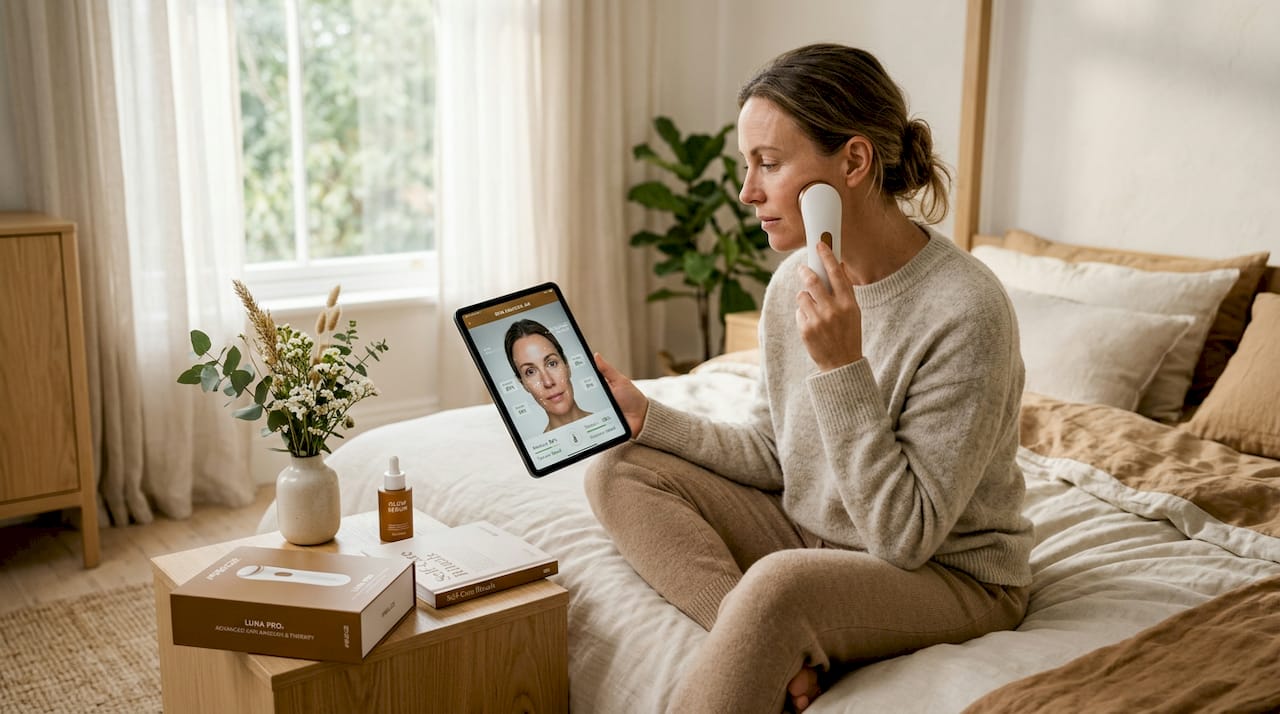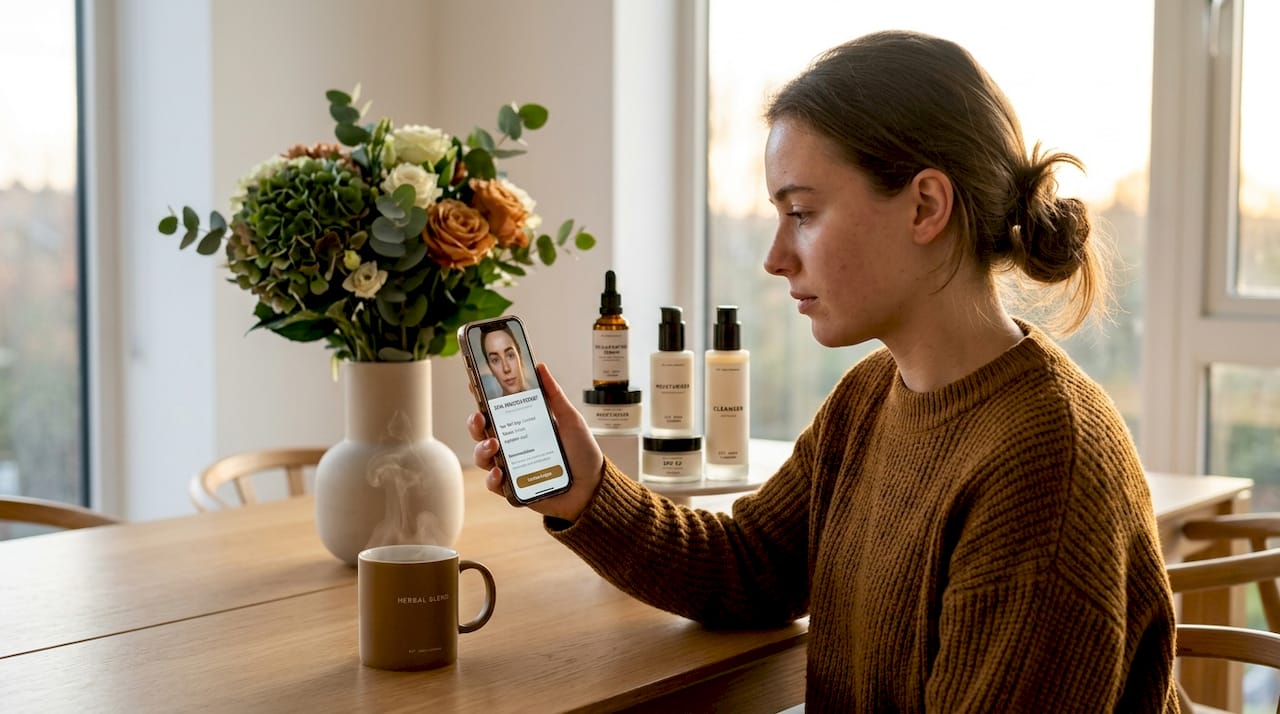
Beauty device apps analyse skin by using AI-powered computer vision to assess selfie images, returning structured skin profiles with real-time personalised recommendations in seconds. This process, known formally as AI skin analysis or automated skin diagnostics, replaces guesswork with measurable data. Rather than asking you to tick boxes about oiliness or sensitivity, these apps detect visible skin concerns directly from your face. The result is a personalised skin profile that updates every time you use the app, turning your phone into a portable skin health tool.
Why beauty device apps analyse skin: the core purpose
The fundamental reason beauty device apps analyse skin is accuracy. A questionnaire asks how your skin feels. An AI model measures what your skin shows. These are very different things, and the gap between them is where most generic skincare routines fail.
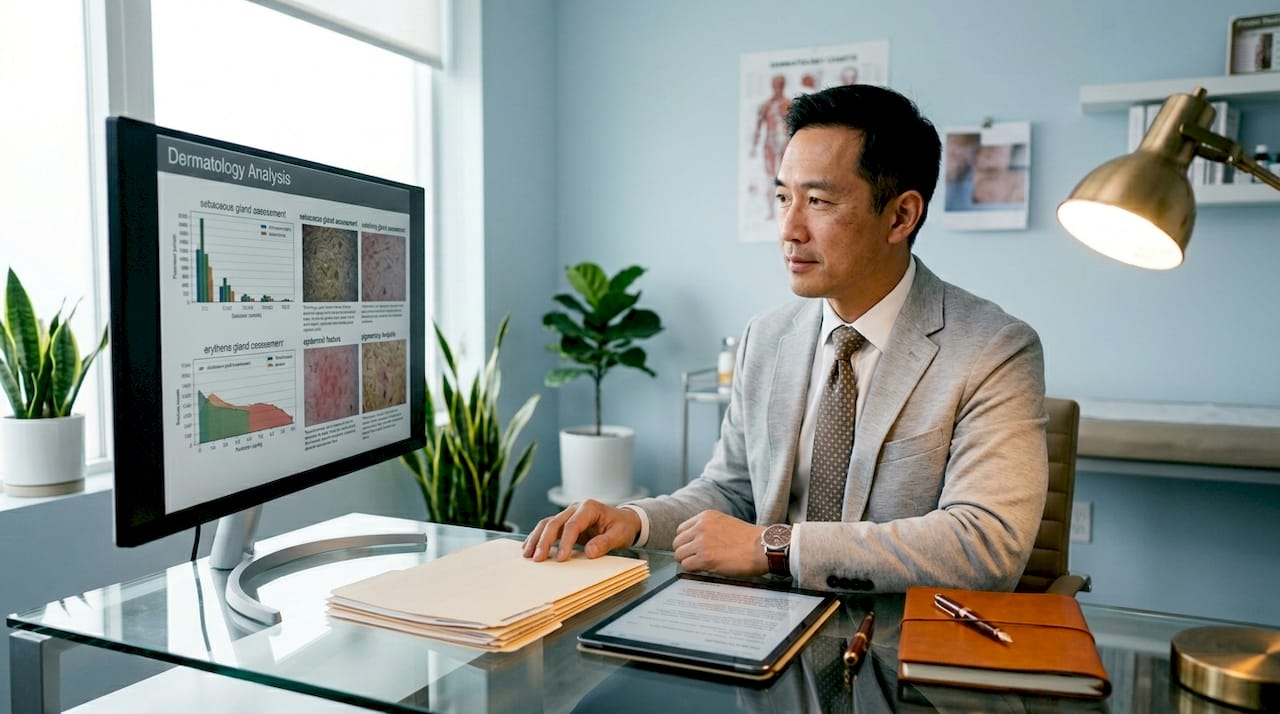
AI-powered skin analysis APIs process a selfie upload and return structured outputs covering skin detection and scoring within seconds. Platforms like YouCam Skin Analysis API and apps such as Dermaday have made this technology accessible to both large beauty brands and independent developers. The output is not a vague skin type label. It is a ranked list of visible concerns, scored by severity, with product or ingredient suggestions attached.
This matters because skin concerns are not static. Hydration levels, pigmentation, and texture all shift with seasons, stress, diet, and age. An app that re-analyses your skin regularly captures those changes, whereas a one-time questionnaire cannot. The ability to track skin health over time is what separates modern skin analysis apps from the beauty quizzes that preceded them.
How do beauty device apps analyse skin?
The process behind skin analysis apps is a multi-stage computer vision pipeline. Each stage builds on the last, and skipping any one of them produces unreliable results.
The pipeline works as follows:
- Face detection: The model locates the face within the image and crops it to a standardised frame.
- Image quality evaluation: Checks for blur, overexposure, shadow, and angle deviation. Poor quality images are flagged before analysis begins.
- Segmentation: The face is divided into zones, such as forehead, cheeks, nose, and chin, so that localised concerns can be scored independently.
- Feature extraction: Algorithms identify visible markers including pore size, pigmentation patches, fine lines, texture irregularities, and redness.
- Severity scoring: Each parameter receives a numerical score, typically on a scale of 1 to 5, indicating concern severity.
A 2026 large-scale study scored 12 facial skin parameters across more than 20,000 Indian adults using the DeepTag algorithm delivered via API, demonstrating that this pipeline scales to population-level research without losing precision. That same architecture powers the consumer apps on your phone today.
One critical detail: these systems measure visible skin surrogates, not direct biological values. Hydration, for example, is inferred from surface texture and reflectance patterns rather than measured directly. This is not a flaw. It is a deliberate design choice that allows non-invasive analysis at scale.
Pro Tip: Position your face under consistent, diffused natural light when using a skin analysis app. Overhead lighting creates shadows that skew pore and texture scores significantly.
Why image-based analysis beats questionnaires
There are four concrete reasons why AI image analysis outperforms traditional questionnaires for skincare personalisation.
-
Objectivity. A camera does not misremember. Users routinely underestimate or overestimate their skin concerns when answering questions. AI scores what is visible, removing subjective bias from the equation.
-
Speed. Results arrive in seconds. Apps like Dermaday analyse six skin metrics and return matched product suggestions within a single session, creating an experience that feels immediate and relevant.
-
Repeat tracking. Questionnaires become stale the moment you complete them. Image-based analysis supports daily or weekly re-scoring, building a longitudinal record of skin health that motivates consistent routines.
-
Engagement. Visual feedback loops, including before-and-after comparisons and progress charts, keep users returning to the app. Consumer AI skin tools that analyse 15 or more skin concerns and deliver ingredient-level explanations report significantly higher repeat usage than questionnaire-based alternatives.
The practical implication is straightforward. When an app tells you that your left cheek scores a 3 out of 5 for pigmentation and your forehead scores a 4 for texture, you have something specific to act on. A questionnaire result that labels you “combination skin” does not.
Pro Tip: Use your skin analysis app at the same time each morning, before applying any products. Consistent timing removes variables like product residue and post-exercise flushing that distort scores.
How do consumer apps compare to clinical skin analysis tools?
The same underlying AI model can serve both a consumer beauty app and a clinical research study. What changes is the output layer and the imaging standards applied.
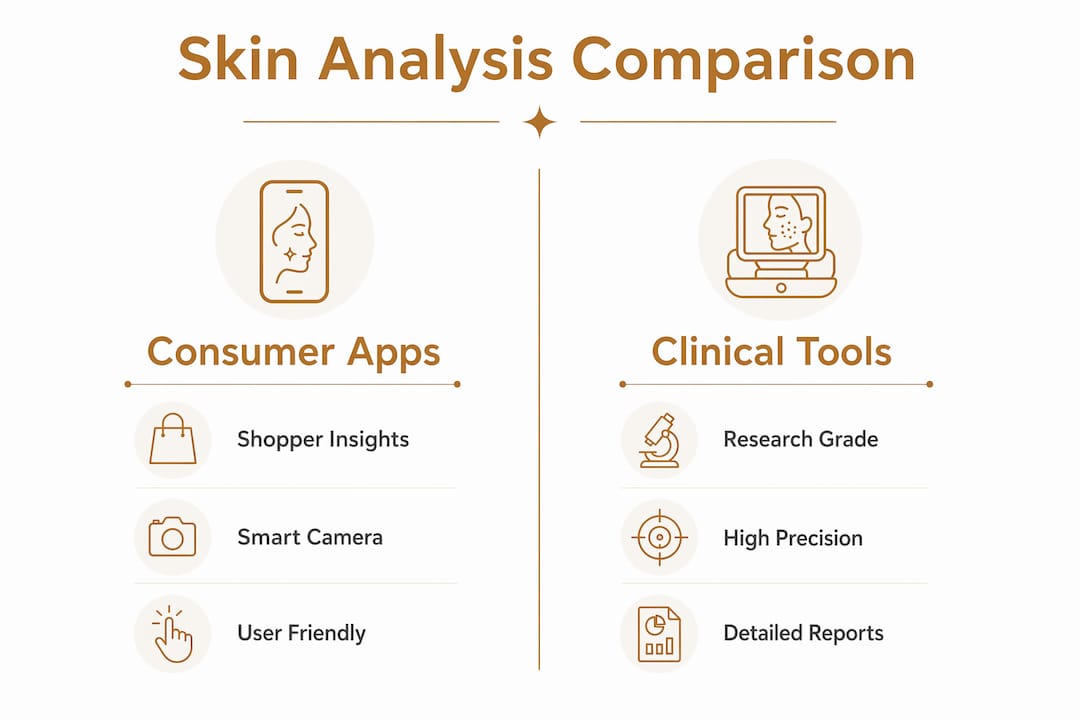
| Feature | Consumer apps | Clinical tools |
|---|---|---|
| Core AI model | Shared architecture | Shared architecture |
| Image capture | Smart camera guidance, variable conditions | Standardised imaging equipment |
| Output format | Simplified grades, product matches | Detailed statistical scores, research data |
| User interface | Designed for engagement and readability | Designed for dermatologist interpretation |
| Primary purpose | Personalised skincare guidance | Research validation and diagnosis support |
Haut.ai’s platform illustrates this clearly. One model, two output layers. Consumer apps receive shopper-friendly insights. Clinical tools receive structured dermatologist-grade data. The distinction is not about accuracy. It is about what the end user needs to do with the information.
Consumer apps compensate for variable image quality through smart camera modules. Technology such as LIQA™ provides real-time capture guidance, instructing users to adjust lighting or angle before the image is processed. This narrows the gap between a selfie taken in a bathroom and an image captured under clinical conditions. It does not close it entirely, but it makes consumer-grade analysis reliable enough for skincare guidance.
What are the accuracy challenges in skin analysis apps?
No technology is without limitations, and skin analysis apps carry several that users should understand before treating results as definitive.
- Image variability. Lighting, angle, facial expression, and camera sensor quality all affect output consistency. A score taken in dim evening light will differ from one taken in morning daylight, even if your skin has not changed.
- Skin tone bias. Bias audits reveal that AI skin analysis tools perform unevenly across the Fitzpatrick scale, with sensitivity dropping to 0% on the darkest skin types without active mitigation. Synthetic data augmentation reduces these bias gaps by up to 68%, but not all apps have implemented this.
- Surrogate measurement limits. Because apps measure visible proxies rather than direct biological values, they cannot detect sub-surface conditions or diagnose skin diseases.
- Longitudinal noise. Small changes in lighting or pose between sessions can create false impressions of skin improvement or deterioration. Apps address this through zone-by-zone comparisons over time, but users should interpret short-term score fluctuations with caution.
AI skin analysis provides skincare guidance based on visible skin markers. It is not a substitute for dermatological diagnosis, and results should be interpreted as a starting point for routine decisions rather than a clinical assessment.
The bias issue deserves particular attention. If you have a deeper skin tone and your app consistently underscores or misclassifies your concerns, the personalisation it offers is compromised. Checking whether a platform has published fairness or bias audit data is a reasonable step before committing to any skin analysis tool.
How do apps use skin analysis data to personalise your routine?
Collecting skin data is only the first step. The value of skin analysis apps lies in what they do with that data afterwards.
-
Ingredient-level recommendations. Apps combine your skin scores with stated preferences, such as fragrance-free or vegan formulations, to suggest specific ingredients. A high pigmentation score might trigger recommendations for niacinamide or vitamin C. A high texture score might surface retinol or AHA-based products.
-
Routine building. Rather than recommending individual products, platforms like those reviewed in best AI skin tools 2026 sequence recommendations into morning and evening routines, accounting for ingredient interactions and layering order.
-
Progress tracking. Daily or session-based scores update a visual timeline. Users see their skin health trend over weeks and months, which reinforces consistent behaviour far more effectively than a static product recommendation.
-
Brand and retail integration. Skin analysis data feeds directly into purchase pathways. When an app identifies a concern and recommends a product category, it can surface specific items from a connected retailer’s catalogue, creating a direct line from diagnosis to purchase.
The biosensors and APIs embedded in modern beauty devices extend this further. When a device captures skin data during treatment, that data feeds back into the app’s scoring model, creating a feedback loop between what you apply to your skin and how your skin responds over time.
Key takeaways
Beauty device apps analyse skin because AI image analysis produces objective, repeatable skin profiles that questionnaires cannot match, enabling personalised routines and measurable progress tracking.
| Point | Details |
|---|---|
| AI replaces guesswork | Computer vision scores visible skin concerns objectively, removing the subjectivity of self-reported questionnaires. |
| Multi-stage pipeline | Face detection, quality checks, segmentation, and severity scoring all run before a result is returned. |
| Consumer vs. clinical outputs | The same AI model powers both, but consumer apps prioritise readable grades while clinical tools deliver research-grade data. |
| Bias is a real limitation | Sensitivity drops significantly on darker skin tones without active mitigation; check whether your app has addressed this. |
| Personalisation is the payoff | Skin scores feed ingredient recommendations, routine sequencing, and progress timelines that improve with each session. |
Why I think skin analysis apps are more significant than most people realise
Most people treat skin analysis apps as a novelty feature. They try it once, see a score, and move on. That is a significant underuse of what the technology actually offers.
What strikes me most about this space is the shift from episodic to continuous skincare. For most of skincare history, you visited a counter, got a consultation, bought products, and used them for months without any feedback on whether they were working. Skin analysis apps break that cycle. They introduce a feedback mechanism that was previously only available in clinical settings.
The democratisation of clinical-grade AI analysis is not a marketing phrase. It describes a genuine structural change in how consumers relate to their skin. When you can score your skin every morning and see a trend line over three months, you stop guessing and start responding. That is a meaningful behavioural shift.
The bias issue is the part of this story that does not get enough attention. Tools that perform poorly on darker skin tones are not just technically flawed. They are actively less useful for a significant portion of their users. The DermEquity findings on prediction flip rates should be a standard reference point for anyone evaluating a skin analysis platform, not a footnote in an academic paper.
My honest view is that the best use of these tools is as a complement to professional advice, not a replacement for it. Use the app to track trends and identify concerns. Use a dermatologist or aesthetician to interpret anything that looks persistent or unusual. The beauty tech innovation driving this category is genuinely impressive, but it works best when you treat it as a highly capable assistant rather than the final word.
— Adam
Explore skin analysis devices at Glowera
Glowera curates premium beauty technology devices for the Saudi Arabian market, including tools that pair directly with skin analysis apps to personalise your routine. The K-Beauty tech collection features devices from Medicube, including the Medicube Booster Pro Heart Edition, which combines skin analysis features with advanced treatment delivery. Glowera also stocks FOREO devices and LED therapy options that complement data-driven skincare routines. Every product ships within Saudi Arabia with expert support, so you can move from skin analysis insight to targeted treatment without compromise.
FAQ
What does a skin analysis app actually measure?
Skin analysis apps measure visible skin parameters including pore size, pigmentation, texture, fine lines, and redness from selfie images. Results are scored on a severity scale and used to generate personalised product and ingredient recommendations.
Are skin analysis apps as accurate as a dermatologist?
No. Consumer skin analysis apps provide skincare guidance based on visible markers, not clinical diagnosis. They share underlying AI architecture with clinical tools but use simplified outputs designed for engagement rather than medical precision.
Why do skin scores change between sessions?
Score variation between sessions is often caused by differences in lighting, angle, or facial expression rather than actual skin change. Using consistent conditions, the same time of day and the same light source, reduces this noise significantly.
Can skin analysis apps work on all skin tones?
Not equally. Bias audits show that many AI skin analysis models perform less accurately on darker skin tones, with sensitivity dropping sharply without active mitigation measures. Look for platforms that publish fairness data or have implemented diverse training datasets.
How often should I use a skin analysis app?
Daily use builds the most useful longitudinal data, but weekly sessions under consistent conditions are sufficient for tracking meaningful trends. Apps like Dermaday are designed for daily scoring, while others work well as weekly check-ins aligned with your skincare routine.