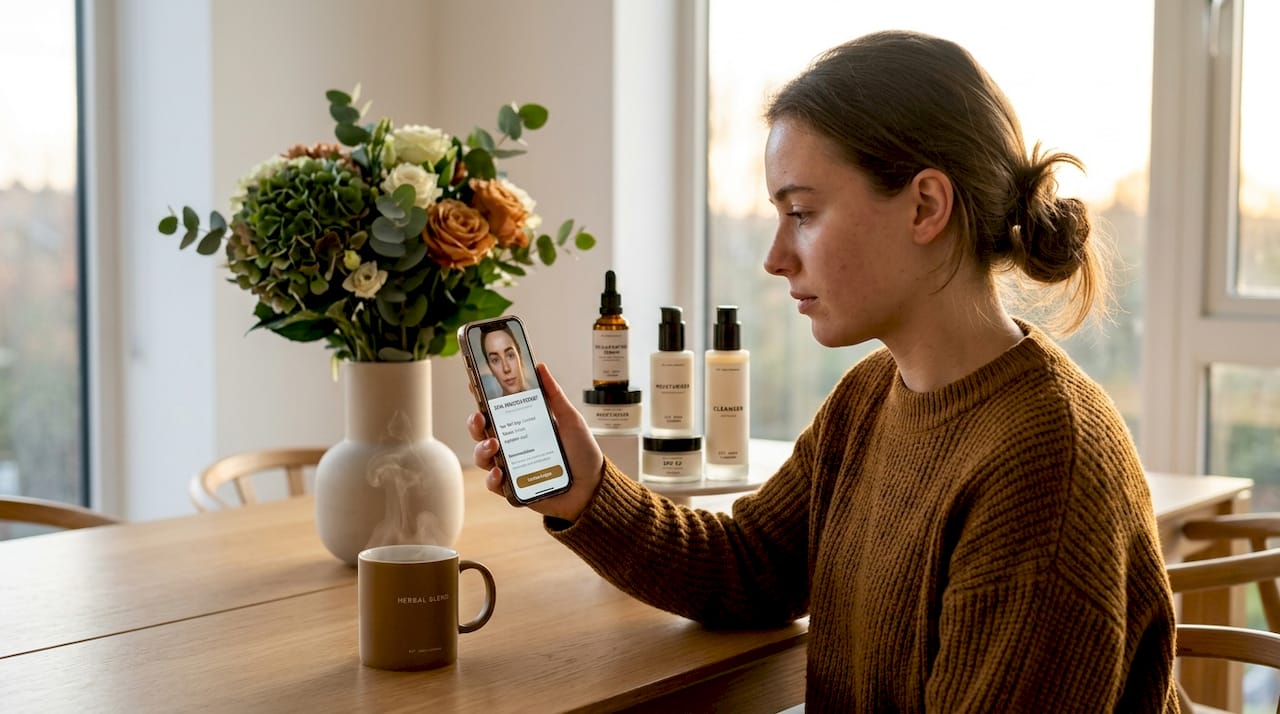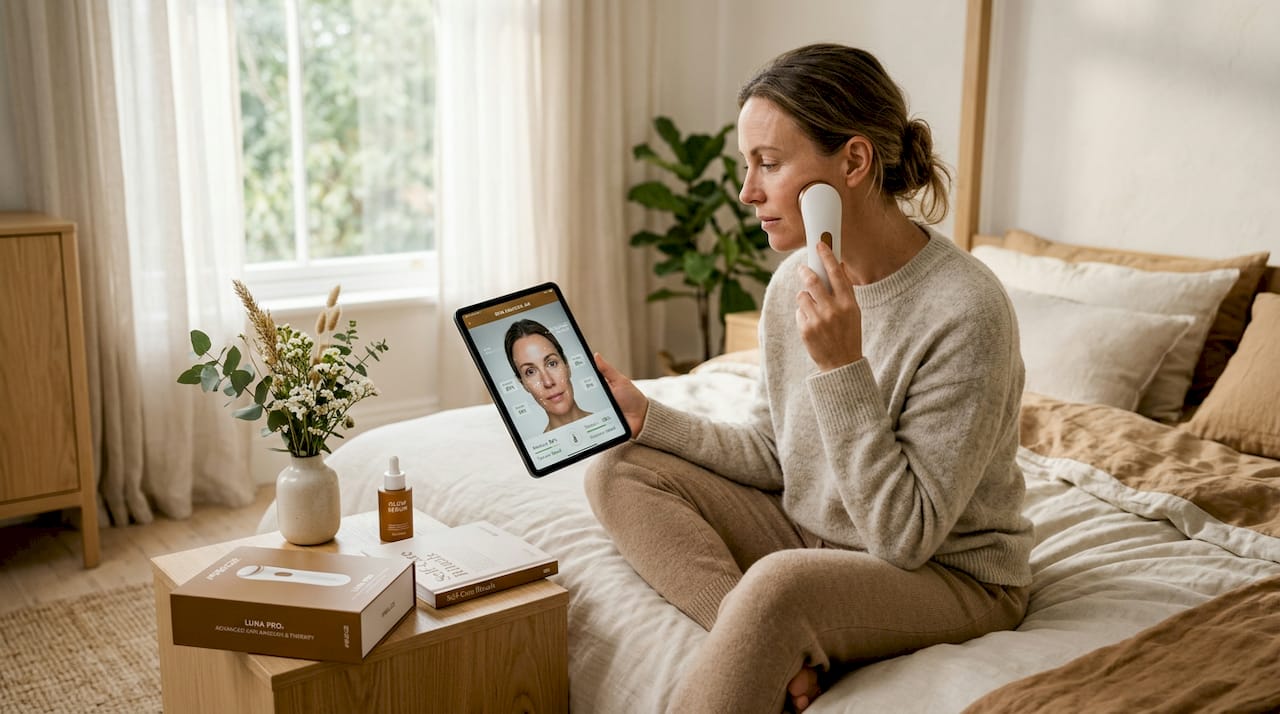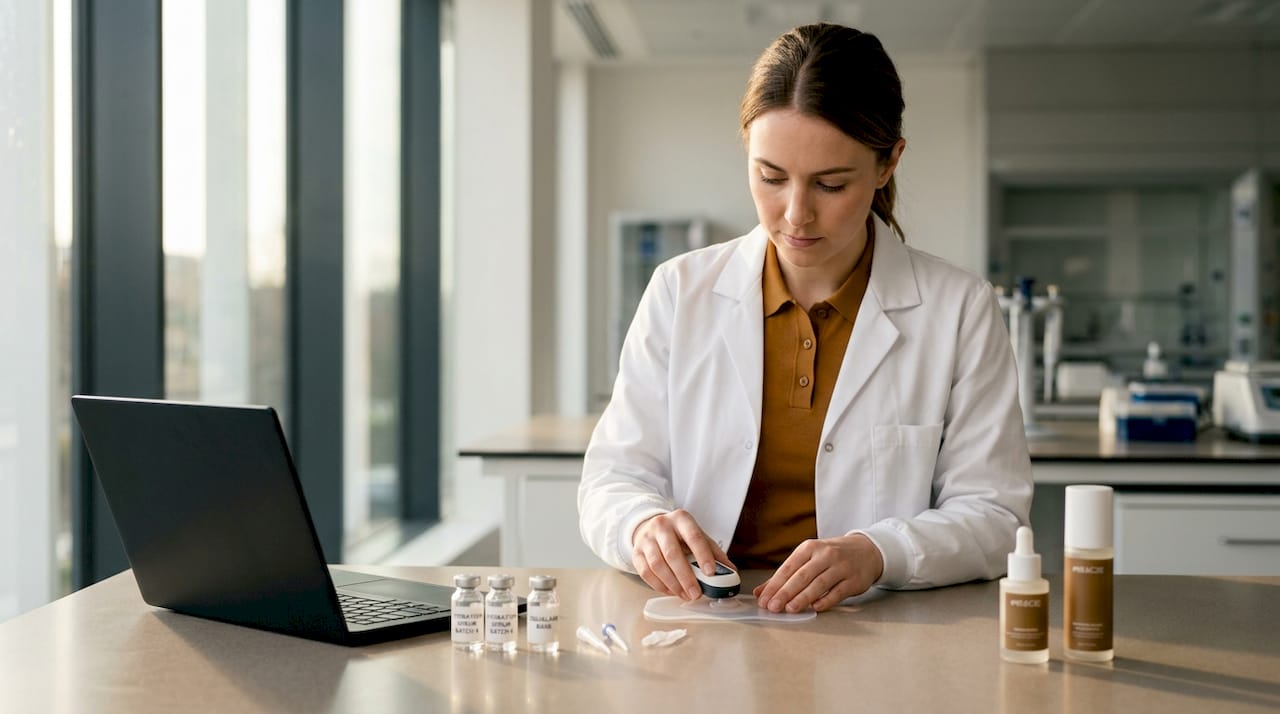
Most skincare devices marketed as “personalised” rely on little more than a camera and a colour filter. That gap between marketing and genuine scientific measurement is exactly where the role of biosensors in skincare devices becomes impossible to ignore. Biosensors convert real physiological signals from your skin into data that actually reflects what is happening beneath the surface. This article covers how they work, why they outperform visual analysis, the engineering behind wearable designs, and what the technology means for your skincare results in practice.
Table of Contents
- Key takeaways
- Role of biosensors in skincare devices: the foundations
- Why biosensors outperform traditional assessment
- Engineering challenges in wearable biosensors
- Benefits of biosensors for personalised skincare
- Future directions in biosensor skincare tech
- My perspective on what most consumers miss
- Explore Glowera’s advanced skincare devices
- FAQ
Key takeaways
| Point | Details |
|---|---|
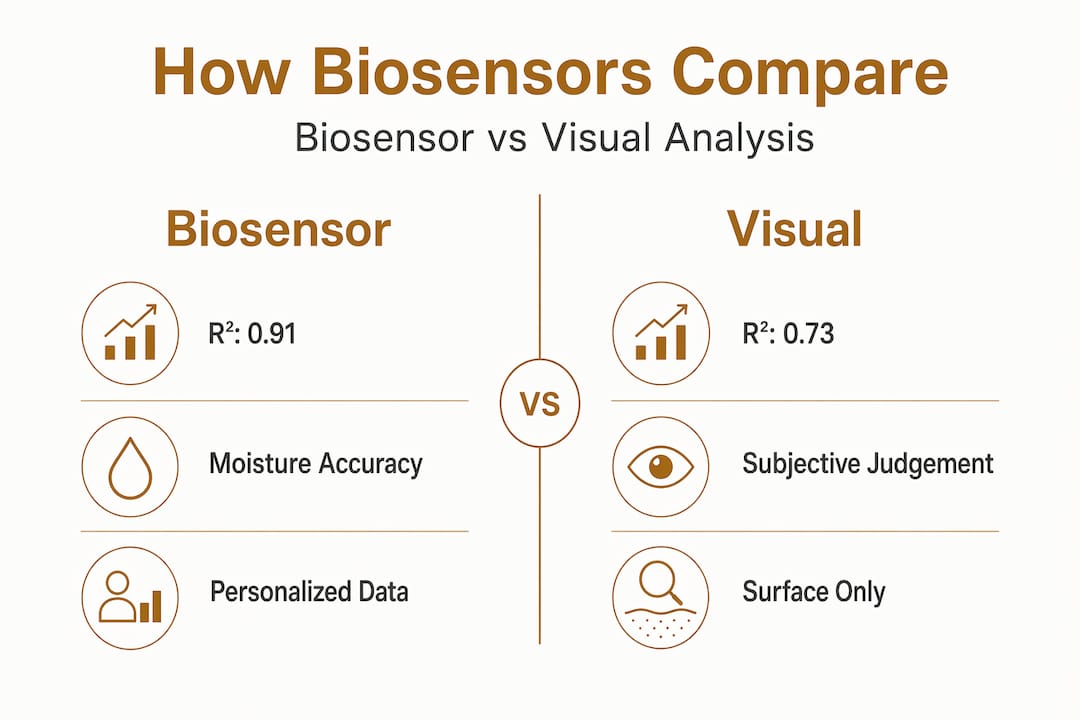
| Biosensors beat visual analysis | Impedance-based predictions achieve R² of 0.91 versus 0.73 for image-based methods. |
| Calibration is non-negotiable | Raw sensor data is unreliable without accounting for individual skin variables like surface pH. |
| Electrode design defines wearability | Breathable nanomesh electrodes maintain stable signals for at least four hours during sweat and movement. |
| Multi-modal sensing raises accuracy | Combining biosensors with imaging produces more reliable skin type classification and moisture prediction. |
| Personalisation goes beyond data volume | Fewer, well-calibrated biomarker readings outperform large volumes of uncalibrated data for skincare decisions. |
Role of biosensors in skincare devices: the foundations
A biosensor is a device that detects a biological or chemical signal at the skin surface and translates it into readable data, typically an electrical output. In the context of skincare, this means measuring real properties of your skin rather than inferring them from a photograph or a questionnaire.
Several sensor types are in active use across smart skincare devices today:
- Impedance-based sensors pass a small electrical current through skin layers and measure resistance. Changes in resistance reflect moisture content, barrier integrity, and tissue composition.
- Electrochemical sensors detect specific molecules, including metabolites in sweat or interstitial fluid, making them useful for tracking biomarkers beyond simple hydration.
- Capacitance sensors measure the dielectric properties of the stratum corneum, which shift predictably with water content. They are common in handheld skin moisture meters.
- pH sensors monitor the acid mantle, the protective surface layer of skin that sits at roughly pH 4.5 to 5.5 and directly influences barrier function.
- Temperature and optical sensors round out multi-modal devices, often working alongside the above types to provide contextual data.
The parameters these sensors capture include skin moisture at multiple depths, sebum levels, transepidermal water loss (a proxy for barrier state), local metabolite concentrations, and surface pH. Each reading is converted into an electrical signal, processed by onboard microelectronics, and delivered to a companion app or onboard display. Wearable biosensors can continuously sense a wide range of biomarkers non-invasively through sweat and interstitial fluids, which is what makes them genuinely transformative for at-home skincare.
Understanding biosensor applications in beauty starts with recognising that each sensor type has a specific domain. Capacitance is excellent for surface hydration. Impedance captures deeper skin layer information. Electrochemical sensing is where next-generation metabolite tracking lives.
Why biosensors outperform traditional assessment
The comparison between biosensor readings and visual or image-based assessment is not even close in scientific terms. A 2026 multimodal study found that impedance-based predictions reached R² values of up to 0.91 for skin moisture, while image-based models achieved only 0.73. That gap translates directly to less accurate product recommendations and missed treatment opportunities.
| Method | R² accuracy (moisture) | Strengths | Limitations |
|---|---|---|---|
| Impedance biosensor | 0.91 | Measures electrical skin properties directly | Requires stable skin contact |
| Image-based analysis | 0.73 | Non-contact, easy to deploy | Affected by lighting, skin tone, camera quality |
| Capacitance sensor | High for surface layer | Low-cost, fast | Contact force variability affects readings |
| Multi-modal (combined) | Highest overall | Captures multiple dimensions simultaneously | More complex calibration required |
One of the least-discussed challenges in biosensor accuracy is biological noise. Skin surface pH, for instance, varies person to person and even hour to hour on the same individual. A 2025 Nature Communications study demonstrated that pH calibration for glucose sensing reduced the mean absolute relative difference from 34.44% to 14.78%, a finding with direct implications for any biosensor extracting data from skin fluids.
The lesson is that raw data without calibration is not personalised at all. It is generic data labelled with your name.
Stable physical contact between the sensor and the skin is equally important. Capacitance meters with load-stabilising mechanisms reduce measurement variability, achieving coefficient of variation under 2% for both sorption and desorption readings. Without that mechanical stability, the numbers shift based on how firmly you press the device rather than what your skin is actually doing.
Pro Tip: When testing a skin moisture device, hold it with consistent, light pressure in the same location for at least three consecutive readings. Compare the spread between readings rather than a single number to judge device reliability before trusting product recommendations.
Multi-modal approaches that combine biosensing with imaging produce the most clinically useful picture. The imaging component provides visual context (texture, colour, tone) while the biosensor delivers the physiological ground truth.
Engineering challenges in wearable biosensors
Getting accurate biosensor readings in a lab is manageable. Getting them on real skin during a full day of activity is a genuinely hard engineering problem.
Sweat is the primary disruptor. It alters the ionic environment at the skin surface, changes electrode impedance, and physically degrades traditional electrode materials over time. To address this, researchers have developed breathable water-resistant nanomesh electrodes using optimised PVA/WBPU polymer composites. These nanomesh electrodes maintain stable signals for at least four hours in high-sweat, high-motion conditions, which is the minimum benchmark for meaningful continuous monitoring.
Key engineering priorities for reliable wearable biosensors include:
- Mechanical compliance: Sensors must flex with the skin rather than resist it. Rigid electrodes create micro-gaps that corrupt impedance readings during movement.
- Breathability: Non-breathable electrode films trap moisture and heat, altering the local skin environment the sensor is trying to measure.
- Low-impedance skin contact: Tissue-like hydrogel interfaces with high mass-permeability and ultrasoft structure significantly reduce contact impedance, improving both accuracy and wearer comfort.
- Power delivery: Wired charging limits wear duration. Wireless power transfer via flexible antenna designs enables battery-free or long-duration continuous operation without interrupting skin monitoring.
- Miniaturisation: Consumer devices must integrate sensor arrays, microprocessors, and wireless communication into something no larger than a plaster.
Pro Tip: If you use a wearable skin monitoring device, apply a small amount of hydrogel or water-based gel between the sensor and your skin. This mimics the low-impedance interface that clinical-grade devices use internally, and it noticeably improves reading stability during extended wear.
The convergence of flexible electronics and materials science is what makes these devices genuinely useful rather than merely conceptually interesting. Devices that felt like science fiction five years ago are now appearing in consumer-grade facial skincare devices targeting everyday skincare enthusiasts.

Benefits of biosensors for personalised skincare
The practical benefits of biosensors for skin are most visible when you look at how they change skincare decisions rather than just skin readings.
- Real-time moisture tracking allows you to see how your skin responds to a specific moisturiser within hours of application, rather than waiting weeks for a visual change. This immediate feedback loop lets you iterate product choices based on actual physiological response.
- Calibrated individual baselines mean that your skin’s “normal” serves as the reference point, not a population average. Because individual variation in skin pH, sebum production, and barrier function is significant, individual skin calibration has been shown to substantially reduce prediction error in biomarker sensing.
- Barrier state monitoring gives early warning of compromised barrier function before visible redness or irritation appears, allowing preventive product adjustments rather than reactive treatment.
- Personalised regimen building becomes grounded in data. Devices that track moisture, pH, and sebum over time build a pattern that shows when your skin needs more occlusion, more exfoliation, or a simplified routine.
- Treatment efficacy validation closes the feedback loop. Rather than assuming a device or product is working because your skin looks better, biosensor data confirms whether barrier metrics are improving and at what rate.
The integration of biosensor output with mobile platforms adds another dimension. Cloud-connected devices can flag anomalies, compare your readings against longitudinal trends, and in some cases, route data to dermatology services for professional review. This is where advanced skincare technology shifts from a consumer gadget to a genuine healthcare-adjacent tool.
Future directions in biosensor skincare tech
The next generation of biosensor-enabled skincare devices will look quite different from what is available today. Several developments are converging:
- AI-driven multi-modal sensing will combine impedance data, imaging, and environmental sensors to generate contextual skin diagnoses that account for humidity, UV exposure, and lifestyle factors simultaneously.
- Expanded biomarker detection will move beyond moisture and pH to include inflammatory cytokines, cortisol (a stress marker), and early signs of oxidative damage, all accessible through sweat or interstitial fluid.
- Continuous wear miniaturisation will produce sensor patches no thicker than a plaster, worn for days rather than minutes, building longitudinal skin health profiles with clinical-grade resolution.
- Data privacy standards will become a major consumer concern as biosensor data, which is health data by any reasonable definition, flows into manufacturer platforms and third-party analytics.
- Clinical validation will separate credible devices from cosmetic-grade gadgets. Consumers should specifically look for published studies, not marketing claims, when evaluating biosensors in cosmetic technology.
The trajectory is towards devices that feel less like beauty tools and more like continuous health monitors with skincare applications.
My perspective on what most consumers miss
I’ve spent years examining what separates genuinely useful skincare technology from devices that look impressive and deliver nothing clinically meaningful. The honest answer is calibration. Not sensor quality, not app design, not brand reputation. Calibration.
What I’ve seen consistently is that consumers focus on the number a device displays and treat it as objective truth. But raw biosensor output is not personalised data. It becomes personalised only after the device accounts for your specific skin pH, your measurement conditions, and your individual baseline. The studies support this directly: proper pH calibration can cut biomarker prediction error by more than half.
I’ve also noticed that the engineering side of biosensors, the electrode materials, the contact mechanics, the power systems, gets almost no attention in consumer coverage. Yet these factors determine whether a device that promises continuous monitoring actually delivers stable readings or just a stream of noise. A sensor that loses signal integrity after an hour of light activity is not a wearable skincare device. It’s a very expensive spot checker.
My honest advice: before investing in any biosensor-enabled skincare device, find the actual measurement study behind it. Not the brand’s claim that it uses “advanced sensing.” The published R² value, the validation methodology, the calibration approach. If that information does not exist publicly, the scientific rigour probably does not exist either.
The technology is real. The potential is substantial. But not every device wearing a biosensor label has earned it.
— Adam
Explore Glowera’s advanced skincare devices
If the science behind biosensors has made you more selective about which devices you invest in, that is exactly the right response. Glowera curates advanced skincare devices from brands that take the technology seriously, with a focus on sensor-integrated tools that deliver measurable results rather than guesswork.
The K-Beauty tech range at Glowera includes Medicube devices built around RF and microcurrent technologies with sensor-driven personalisation, including the Medicube Booster Pro, which integrates skin-responsive technology for adaptive treatment delivery. The FOREO collection and LED therapy devices round out a selection that covers the full spectrum of at-home advanced skincare. Every product Glowera stocks is authentic, shipped within Saudi Arabia, and backed by expert guidance to help you match the right device to your actual skin needs.
FAQ
What does a biosensor measure in a skincare device?
Biosensors in skincare devices measure physiological skin properties including moisture content, surface pH, sebum levels, and barrier function by converting electrical, chemical, or capacitance signals from the skin into readable data.
Are biosensors more accurate than camera-based skin analysis?
Yes. Impedance-based biosensors achieve R² accuracy values of up to 0.91 for skin moisture prediction, compared to 0.73 for image-based methods, making them significantly more reliable for personalised skincare assessment.
Why does calibration matter for skin biosensors?
Skin variables like surface pH affect biosensor readings significantly. pH-adjusted calibration has been shown to reduce biomarker measurement error from over 34% down to under 15%, making individual calibration a scientific necessity rather than a bonus feature.
Can biosensors be worn on skin all day?
Advanced biosensor designs using breathable nanomesh electrodes can maintain stable signals for at least four hours under sweat and movement conditions, with wireless power transfer enabling extended continuous operation.
How do biosensors support personalised skincare?
Biosensors build individual baseline measurements of your skin’s actual physiological state, allowing devices to deliver recommendations calibrated to your specific moisture levels, barrier condition, and biomarker patterns rather than population averages.