At-home facial devices promise to bring clinic-quality results to your bathroom shelf, but the reality is considerably more nuanced. Understanding what is an at-home facial device, how it actually works on your skin, and what it genuinely cannot do is the difference between a smart investment and an expensive disappointment. Saudi consumers are increasingly turning to premium international brands for skin rejuvenation and anti-aging technology, and the market is filled with both scientifically sound tools and overhyped gadgets. This guide cuts through the noise to cover the core technologies, what the evidence actually supports, and how to choose wisely.
Table of Contents
- Understanding at-home facial devices and their technologies
- Scientific evidence and realistic expectations for at-home facial devices
- Types of at-home facial devices: features and benefits
- Safety, usage tips, and selecting the right device for your skincare goals
- Rethinking at-home facial device promises: an expert’s honest take
- Explore premium at-home facial devices for Saudi skincare lovers
- Frequently asked questions
Key Takeaways
| Point | Details |
|---|---|
| Technology types | At-home facial devices mainly use LED light or microcurrent technologies to promote skin rejuvenation. |
| Scientific support | Clinical studies support subtle improvements but marketing often exaggerates instant results. |
| Safety and usage | Choose FDA-cleared devices and follow safety guidelines to avoid side effects and ensure effectiveness. |
| Routine consistency | Regular, repeated use is essential for noticeable skin benefits over time with any device. |
| Choose for your goals | Select devices that match your skin concerns and lifestyle to maximise adherence and results. |
Understanding at-home facial devices and their technologies
At-home facial devices are personal skincare tools that use specific forms of energy, such as light, electricity, or sound, to treat the skin without needles, chemicals, or clinic visits. The two technologies you will encounter most often are LED photobiomodulation and microcurrent therapy, and they work in fundamentally different ways.

LED devices, particularly those using red light and near-infrared wavelengths, work through a process called photobiomodulation (PBM). Light at specific wavelengths penetrates the skin and is absorbed by mitochondria in skin cells, stimulating energy production, collagen synthesis, and a reduction in inflammation. Red-light LED devices stimulate collagen production and reduce inflammation with minimal side effects, making them one of the most accessible technologies for anti-aging at home.
Microcurrent devices work differently. Rather than light, they deliver low-level electrical currents to the muscles beneath the skin and to skin cells directly. Microcurrent devices deliver these currents to tone muscles and boost cellular energy, which is why they are often described as a “non-surgical facelift.” The lift is real, though subtle and temporary without regular maintenance. You can explore the science further in this overview of microcurrent skincare benefits.
Key differences worth knowing before you buy:
- LED and near-infrared devices target collagen production, skin texture, redness, acne-causing bacteria, and hyperpigmentation.
- Microcurrent devices target facial muscle tone, jawline definition, under-eye lifting, and overall skin firmness.
- Safety profile for both is generally excellent when used as directed. FDA-cleared devices have been evaluated for safety and basic efficacy claims. A good comparison of beauty device technologies will help you identify which approach suits your skin concern.
- Side effects are minimal for most users, but photosensitive individuals and those on certain medications should always check with a clinician first. Look for guidance on FDA-cleared beauty devices to understand which products meet this standard.
Scientific evidence and realistic expectations for at-home facial devices
Understanding the technology is only half the picture. The other half is knowing what the research actually supports, because the gap between clinical evidence and marketing language is wide.
Red light therapy has genuine and growing clinical backing for skin concerns including fine lines, wound healing, and mild acne. Results, however, are subtle and cumulative. You are not going to see the same outcome as a professional in-clinic laser treatment. Commercial messaging often overstates the speed, magnitude, and consistency of red light therapy results for cosmetic uses. This is worth remembering every time a brand promises “visible results in 10 days.”
Device quality is not cosmetic packaging. Consumer LED devices often deliver lower irradiance than clinical equipment, and limited independent validation means the gap between a premium brand and a budget device can be significant. What you pay for in a reputable brand is measurable energy output, clinical testing, and consistent performance over time.
For microcurrent, effectiveness depends almost entirely on consistency. A single session gives a temporary lift that fades within hours to a couple of days. Regular use over weeks builds cumulative muscle tone and cellular benefits that become more noticeable over time. The best LED mask selection strategies and microcurrent device features to look for both come back to the same core principle: transparency about specifications.
The honest position is this. At-home devices are real skincare tools, not replacements for professional treatments or a healthy skincare routine. They can contribute meaningfully to your anti-aging goals if you choose well, use them consistently, and set appropriate expectations from the start.
Types of at-home facial devices: features and benefits
With technology and science covered, here is a practical breakdown of the main device categories available and what each one genuinely offers.
LED masks and panels
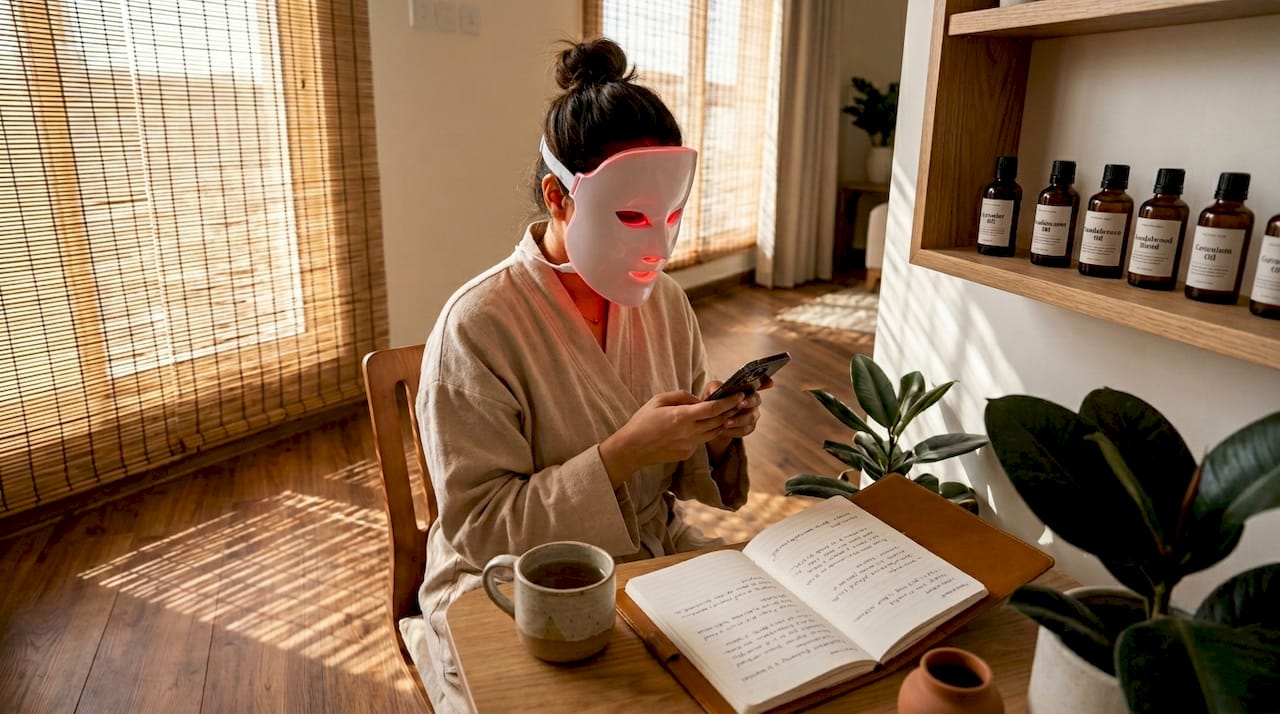
These fit over the face and deliver red, near-infrared, or blue light across the entire skin surface simultaneously. They are the most hands-free option available and suit people who want a passive, routine-friendly treatment. Benefits include collagen stimulation, reduced redness, and, with blue light, targeted acne support. You can browse LED light therapy devices to compare wavelengths and coverage areas.
Microcurrent wands and probes
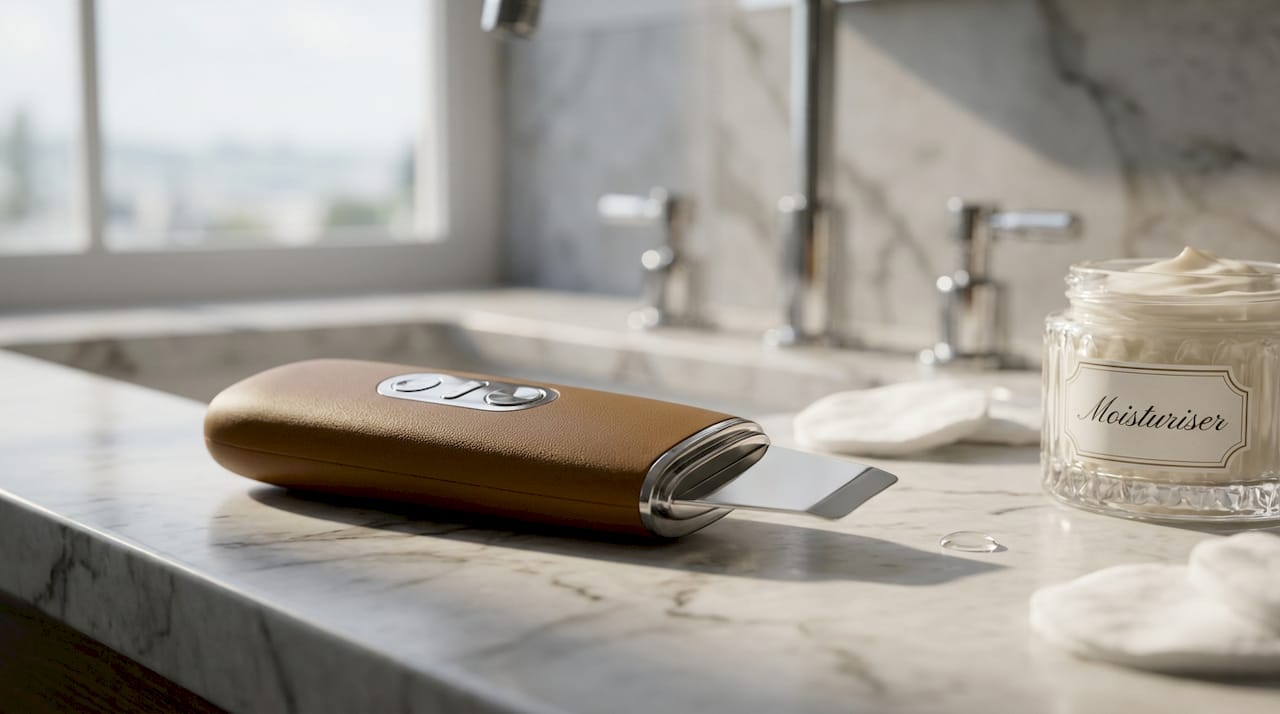
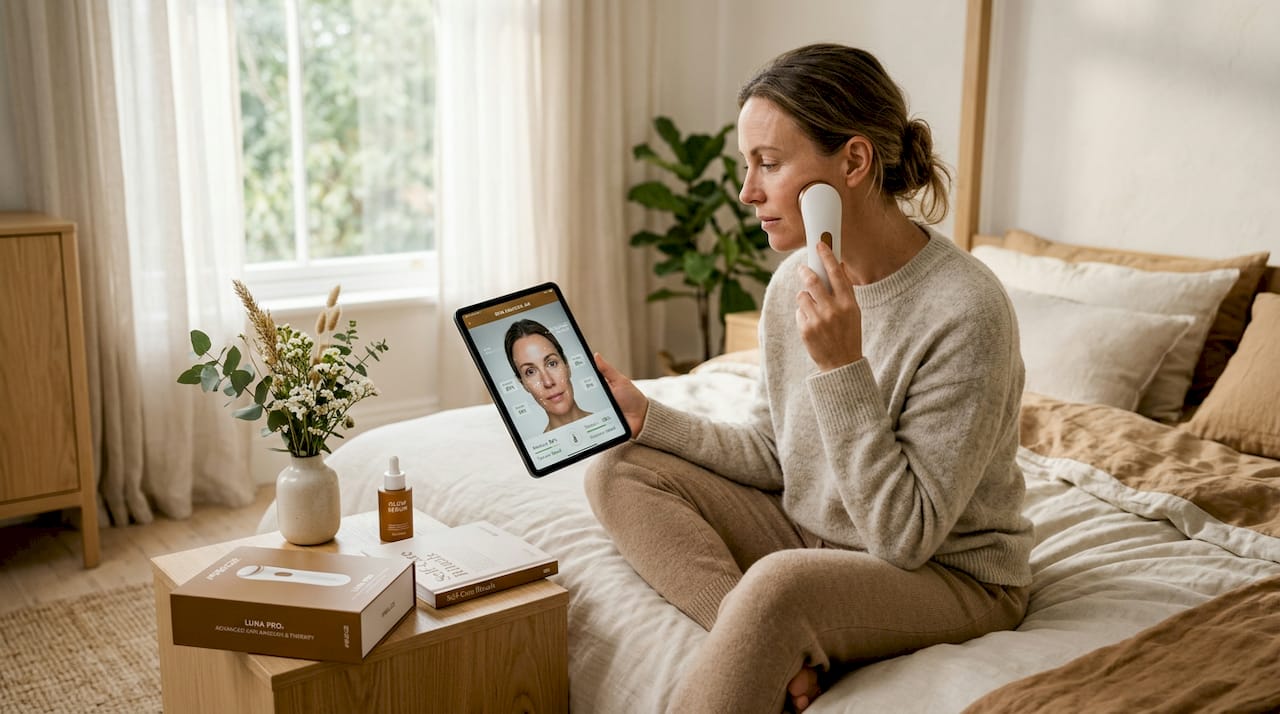
These handheld devices require manual movement across the face, which some users find meditative, others find time-consuming. The manual application allows targeted lifting along the jawline, cheeks, and brow. Results are most visible on facial contour and firmness. The Medicube Booster Pro Heart Edition is one example of a premium device that combines ease of use with clinically developed microcurrent technology.
Multi-modality hybrid devices
These combine two or more technologies, typically microcurrent with EMS (electrical muscle stimulation) and LED, in a single device. Multi-modality devices combine microcurrent, EMS, and LED to target wrinkles, elasticity, and skin tone simultaneously. They offer breadth of treatment but are generally more expensive. You can explore the full range of microcurrent devices available for home use.
| Device type | Primary benefit | Best for | Typical session time |
|---|---|---|---|
| LED mask (red/NIR) | Collagen stimulation, texture | Anti-ageing, redness | 10 to 20 minutes |
| LED mask (blue) | Antibacterial, acne reduction | Acne-prone skin | 10 minutes |
| Microcurrent wand | Muscle toning, lifting | Contouring, firmness | 5 to 15 minutes |
| Multi-modality device | Wrinkles, elasticity, tone | Comprehensive anti-ageing | 10 to 20 minutes |
Key benefits of consistent at-home device use include:
- Improved skin firmness and muscle definition with microcurrent
- Reduction in fine lines and improved texture with red light
- Brighter, more even skin tone with combined protocols
- Reduced acne severity and post-acne redness with blue or red light
- Noticeable hyperpigmentation improvement with regular near-infrared use
Pro Tip: Invest in a device that fits your actual lifestyle, not your aspirational one. A ten-minute LED mask you will wear three times a week delivers far better results than a technically superior device that sits unused because it requires a twenty-five-minute ritual every day.
Safety, usage tips, and selecting the right device for your skincare goals
Knowing how to use a facial device correctly is as important as choosing the right one. Misuse does not just reduce results; in some cases, it can cause irritation or harm.
Follow these steps for safe, effective use:
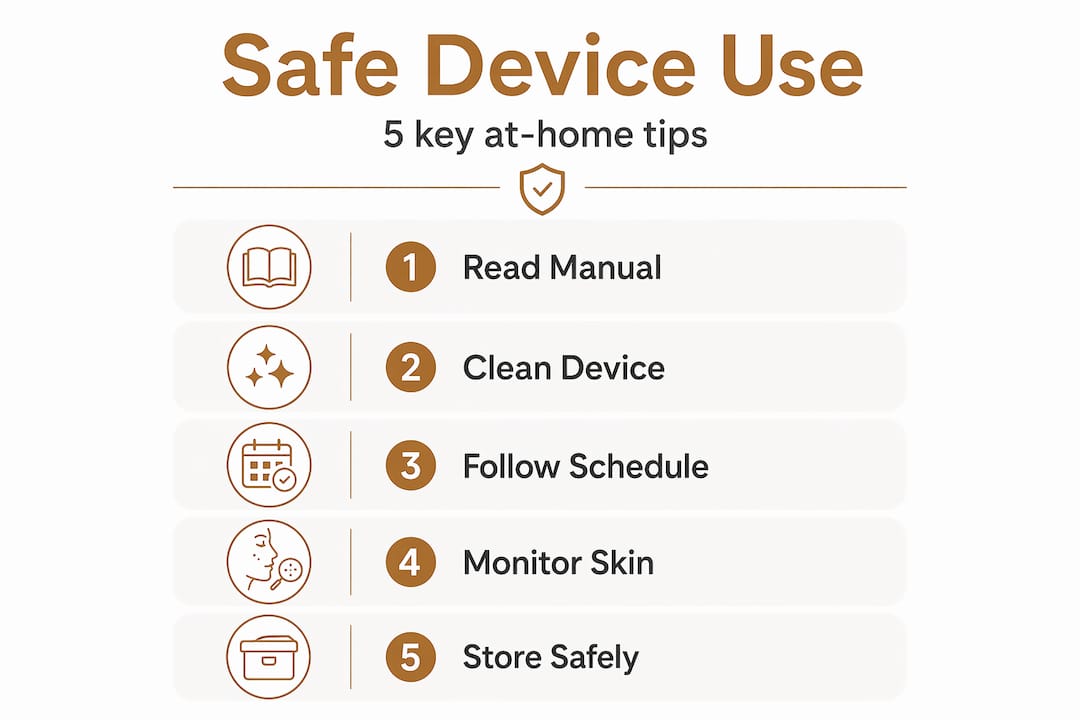
- Read the manual before first use. This sounds obvious, but contraindications and operational guidelines differ between devices and matter.
- Cleanse thoroughly before each session. LED light and microcurrent work best on clean skin. Residual SPF, make-up, or oils can block transmission and reduce efficacy.
- Protect your eyes during LED sessions. Wear the protective goggles provided. Direct LED exposure at close range is not recommended for unprotected eyes.
- Use the conductive gel when required. Microcurrent devices require a gel medium to conduct the current evenly. Skipping it leads to uneven treatment and skin discomfort.
- Start at a lower intensity. Particularly with microcurrent, begin at the lowest setting and increase gradually over the first one to two weeks.
- Avoid use over active infections, open wounds, or inflamed acne lesions. Check specific contraindications for your device, particularly if you have epilepsy, are pregnant, or have electronic implants.
- Look for FDA-cleared devices and follow safety instructions carefully, particularly if you have light-sensitive conditions or take photosensitising medications.
For frequency, most LED protocols recommend four to five sessions per week initially, scaling to three to four for maintenance. Consistency and ease of use are key factors in microcurrent device effectiveness, which is why choosing a device you enjoy using matters as much as the specification sheet. A detailed FDA-cleared beauty devices guide and a microcurrent device selection guide are both worth reading before committing to a purchase. For broader facial treatment guidance, professional skincare resources can also offer useful context.
Pro Tip: Match your device to your most pressing concern, not the longest feature list. If firming and lifting is your goal, a dedicated microcurrent device will outperform a multi-modality gadget where microcurrent is a secondary function.
Rethinking at-home facial device promises: an expert’s honest take
The at-home device market has a transparency problem. Brands regularly feature before-and-after photographs that represent exceptional results under ideal conditions, presented as if they are the norm. They are not. Experts urge careful patient selection, realistic expectations, and evidence-based device use amidst the marketing hype, and that caution applies equally to premium brands.
Here is what we have observed consistently. The consumers who get the best results from at-home facial devices are not necessarily those who buy the most expensive tools. They are the ones who use their device regularly, integrate it into an existing skincare routine rather than treating it as a standalone solution, and choose a device that matches their actual skin concern with transparent specifications.
Rapid wrinkle erasure is not what these devices do. What they do is support your skin’s natural regenerative processes over time. That is valuable, but it requires patience. A good beauty device technology overview will help you identify which parameters to look for when comparing devices, because irradiance, wavelength, and current output are the numbers that matter, not the number of preset modes.
Think of at-home facial devices as supportive tools in a broader skincare strategy. Paired with appropriate products, sun protection, hydration, and professional treatments when needed, they can genuinely improve skin health over months of consistent use. Alone and used occasionally, they are unlikely to deliver meaningful change. Before committing a significant amount to a premium device, a conversation with your dermatologist is always worthwhile.
Explore premium at-home facial devices for Saudi skincare lovers
If you are ready to take your skincare routine to the next level, Glowera brings together a carefully curated selection of premium international skincare devices delivered directly to Saudi Arabia with authenticity guarantees and local customer support.
Whether you are looking for a dedicated LED therapy device for collagen stimulation and acne support, or a professional-grade microcurrent facial device for lifting and contouring, Glowera carries clinically validated tools across a range of price points. From entry-level options for those new to at-home beauty technology, to advanced multi-modality devices for experienced users, every product listed is sourced from internationally recognised brands with verified performance credentials. Browse the collection, compare specifications, and find the device that genuinely fits your skin goals and daily routine.
Frequently asked questions
What skin issues can at-home facial devices improve?
They can help reduce fine lines, improve skin texture, enhance firmness, lighten dark spots, and may aid acne and hyperpigmentation depending on device type and consistent use. Red-light devices stimulate collagen and may reduce wrinkles and dark spots with regular sessions.
Are at-home facial devices safe for all skin types?
They are generally safe for most skin types, but those with light-sensitive conditions or on certain medications should avoid use. Always choose FDA-cleared devices and follow safety instructions specific to your skin type and health history.
How often should I use an at-home facial device for best results?
Most devices recommend starting with three sessions per week, then gradually increasing to five or six times weekly, with consistent use over weeks or months needed for visible improvement. Ulike Reglow advises starting with three weekly sessions before ramping up usage frequency.
What should I look for when choosing an at-home facial device?
Look for FDA clearance, clinical validation, technology appropriate to your skin concern, ease of use, and suitable treatment intensity. Buying for the correct indication with realistic expectations is the most reliable foundation for a sound purchase decision.
Can I use at-home facial devices alongside other skincare treatments?
Yes, these devices complement rather than replace a healthy skincare routine and professional treatments. Consistent combined use of devices alongside appropriate topicals and sun protection typically yields the best long-term results.