Choosing a beauty device for home use feels straightforward until you realise how many products make bold claims without a shred of regulatory backing. The market for examples of FDA-cleared beauty devices has grown significantly, but so has the noise from brands that use vague language like “clinically inspired” or “dermatologist-tested” to sidestep real scrutiny. If you are based in Saudi Arabia and investing in at-home anti-aging technology, knowing exactly what FDA clearance means and which devices have earned it is not optional. It is the difference between a device that is genuinely safe for your skin and one that is simply well-marketed.
Table of Contents
- How to verify FDA clearance and why it matters
- Popular FDA-cleared beauty devices for at-home use
- Comparison of leading FDA-cleared beauty devices
- How to choose the right FDA-cleared device for your skin goals
- The real value of FDA clearance in beauty devices: an insider’s take
- Discover FDA-cleared beauty devices available in Saudi Arabia
- Frequently asked questions
Key Takeaways
| Point | Details |
|---|---|
| FDA clearance explained | FDA clearance means the device is deemed safe based on similarity to approved devices, not full approval. |
| Examples of devices | Popular FDA-cleared devices include LED masks, microcurrent tools, and fractional lasers for at-home skin care. |
| Verification is key | Always verify FDA clearance and intended use via the FDA database before purchasing a beauty device. |
| Consider your skin goals | Choose devices cleared for treatments matching your specific anti-aging or skin health needs. |
| Clearance is baseline | FDA clearance ensures safety but checking clinical evidence and skin type compatibility improves outcomes. |
How to verify FDA clearance and why it matters
FDA clearance is one of the most misunderstood terms in beauty tech. Many shoppers assume it means the same thing as FDA approval, but these are two very different things. Understanding the distinction protects you from spending money on devices with inflated claims.
FDA clearance is granted through the 510(k) pathway. This means a device manufacturer submits evidence showing their product is substantially equivalent to an existing, legally marketed device. The 510(k) pathway confirms equivalence rather than requiring the brand-new clinical trials that full FDA approval demands. It is a rigorous process, but it is not the same as proving a device works better than anything else on the market.
FDA approval, by contrast, requires extensive clinical trial data proving both safety and effectiveness for a new use. Most beauty devices you see at-home do not go through this route. They go through 510(k) clearance, which still confirms a meaningful safety standard.
Here is what FDA clearance actually tells you:
- The device has been reviewed and meets safety standards for its specific intended use
- It is substantially equivalent to a predicate device already on the market
- The manufacturer has submitted technical documentation and safety data
- The FDA has not found any reason to block it from being marketed
What it does not tell you is whether the device will produce dramatic results for your particular skin concern. That is why consumers now use FDA clearance as a baseline filter in a market saturated with unverified marketing claims, rather than treating it as a performance guarantee.
Pro Tip: Search the FDA’s 510(k) database at accessdata.fda.gov using a device’s brand name or model number. You will see the exact intended use the clearance covers, which is often narrower than what the marketing suggests.
You can also explore LED light therapy devices and microcurrent devices that carry this clearance and are specifically designed for at-home skin rejuvenation.
Now that you understand the importance of FDA clearance, let’s explore specific examples of such beauty devices available for at-home use.
Popular FDA-cleared beauty devices for at-home use
The range of cleared devices has expanded considerably. FDA-cleared technologies now include light therapy, microcurrent tools, and fractional lasers used for skin rejuvenation and hair restoration. Each works through a different biological mechanism, and each is cleared for a specific set of uses.
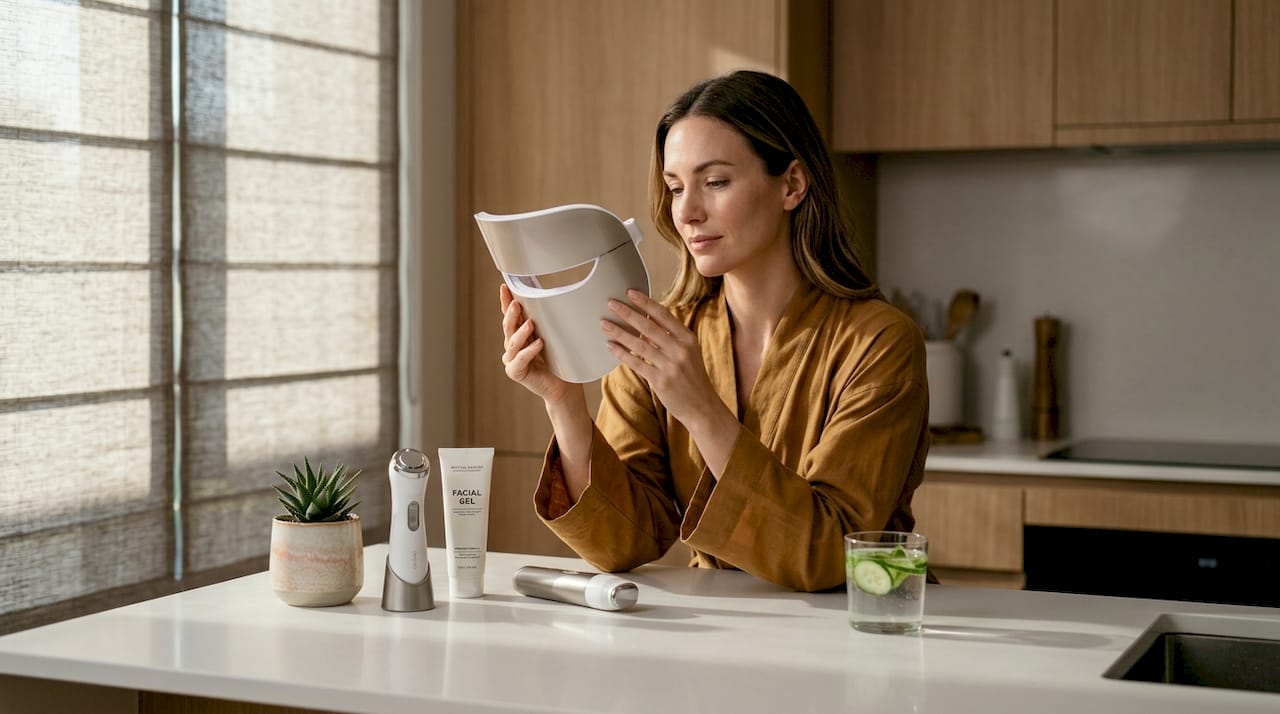
LED light therapy masks are among the most widely used examples of FDA-cleared beauty devices. They emit specific wavelengths of light, typically red (around 630 to 660nm) and near-infrared (around 830nm), which penetrate the skin to stimulate collagen production and reduce inflammation. Red light is cleared for wrinkle reduction and skin tone improvement. Blue light variants target acne-causing bacteria. The CurrentBody LED face mask is a strong example, using clinically proven wavelengths with a flexible design that fits the contours of the face.
Microcurrent devices send low-level electrical currents through the skin to stimulate the facial muscles and boost adenosine triphosphate (ATP), which is the energy currency of your cells. More ATP means faster cell repair and firmer-looking skin over time. These devices are cleared for muscle stimulation and are popular for lifting and contouring the face without injectables. The Medicube AGE-R Booster Pro combines microcurrent with electroporation to push active skincare ingredients deeper into the skin.

Multifunctional facial devices like the FOREO UFO 3 combine LED therapy, thermal activation, and T-Sonic pulsations in a single tool. The combination of technologies in one device means you address multiple skin concerns, including dullness, dehydration, and uneven texture, in a single session.
Here is a quick breakdown of device types and their primary cleared uses:
- LED light therapy masks — wrinkle reduction, acne treatment, skin tone improvement
- Microcurrent facial toners — muscle stimulation, facial lifting, ATP production boost
- Fractional laser devices — skin resurfacing, pigmentation treatment, hair restoration
- Radiofrequency tools — skin tightening, collagen stimulation
- Photon therapy wands — spot treatment for acne and inflammation
Each of these categories has devices that have been through the 510(k) process. The key is matching the device’s cleared use to your actual skin goal.
With these examples in mind, it is useful to compare their features side by side to help you choose the most suitable device for your needs.
Comparison of leading FDA-cleared beauty devices
Not all FDA-cleared devices are equal in terms of usability, treatment depth, or the skin concerns they address. The table below compares some of the leading options available to you in Saudi Arabia.
| Device | Technology | Primary cleared use | Session time | Skin concern |
|---|---|---|---|---|
| CurrentBody LED face mask | Red and near-infrared LED | Wrinkle reduction, skin tone | 10 minutes | Anti-ageing, dullness |
| Shark CryoGlow LED mask | Red, blue, infrared LED | Acne, inflammation, lifting | 10 minutes | Acne, firming |
| CurrentBody neck mask | Red and near-infrared LED | Skin rejuvenation | 10 minutes | Neck and décolletage ageing |
| Medicube AGE-R Booster Pro | Microcurrent and electroporation | Muscle stimulation, product absorption | 5 to 10 minutes | Lifting, ingredient delivery |
| FOREO UFO 3 | LED, thermal, T-Sonic | Skin hydration, radiance | 90 seconds | Dullness, dehydration |
The Shark CryoGlow LED face mask stands out for combining cryotherapy cooling with multi-wavelength LED, which is a pairing that reduces post-treatment redness and makes it particularly suitable for sensitive or reactive skin. The CurrentBody LED neck and décolletage mask addresses an area most facial devices ignore entirely, making it a smart addition if neck ageing is a concern.
FDA clearance focuses on safety for a specific use, but clinical effectiveness and user experience vary between devices. Two devices can both be cleared for wrinkle reduction and still deliver noticeably different results because of differences in wavelength precision, energy output, and contact with the skin.
Pro Tip: When comparing devices, look beyond the clearance status and check whether the brand publishes independent clinical study results. A device backed by a peer-reviewed study carries more weight than one backed only by internal testing.
Having compared key devices, let’s offer advice on choosing the ideal FDA-cleared device for your home anti-aging routine.
How to choose the right FDA-cleared device for your skin goals
Buying the best FDA-cleared device is not about picking the most expensive option or the one with the most features. It is about matching the device to your specific skin concern and your actual daily routine. Here is a structured way to approach the decision.
- Define your primary skin concern. Is it fine lines, sagging, acne, uneven tone, or dehydration? Each concern maps to a different device type. Microcurrent suits lifting and firming. LED suits tone, texture, and acne. Do not buy a device for a concern it is not cleared to address.
- Check the exact intended use on the FDA clearance. A device cleared for “temporary improvement of appearance of wrinkles” is not the same as one cleared for “long-term collagen stimulation.” The language matters.
- Assess treatment time honestly. A 10-minute daily mask is realistic for most routines. A 30-minute protocol three times a week is not, for most people. Consistency drives results, so choose what you will actually use.
- Look for skin tone inclusivity. FDA clearance does not always account for differences in skin tone response, so check whether the manufacturer has tested the device on darker skin tones, which is particularly relevant for those with medium to deep complexions common across Saudi Arabia.
- Review the clinical data and user feedback. Look for published studies, not just testimonials. A brand willing to share its clinical methodology is a brand confident in its results.
- Factor in device lifespan and running costs. Some devices require replacement parts or consumables. Others are a one-time purchase. Calculate the real cost over two years, not just the sticker price.
Additional things to consider before purchasing:
- Does the device come with a local warranty and Saudi Arabia customer support?
- Is the device designed for home use, or is it a scaled-down professional tool with reduced efficacy?
- Are there contraindications for your skin condition, such as active rosacea or photosensitivity?
You can explore K-Beauty tech devices for options that combine advanced Korean skincare science with FDA-cleared technology, or browse the full LED therapy range to compare wavelengths and intended uses side by side.
Pro Tip: If you are new to beauty devices, start with a single-technology tool rather than a multifunctional device. Mastering one modality first means you can accurately attribute results and build a routine that genuinely works.
With these decision factors clear, we now share a unique perspective on the real impact of FDA clearance in beauty tech and what savvy buyers should keep in mind.
The real value of FDA clearance in beauty devices: an insider’s take
Here is something the beauty industry rarely says out loud. Most at-home beauty devices achieve FDA clearance not by proving they work better than anything else, but by proving they are similar enough to something that already exists. That is what the 510(k) pathway means in practice. It is a safety gate, not a performance ranking.
The distinction between FDA-cleared and FDA-approved affects the level of evidence behind a device and should shape your expectations accordingly. A cleared device is safe for its intended use. Whether it will visibly lift your jawline in four weeks is a separate question entirely.
What this means practically is that two devices can sit side by side on a shelf, both FDA-cleared, and one can have five published clinical studies behind it while the other has none. The clearance label does not tell you which is which. You have to look further.
We have seen this play out repeatedly in the beauty tech space. A brand launches a device with impressive packaging and a prominent FDA-cleared badge, but when you search for clinical data, you find only internal testing with small sample sizes. Meanwhile, a less flashy brand publishes peer-reviewed results across diverse skin tones and longer follow-up periods. The second brand is almost always the better investment.
The other thing worth saying is that patience is not optional with these devices. Insights from Dr Dennis Gross LED therapy research show that consistent use over weeks is what drives measurable change in collagen density, not a single session. If you are expecting a device to transform your skin in a week, you will be disappointed regardless of its clearance status.
FDA clearance is a necessary filter, not a sufficient one. Use it to eliminate unsafe or unregulated products, then do the extra work of evaluating clinical evidence, skin tone testing, and brand transparency before you buy.
Discover FDA-cleared beauty devices available in Saudi Arabia
Finding genuinely cleared, professionally tested beauty devices in Saudi Arabia used to mean importing from abroad and hoping for the best. That is no longer the case.
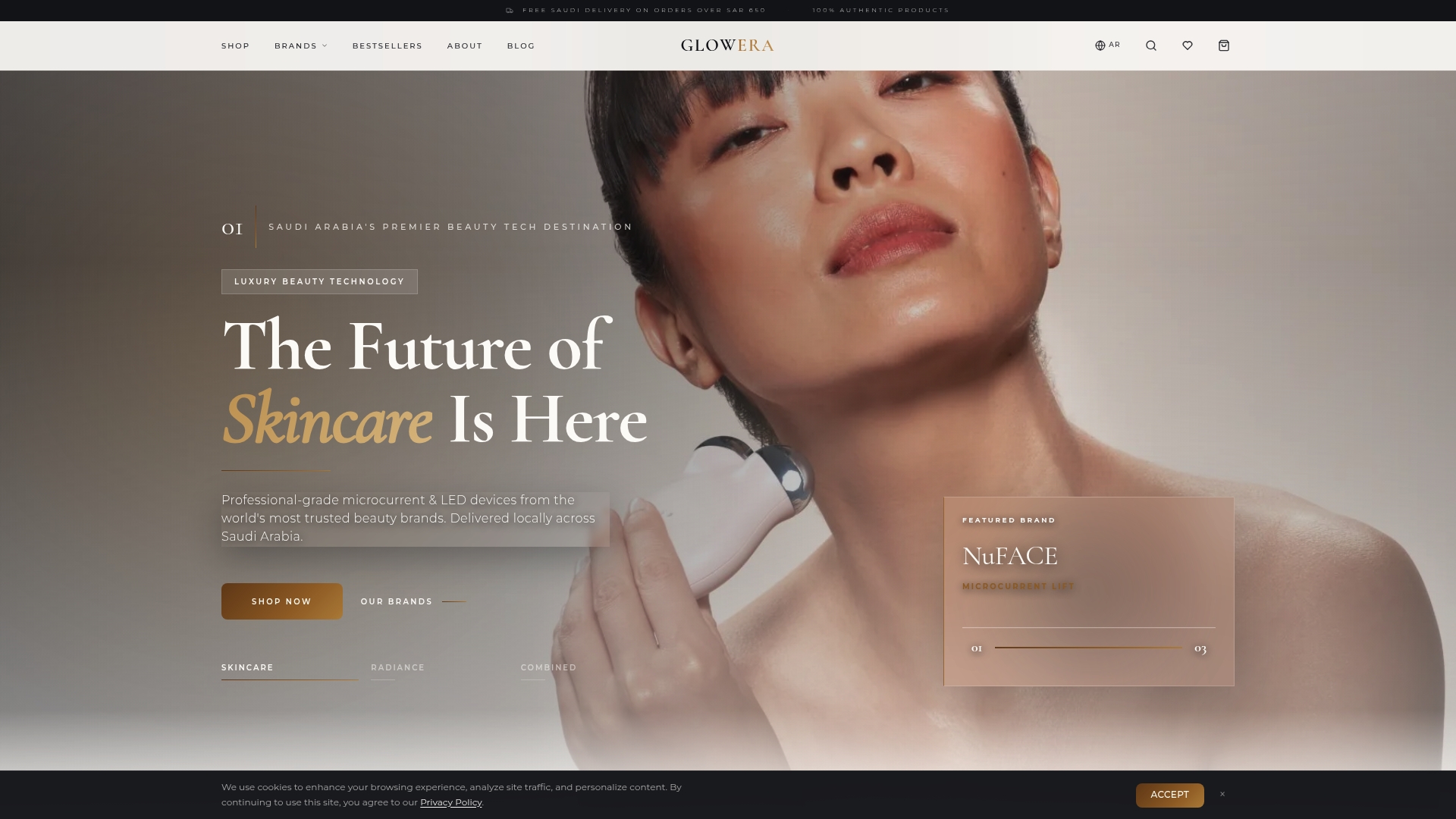
Glowera offers a curated selection of FDA-cleared skincare devices from internationally recognised brands, all available with local Saudi Arabia delivery and dedicated customer support. Whether you are exploring LED light therapy devices for anti-ageing, or considering the Medicube AGE-R Booster Pro for microcurrent lifting, every product on the platform is chosen for its regulatory standing, clinical credibility, and real-world results. You get the confidence of buying from a trusted source, without the uncertainty of navigating international shipping or unverified sellers.
Frequently asked questions
What does FDA-cleared mean for beauty devices?
FDA-cleared means the device has been reviewed and found substantially equivalent to a legally marketed device, confirming safety for its intended use but not full clinical approval.
Are FDA-cleared beauty devices always effective?
FDA clearance does not guarantee clinical effectiveness, so look for published studies or verified user reviews specific to your skin concern before purchasing.
How can I verify if a beauty device is FDA-cleared?
You can search the FDA’s public 510(k) database using the device name or model number to verify clearance status and confirm its specific intended uses.
Are FDA-cleared devices safe for all skin types?
Not all devices are tested across every skin tone, so confirm whether the manufacturer has conducted testing on your skin type before purchasing.
What types of beauty devices are typically FDA-cleared?
Common examples include light therapy masks, microcurrent toners, fractional lasers, and radiofrequency tools designed for moderate-risk cosmetic use at home.