Deeper is not always better when it comes to light therapy. Many people assume that a device which pushes light further into the skin will automatically deliver faster or more dramatic results, but that belief can lead you to choose the wrong device entirely. Depth-penetration choice is fundamentally about matching the light to the correct anatomical target, not simply reaching as deep as possible. For anyone in Saudi Arabia exploring at-home skin rejuvenation, understanding this distinction is what separates a device that genuinely transforms your skin from one that simply looks impressive on a shelf.
Table of Contents
- What is depth penetration in light therapy?
- How depth influences skin rejuvenation and anti-aging
- The importance of matching wavelength to your skin type
- Safety and edge cases for at-home light therapy
- Our take: don’t chase depth, chase the right wavelength and dose
- Find your ideal light therapy device in Saudi Arabia
- Frequently asked questions
Key Takeaways
| Point | Details |
|---|---|
| Wavelength determines penetration | Red and near-infrared wavelengths reach deeper skin layers and are preferred for anti-aging effects. |
| Match depth to skin goal | Deeper penetration is not always better; target the correct skin layer for optimal results. |
| Mind skin tone risks | Blue light can worsen hyperpigmentation in darker skin—choose wavelengths carefully for Saudi skin types. |
| Safety is essential | Review health, medications, and device instructions before using any at-home light therapy device. |
| Device specs beat marketing | Rely on wavelength and dose specifications, not just claims of deeper penetration. |
What is depth penetration in light therapy?
Light therapy, also known as photobiomodulation (PBM), works by delivering specific wavelengths of light into the skin to trigger biological responses. The key variable is wavelength, measured in nanometres (nm), and it determines exactly how far the light travels before it is absorbed or scattered.
Think of it like this: blue light (400–490 nm) is energetic but short-ranged. It stays close to the surface, targeting the epidermis and the upper layers where bacteria live. Red light (630–700 nm) travels further, reaching the dermis where collagen and elastin fibres reside. Near-infrared light (NIR, 800–1000 nm) goes even deeper, penetrating into subcutaneous tissue and even muscle. Each range has its purpose, and none is universally superior.
“Not all wavelengths are created equal for skin rejuvenation. Red wavelengths penetrate deeper than blue light and are the preferred choice for anti-aging and collagen stimulation at home.”
Here is a quick reference to help you understand how wavelength maps to skin depth and purpose:
| Wavelength range | Colour | Skin depth reached | Primary skin target |
|---|---|---|---|
| 400–490 nm | Blue | Epidermis (0.5–1 mm) | Acne-causing bacteria |
| 630–700 nm | Red | Dermis (1–3 mm) | Collagen, fine lines, tone |
| 800–1000 nm | Near-infrared | Subcutaneous (3–8 mm) | Deep tissue, inflammation |
The critical insight here is that penetration depth is not proportional to benefit. If your goal is reducing fine lines and boosting collagen, red light reaching the dermis is exactly right. Sending near-infrared light that deep into the skin for the same goal adds no extra benefit and may not even reach the correct cellular targets for surface rejuvenation.
Key things to understand about depth penetration:
- Blue light is effective for acne but does not reach collagen-producing fibroblasts
- Red light activates mitochondria in dermal cells, which is where anti-aging magic happens
- NIR light is better suited to joint pain, deep inflammation, or muscle recovery
- Device quality, LED density, and session duration all influence how effectively any wavelength performs
If you want to learn how leading brands approach this science in practice, the guide on Dr Dennis Gross LED therapy explains how multi-wavelength protocols are designed to layer benefits intelligently. For a broader overview of device selection, the article on choosing LED masks is a useful starting point.
How depth influences skin rejuvenation and anti-aging
Now that the basics are clear, let us look at what actually happens inside the skin when red light reaches the dermis at the right depth.
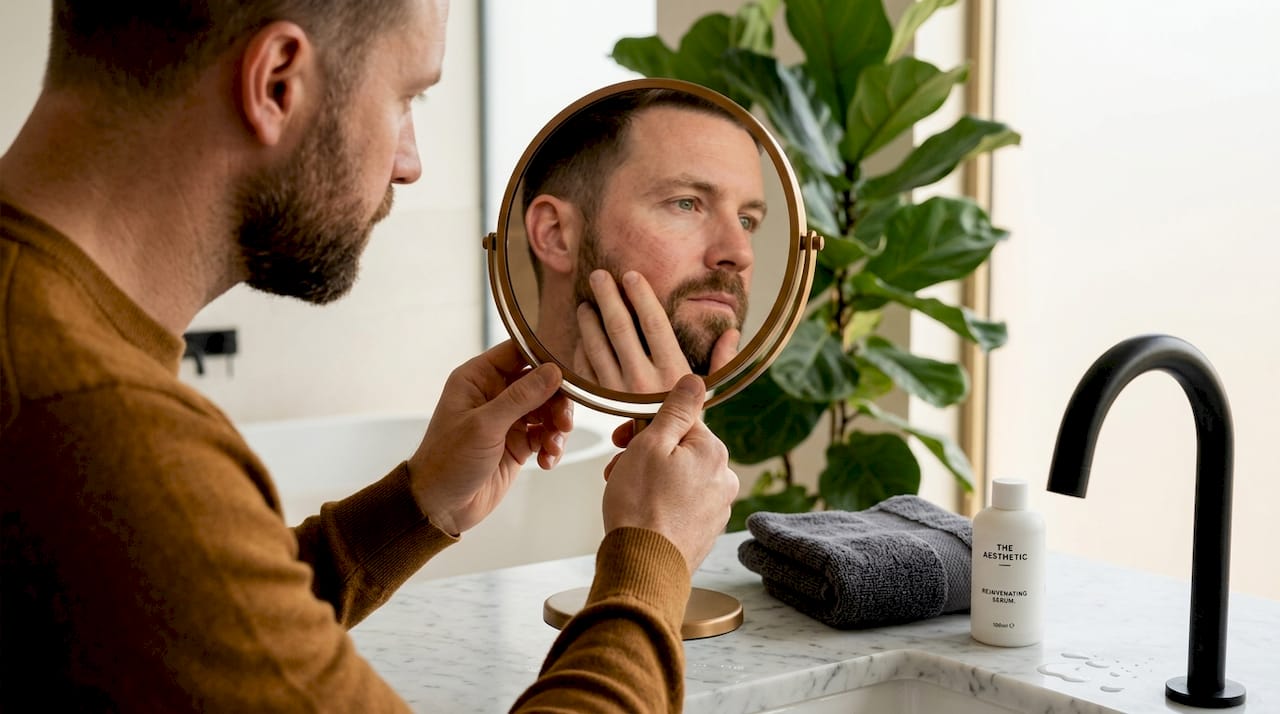
The primary mechanism is mitochondrial activation. Mitochondria are the energy-producing organelles inside every cell, and they contain a protein called cytochrome c oxidase (CCO). Absorption by mitochondrial CCO is the central event in red and NIR photobiomodulation. When red light hits CCO, it triggers a cascade that increases ATP (cellular energy) production, reduces oxidative stress, and stimulates fibroblasts to produce more collagen and elastin.
This is why red light at 630–660 nm is the gold standard for at-home anti-aging. It is not about going as deep as possible. It is about hitting the precise layer where fibroblasts live and where collagen synthesis can be meaningfully upregulated.
| Feature | Red light (630–700 nm) | Near-infrared (800–1000 nm) |
|---|---|---|
| Depth reached | Dermis (1–3 mm) | Subcutaneous and beyond |
| Anti-aging collagen target | Yes, directly | Indirect or minimal |
| Surface skin tone improvement | Strong | Moderate |
| Inflammation reduction | Moderate | Strong |
| Best for at-home use | Yes | Depends on device and goal |
It is also worth knowing that moderate evidence supports LLLT (low-level light therapy) for improving skin outcomes, but device and protocol standardisation remain a significant challenge in the field. This means two devices marketed as “red light therapy tools” can deliver very different results depending on their power output, LED density, and session time recommendations.
Pro Tip: When comparing devices, look for the irradiance figure (measured in mW/cm²) alongside the wavelength. A device with the right wavelength but insufficient power output will not deliver the energy dose your skin needs to respond.
Here is what actually matters for your anti-aging results:
- Wavelength accuracy: Confirm the device emits in the 630–660 nm red range for collagen work
- Session dose: Consistent sessions of 10–20 minutes, several times per week, outperform sporadic long sessions
- Device contact or proximity: Most at-home LED panels require close proximity (within 5–10 cm) for effective energy transfer
- Protocol adherence: Following the manufacturer’s recommended schedule is more important than improvising longer sessions
The CurrentBody LED panel is a good example of a device that specifies its wavelength output clearly, making it easier to match to your skin goals. For a deeper look at how device protocols translate to visible results, revisiting the Dr Dennis Gross LED therapy blog provides practical context.
The importance of matching wavelength to your skin type
This section is particularly relevant for users in Saudi Arabia, where Fitzpatrick skin types IV to VI are common. The Fitzpatrick scale classifies skin from Type I (very fair) to Type VI (very dark), and it matters enormously when choosing a light therapy wavelength.
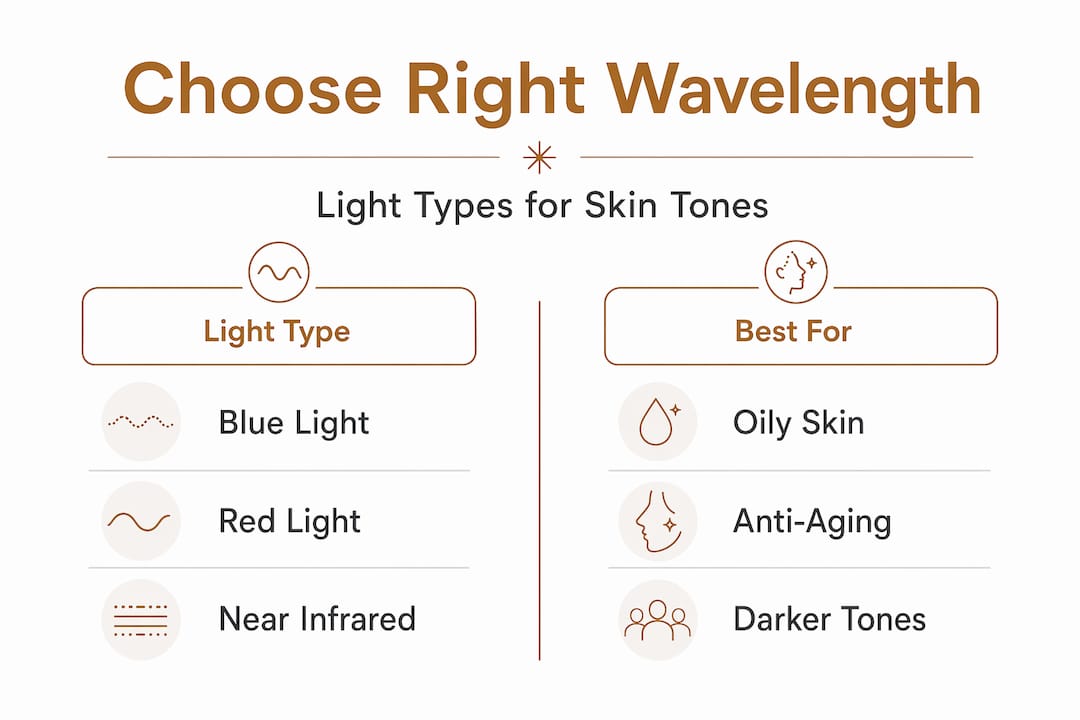
Here is the concern with blue light specifically. Blue light can worsen hyperpigmentation in darker Fitzpatrick IV to VI skin types. This is because blue light can stimulate melanin production in melanocytes, which are already more reactive in deeper skin tones. Using a blue-dominant device to treat acne on darker skin can inadvertently trigger post-inflammatory hyperpigmentation, leaving dark spots that are harder to treat than the original blemish.
| Fitzpatrick type | Skin tone description | Blue light risk | Recommended wavelength |
|---|---|---|---|
| I–II | Very fair to fair | Low | Blue or red |
| III | Medium | Moderate | Red preferred |
| IV–V | Olive to brown | High | Red only |
| VI | Very dark | Very high | Red only, low starting dose |
Red light does not carry the same hyperpigmentation risk. It works deeper in the dermis rather than stimulating surface melanocytes, making it a far safer choice for the majority of Saudi users. This is not a minor caveat. It is a fundamental reason why blanket recommendations to “try blue light for acne” can be genuinely harmful for darker skin tones.
What you should consider before choosing a device:
- Know your Fitzpatrick type: If you are unsure, consult a dermatologist or use a reputable online guide
- Avoid blue-only devices if your skin tone is medium to dark
- Start with low doses: Even red light should be introduced gradually, particularly if your skin is reactive or you have not used light therapy before
- Check for photosensitivity: Certain skincare ingredients, including retinoids and some acids, can increase skin sensitivity to light
- Always use eye protection: LED devices emit concentrated light that can damage the retina even when eyes are closed
Pro Tip: If you are new to light therapy and have a darker skin tone, start with the lowest recommended session time and increase gradually over two to three weeks. This allows your skin to adapt without triggering an unwanted melanin response.
For a full overview of wavelength options and what is available for Saudi users, the LED therapy for skin pigmentation category page is a helpful resource. You can also explore CurrentBody at-home devices for a curated list of devices that specify their wavelength outputs clearly.
Safety and edge cases for at-home light therapy
Light therapy is considered one of the safest non-invasive skincare technologies available, but “safe” does not mean “suitable for everyone without conditions.” There are specific situations where caution or medical clearance is essential.
“Light-sensitive conditions, including lupus and certain medication interactions, require caution with PBM; eye protection is consistently recommended for all users.”
Before you begin any at-home light therapy protocol, work through this checklist:
- Review your medications: Certain antibiotics (tetracyclines), antifungals, and diuretics are photosensitising. They increase your skin’s sensitivity to light and can cause burns or rashes even at low doses.
- Check for autoimmune conditions: Lupus, dermatomyositis, and some forms of rosacea can be aggravated by light exposure. Always get clearance from your dermatologist if you have an autoimmune diagnosis.
- Assess active skin conditions: Open wounds, active cold sores, or severe eczema flares should be allowed to resolve before applying light therapy to those areas.
- Use eye protection every session: Even devices marketed as “safe for eyes” emit enough light to cause cumulative retinal stress. Goggles or blackout eye covers specifically designed for LED therapy are a non-negotiable investment.
- Avoid direct use over thyroid area: Some practitioners advise caution when using NIR devices near the throat, as the thyroid gland may be sensitive to certain wavelengths.
- Pregnant women should consult a doctor: There is insufficient research on the safety of PBM during pregnancy, so medical guidance is essential.
The CurrentBody LED eye mask is an example of a device designed with built-in eye protection considerations, but even with such devices, following the manufacturer’s safety instructions precisely is essential.
Our take: don’t chase depth, chase the right wavelength and dose
Here is where we want to offer a perspective that most device marketing will not give you. The skincare device industry has developed a habit of competing on penetration depth as though it were a performance metric in its own right. Deeper sounds better. More powerful sounds more effective. But the science does not support this framing.
The evidence for skin anti-aging depends on correct dosing and actual target illumination, not penetration claims alone. A device that pushes NIR light 8 mm into your skin does nothing extra for surface collagen if the fibroblasts you need to stimulate are sitting at 2 mm depth. You have simply bypassed your target.
What we consistently see is that users who get the best results are not those with the most powerful or deepest-penetrating devices. They are the users who chose a device matched to their specific skin concern, started with conservative doses, and built a consistent protocol over weeks and months. Consistency and correct targeting beat intensity every time.
The other thing worth saying plainly: your skin tone is not a minor variable. For the majority of our customers in Saudi Arabia, red light is the right starting point. Blue light devices are not inherently bad, but they require more careful use and are genuinely riskier for darker skin tones. If a device or a brand is not being transparent about this, that is a red flag.
Our advice is simple. Choose your device based on your skin goal and your Fitzpatrick type. Start low and slow. Track your results over a minimum of eight weeks before judging whether the protocol is working. And invest in a device whose wavelength specifications are clearly published, such as the red light face mask from CurrentBody, which specifies its 633 nm and 830 nm outputs precisely.
Find your ideal light therapy device in Saudi Arabia
Understanding the science is only half the journey. The other half is finding a device that actually delivers on its specifications, arrives safely in Saudi Arabia, and comes with the support you need to use it correctly.
At Glowera, we have curated a range of clinically informed, professionally graded devices specifically for the Saudi market. Whether you are beginning with red light for collagen and anti-aging, or you want a multi-wavelength panel for broader skin health, our full LED therapy range covers the most trusted options available today. For those ready to invest in a professional-grade panel with clearly published wavelength specs, the LED light therapy panel from CurrentBody is one of our most recommended starting points. All devices come with local delivery and expert guidance.
Frequently asked questions
Does deeper penetration mean faster anti-aging results?
Not always; deeper penetration is only beneficial when it reaches the correct skin layer for your intended result, and going deeper than necessary adds no advantage.
Is blue light therapy risky for darker skin tones?
Yes; in Fitzpatrick IV to VI types, blue light may worsen hyperpigmentation, making red light the safer and more appropriate choice for most Saudi users.
What should I check before starting at-home light therapy?
Check your Fitzpatrick skin type, device wavelength, recommended session dose, and any contraindications including photosensitivity and lupus, as well as any medications that increase light sensitivity.
How do I know if my device uses safe and effective wavelengths?
Review the product specifications for published nm values; red wavelengths at 630–660 nm are the clinically supported standard for safe and effective anti-aging collagen stimulation at home.