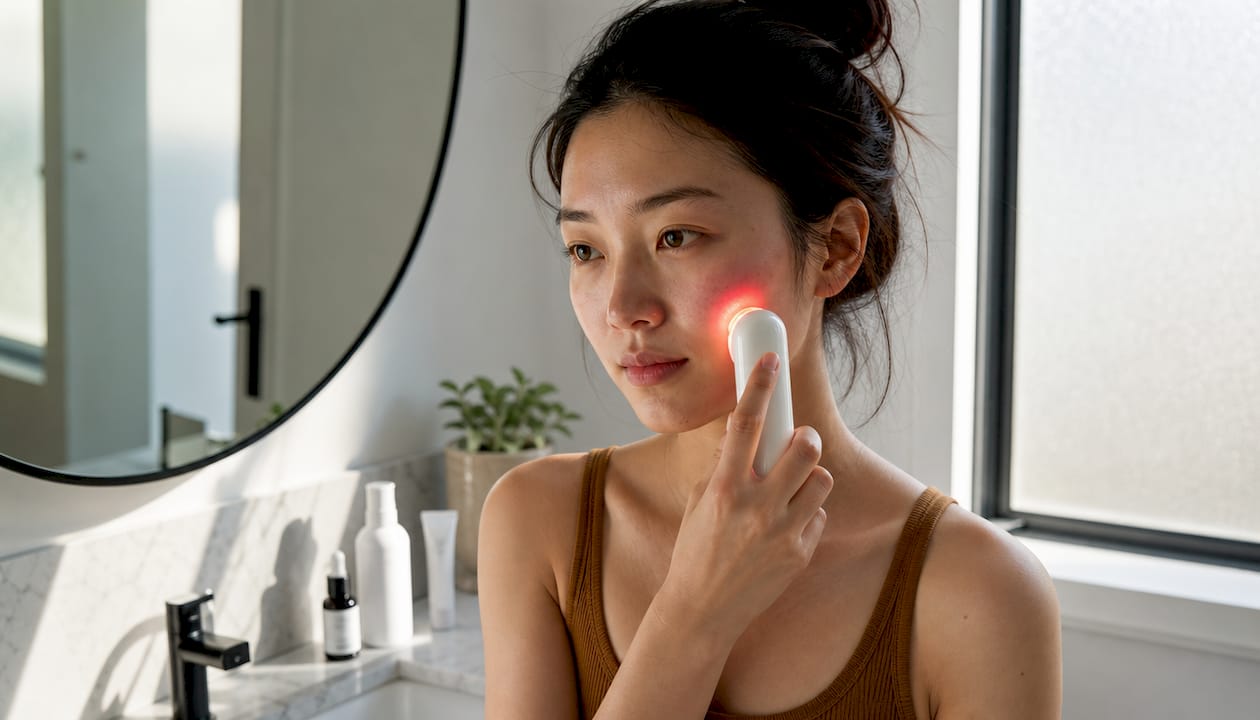
Photobiomodulation (PBM) is defined as the use of specific light wavelengths to stimulate cellular repair, collagen production, and skin rejuvenation without heat or injury. The types of photobiomodulation beauty gadgets now available for home use span LED face masks, handheld wands, flexible body wraps, and intranasal devices, each targeting different skin concerns and body areas. Consistent at-home use of these devices, typically 10-minute sessions three to five times per week, produces measurable improvements in skin tone and firmness, with 95% of people reporting visible results after four weeks. That figure reflects a genuine clinical pattern, not marketing copy.
1. What are LED face masks and why are they the most popular light therapy gadgets?
LED face masks are the fastest-growing category of at-home photobiomodulation devices. They deliver light across the entire face simultaneously, making them the most time-efficient option for general anti-aging and skin rejuvenation.
The best masks use three core wavelengths. Red light at 630–660 nm stimulates collagen and reduces inflammation. Near-infrared at 810–850 nm penetrates deeper tissue for repair. Blue light at 415–470 nm targets surface acne bacteria. Each wavelength activates a different biological pathway, so multi-wavelength masks deliver broader results than single-colour devices.
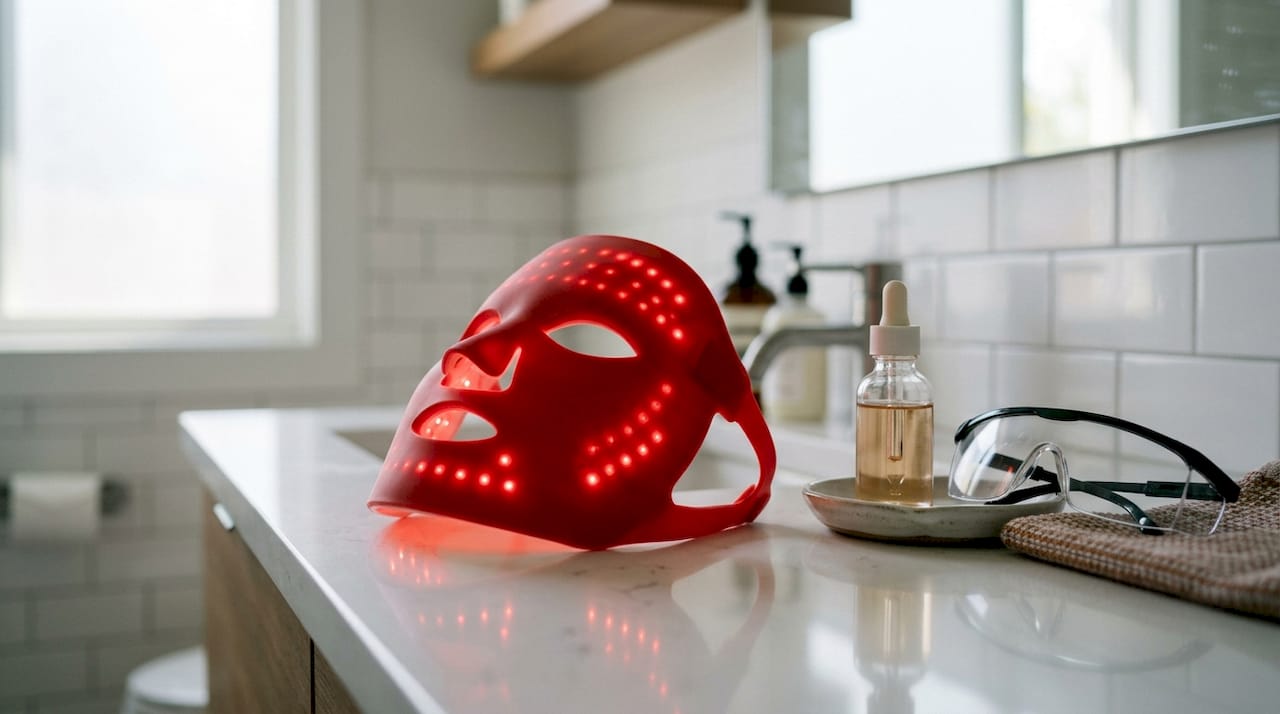
Design matters as much as wavelength. Flexible silicone masks that sit directly against the skin outperform rigid designs because light intensity drops sharply with distance, following the inverse square law. A mask that lifts even a centimetre from the cheek loses a significant portion of its irradiance before it reaches the skin.
Key features to evaluate in an LED face mask:
- Number of LEDs and their distribution across the panel
- Wavelength range (look for red and near-infrared as a minimum)
- Flexible versus rigid construction and how well it conforms to your face
- Session timer and automatic shut-off for safety
- Certification or clinical testing documentation
Pro Tip: Choose a mask with a skin-contact silicone design rather than a rigid shell. Direct contact maximises light delivery and makes every session more effective.
Consumer-grade masks operate at 5–35 mW/cm² and 1–5 J/cm² per session, well below the clinical dose of 20–60 J/cm². That gap means home masks are maintenance tools, not clinical correction devices. Set your expectations accordingly and you will not be disappointed.
2. How do handheld wands and spot devices work for targeted photobiomodulation?
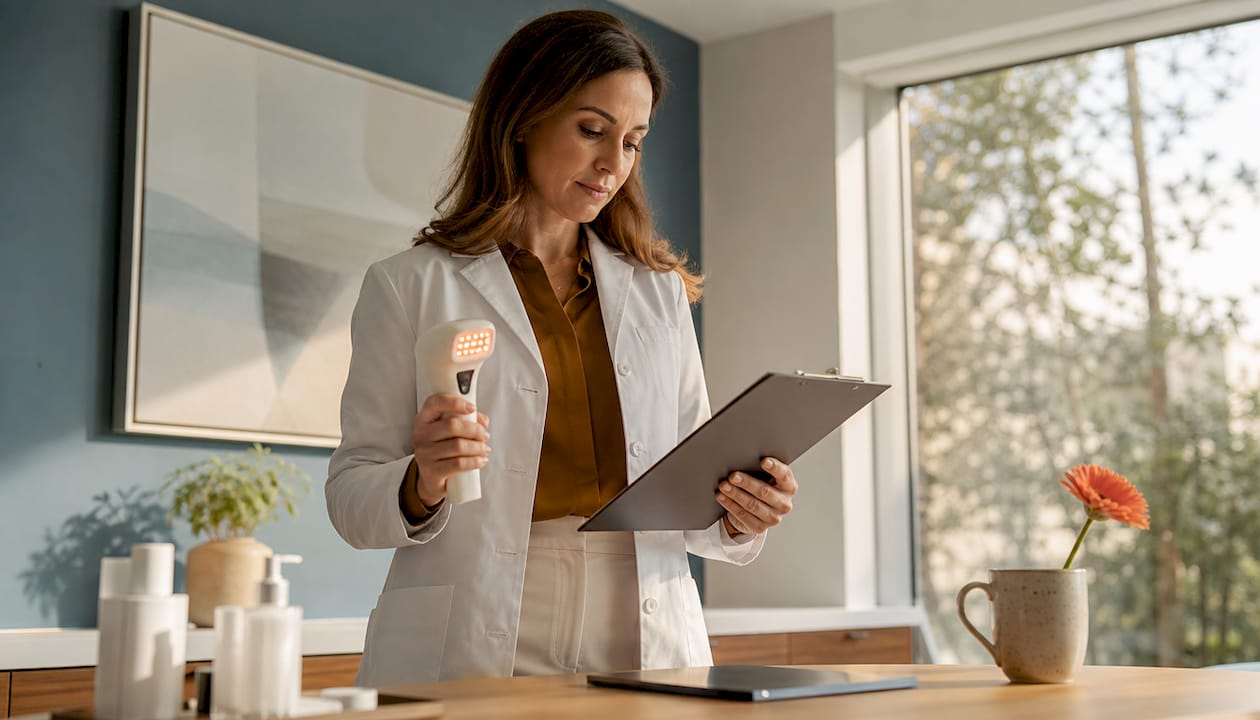
Handheld wands concentrate light on a small area, making them the right choice for fine lines around the eyes, lip lines, or isolated blemishes. They are portable, affordable, and require no setup beyond charging.
Most wands use red light at 630–660 nm or a combination of red and near-infrared. The focused beam delivers higher local intensity to a small patch of skin, which suits spot treatment well. Coverage across the full face takes considerably longer than with a mask, so wands work best as a complement to a broader device rather than a standalone solution.
Practical considerations for handheld devices:
- Session duration per area is typically 1–3 minutes for each spot
- Consistent daily use matters more than session length
- Look for devices with a stable output rather than pulsed modes unless the pulsing is clinically specified
- Portability makes them ideal for travel or desk-side use
Wands sit at the lower end of the price range for photobiomodulation devices, which makes them a sensible entry point. The trade-off is time: treating the full face with a wand takes three to four times longer than using a mask.
3. What are flexible LED wraps and how do they support body photobiomodulation?
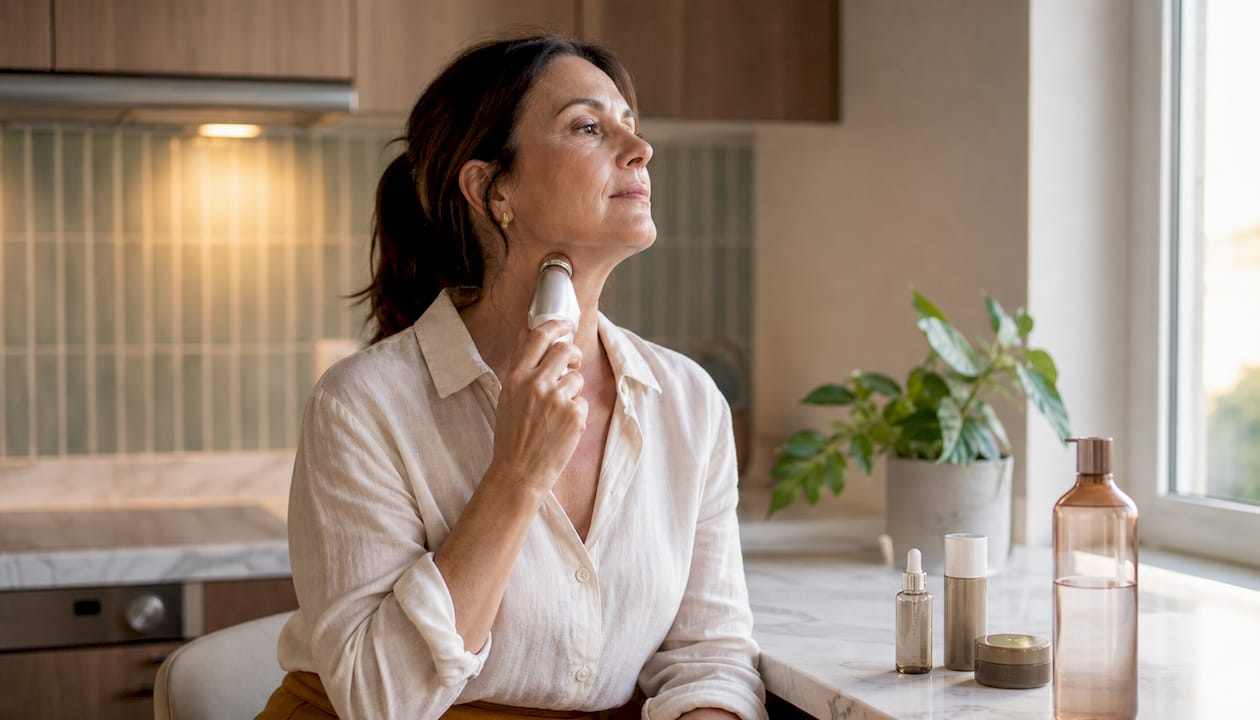
Flexible LED wraps extend light therapy beyond the face to the neck, décolletage, hands, and arms. They are constructed from pliable materials that conform to body contours, delivering uniform light across curved surfaces that rigid panels cannot reach effectively.
Wraps typically include red and near-infrared wavelengths. Near-infrared at 810–850 nm penetrates deeper into tissue, which makes wraps particularly useful for areas with thicker skin or where joint and muscle support is a secondary goal alongside skin rejuvenation.
The direct skin contact principle applies here as strongly as it does with face masks. A wrap that stays flush against the neck delivers meaningfully more light than one that gaps at the sides. Secure fastening is a practical feature worth checking before purchase.
What to look for in a flexible LED wrap:
- Material flexibility and how well it holds its shape against curved areas
- Wavelength range, particularly near-infrared for deeper tissue
- Session duration guidance from the manufacturer
- Washability or ease of cleaning the contact surface
- Cable management and whether it restricts movement during a session
Wraps fill a genuine gap in the at-home market. The face gets most of the attention, but the neck and hands age visibly and respond well to consistent light therapy.
4. What are intranasal photobiomodulation devices and what unique benefits do they offer?
Intranasal photobiomodulation devices deliver light through the nasal cavity rather than onto the skin surface. The nasal mucosa is richly vascularised, meaning light applied there reaches the bloodstream and neural pathways directly.
Intranasal devices use red light at 650 nm and near-infrared at 810 nm to support systemic wellness, cognitive vitality, and blood circulation. These are not skin rejuvenation tools in the conventional sense. Their value lies in systemic effects that complement surface-level skin treatments.
Key points about intranasal devices:
- Sessions are typically short, often 10–25 minutes
- The device inserts small LED probes into the nostrils
- Benefits reported include improved circulation and cognitive support
- They are highly portable and require no skin preparation
- They suit people who want systemic wellness benefits alongside cosmetic goals
Pro Tip: Intranasal devices work best as part of a broader wellness routine rather than as a standalone skin treatment. Pair them with a surface LED device for both systemic and topical photobiomodulation benefits.
This category remains niche but is growing. People with an interest in cognitive health and circulation, alongside skin goals, find intranasal devices a practical addition to their routine.
5. How do combination photobiomodulation devices incorporate other skincare technologies?
Combination devices pair LED light therapy with microcurrent, massage, or sonic cleansing in a single tool. The appeal is obvious: one device addresses multiple concerns in a single session.
Hybrid devices combine LED therapy with microcurrent or massage, but these modalities work through different biological pathways. Photobiomodulation drives mitochondrial activation and collagen synthesis over weeks of consistent use. Microcurrent produces immediate muscle toning and lymphatic drainage. Massage improves circulation and product absorption in the short term. The combination is genuinely useful, but the timelines differ.
Practical considerations for combination devices:
- Use the LED function consistently across weeks for cumulative skin repair
- Treat microcurrent and massage results as immediate but temporary
- App-driven routines can help you follow the correct sequence and session length
- Verify that the LED component meets minimum wavelength and output specifications
- Combination devices often cost more; confirm the LED element is clinically credible before paying the premium
The red and near-infrared combination at 660 nm and 808–810 nm targets both superficial and deeper skin layers simultaneously. Devices that include both wavelengths alongside other modalities offer the most complete at-home treatment. For a broader comparison of beauty device technologies, the differences in biological pathways are worth understanding before you invest.
6. What factors should guide your choice of photobiomodulation beauty gadget?
Choosing the right device comes down to matching wavelength range, device design, and treatment area to your specific skin goals. No single device suits every concern equally well.
The biphasic dose-response is the most overlooked factor in home use. More light is not always better: exceeding the optimal energy dose inhibits cellular benefits rather than amplifying them. Following the manufacturer’s recommended session times is not a suggestion. It is the difference between results and wasted effort.
Pro Tip: Seek devices with documented clinical backing and a stable, consistent output. Devices that allow you to increase power beyond recommended levels without guidance are a liability, not a feature.
A practical framework for matching device to goal:
| Skin concern | Recommended device type | Key wavelength |
|---|---|---|
| Anti-aging and collagen | LED face mask or flexible wrap | Red 630–660 nm and near-infrared 810–850 nm |
| Acne and surface bacteria | LED face mask with blue light | Blue 415–470 nm |
| Spot treatment and fine lines | Handheld wand | Red 630–660 nm |
| Neck and body skin rejuvenation | Flexible LED wrap | Near-infrared 810–850 nm |
| Systemic wellness and circulation | Intranasal device | Red 650 nm and near-infrared 810 nm |
Safety and ease of use are equally important. Devices with automatic timers, eye protection guidance, and clear session protocols reduce the risk of misuse. A guide on choosing LED masks for Saudi skin conditions offers additional context on what to prioritise in a warm climate.
Key takeaways
The most effective at-home photobiomodulation devices combine red and near-infrared wavelengths, maintain direct skin contact, and are used consistently for a minimum of four weeks.
| Point | Details |
|---|---|
| Wavelength range determines results | Devices with red 630–660 nm and near-infrared 810–850 nm treat both surface and deeper skin layers. |
| Skin contact is critical | Flexible, skin-contact designs deliver more light than rigid or lifted panels due to the inverse square law. |
| Home devices are maintenance tools | Consumer-grade output of 5–35 mW/cm² supports long-term skin health, not rapid clinical correction. |
| Consistency drives results | 10-minute sessions three to five times per week for four weeks produces measurable improvement in 95% of people. |
| Match device to skin goal | LED masks suit general anti-aging; wands target spots; wraps cover body areas; intranasal devices support systemic wellness. |
What I have learned from watching the photobiomodulation market mature
The most common mistake I see is treating home LED devices as a shortcut to clinical results. They are not. Consumer-grade masks deliver a fraction of the energy that a dermatology clinic uses, and that is by design. The biology still works at lower doses; it just works more slowly and more gently. That is the correct role for a home device.
The second mistake is inconsistency. People use a mask twice, see nothing dramatic, and conclude the technology does not work. Photobiomodulation is a metabolic process. It requires weeks of repeated stimulation before collagen remodelling becomes visible. The 95% improvement figure after four weeks of consistent use is real, but it assumes you actually complete those four weeks.
What genuinely excites me about the current market is the improvement in flexible device design. Early rigid masks were clumsy and left gaps at the temples and chin. Modern silicone masks that conform to the face have closed that gap, literally and figuratively. The physics of light delivery rewards contact, and manufacturers have finally caught up with the science.
My honest advice: start with a well-specified LED face mask that includes both red and near-infrared wavelengths. Add a handheld wand for spot concerns if needed. Build the habit before adding complexity. The anti-aging benefits of LED light therapy are real, but only for people who show up consistently.
— Adam
Glowera’s range of photobiomodulation and LED skincare devices
Glowera curates a selection of LED light therapy devices and microcurrent tools from internationally recognised brands, all available with delivery across Saudi Arabia. Every device in the range is selected for clinical credibility, not just aesthetics.
Whether you are looking for a full-face LED mask, a combination device, or a targeted wand, Glowera’s collection covers the main categories discussed here. The platform also offers expert guidance to help you match a device to your skin type and goals. Browse the full range at Glowera and find a device that fits your routine, your skin, and your budget.
FAQ
What is photobiomodulation in beauty gadgets?
Photobiomodulation is the use of specific light wavelengths, typically red and near-infrared, to stimulate cellular repair, collagen production, and skin rejuvenation without heat or damage. It is the scientific mechanism behind LED face masks and related light therapy gadgets.
How often should I use an at-home LED light therapy device?
The standard protocol is 10-minute sessions three to five times per week, with visible improvements in skin tone and texture typically appearing after four weeks of consistent use.
Are home LED masks as effective as professional treatments?
Home LED masks operate at 5–35 mW/cm² compared to clinical doses of 20–60 J/cm², making them maintenance tools rather than clinical correction devices. They produce real results over time but work more gradually than in-clinic treatments.
Which wavelength is best for anti-aging skin rejuvenation?
Red light at 630–660 nm and near-infrared at 810–850 nm together offer the most complete anti-aging benefit, targeting both surface collagen stimulation and deeper tissue repair simultaneously.
Can I use multiple types of photobiomodulation devices together?
Yes. Combining an LED face mask for general coverage with a handheld wand for spot treatment is a practical approach. Intranasal devices can be added for systemic wellness benefits alongside surface skin treatment.