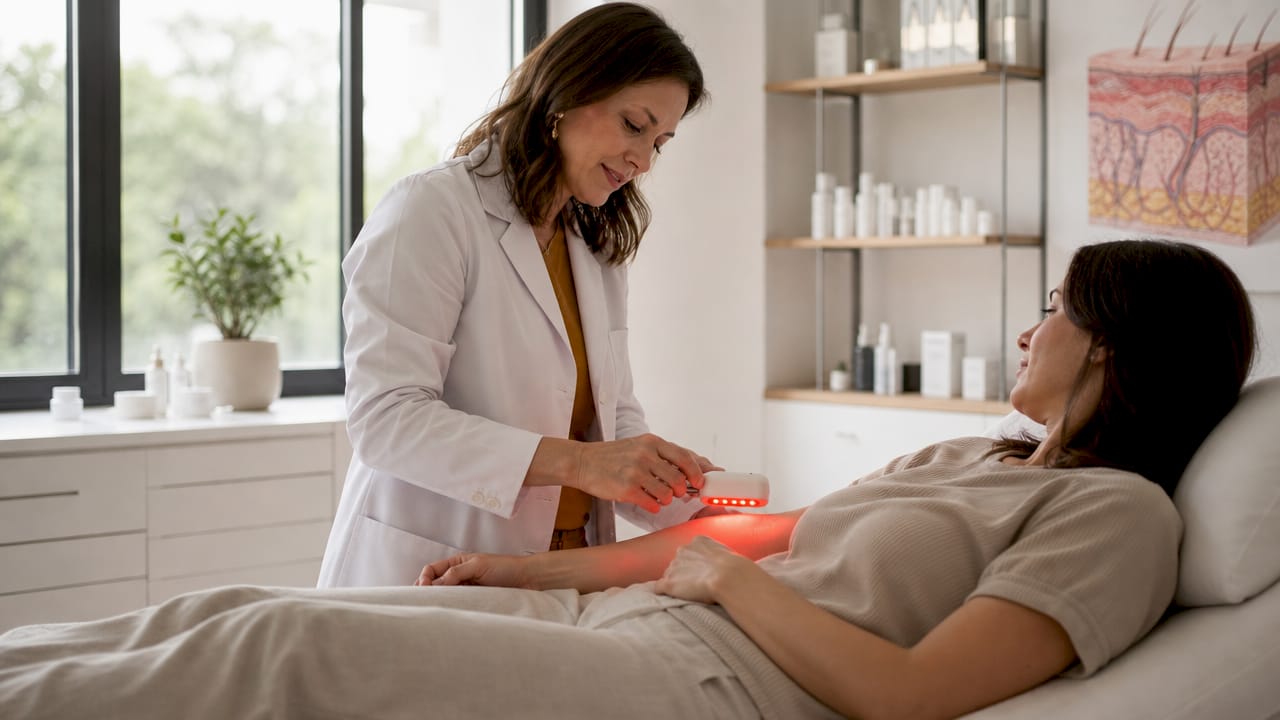
Photon therapy, clinically known as photobiomodulation (PBM), is defined as the use of specific wavelengths of red and near-infrared light to stimulate cellular metabolism in the skin without heat or ultraviolet radiation. The treatment targets mitochondria inside skin cells, particularly an enzyme called cytochrome c oxidase, to trigger collagen production, reduce inflammation, and accelerate tissue repair. Clinical protocols use wavelengths in the 630–900nm range, covering both red light for superficial skin effects and near-infrared for deeper tissue penetration. This is not UV phototherapy. PBM causes no DNA damage and no immunosuppression, which places it in an entirely different category of light-based treatment. If you want photon therapy skin science explained clearly and accurately, this article covers the biology, the evidence, and the practical decisions you need to make.
How does photon therapy work at the cellular level?
Photon therapy works by delivering photons of light directly into skin tissue, where they are absorbed by mitochondria inside skin cells. The primary target is cytochrome c oxidase, an enzyme that sits within the mitochondrial membrane and plays a central role in energy production. Under normal conditions, nitric oxide binds to cytochrome c oxidase and partially blocks its activity, reducing the cell’s ability to produce adenosine triphosphate (ATP), the molecule that powers cellular repair and regeneration.
When red or near-infrared light hits this enzyme, it displaces the nitric oxide. Cytochrome c oxidase resumes full activity, ATP production rises, and the cell enters a state of heightened repair. Reactive oxygen species, which act as signalling molecules rather than simply damaging agents at these controlled levels, trigger downstream pathways that stimulate fibroblasts to produce more collagen. The result is measurable improvement in skin texture, density, and tone over a course of consistent treatments.
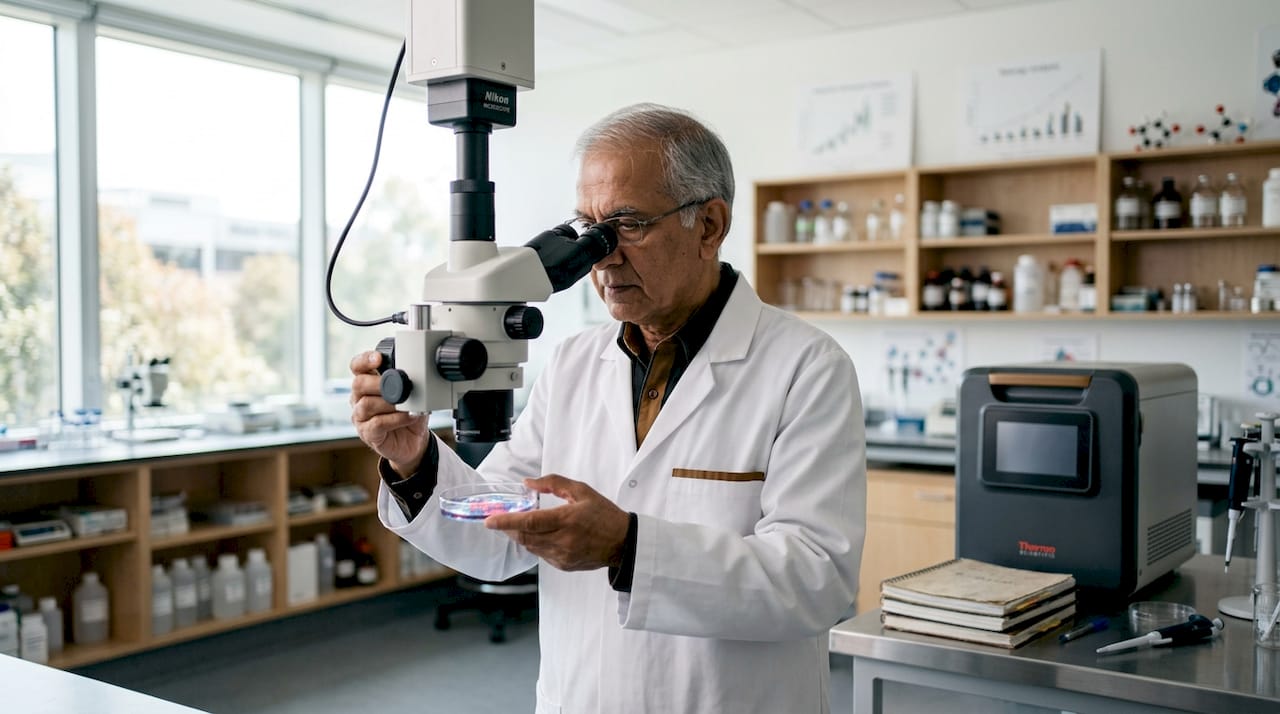
Red light in the 630–700nm range penetrates approximately 1–2mm into the skin, making it effective for superficial targets such as the epidermis and upper dermis. Near-infrared light in the 800–900nm range penetrates considerably deeper, reaching muscle and connective tissue. For skin rejuvenation specifically, red light wavelengths are the primary driver of collagen synthesis and surface texture improvement.
Pro Tip: If your goal is reducing fine lines and improving skin tone, prioritise a device with a verified red light output in the 630–670nm range. Near-infrared additions are useful for deeper inflammation, but red light does the heavy lifting for surface skin.
The anti-inflammatory effect of PBM is equally significant. By modulating reactive oxygen species and reducing pro-inflammatory cytokines, photon therapy calms active skin conditions including acne and rosacea. This dual action, building collagen while reducing inflammation, is what makes the treatment relevant across multiple skin concerns rather than just one.
What wavelengths, doses, and treatment durations actually matter?
The three parameters that determine whether photon therapy produces results are wavelength, irradiance, and fluence. Getting any one of them wrong means the treatment either does nothing or targets the wrong tissue entirely.
Wavelength is the most discussed parameter, and for good reason. Red light (630–700nm) targets superficial skin layers and promotes collagen and texture improvement. Near-infrared (800–900nm) penetrates deeper to affect muscle and joint tissues. Choosing the wrong wavelength for your skin goal is one of the most common mistakes people make when selecting a device.
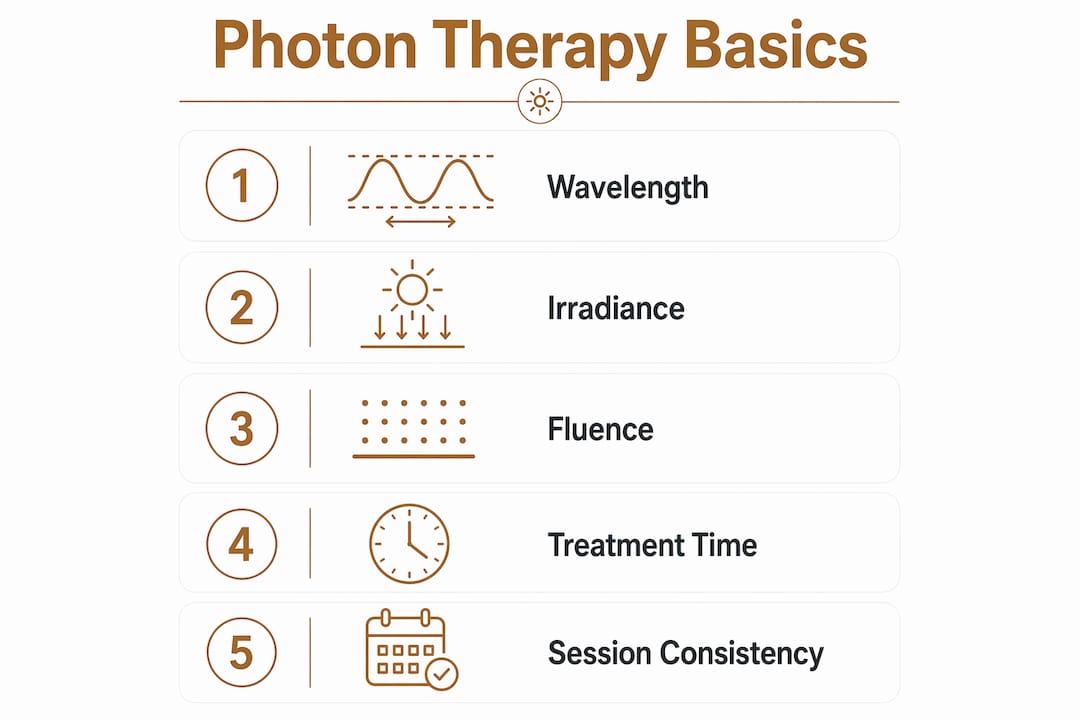
Irradiance and fluence are less talked about but equally critical. Irradiance refers to the power output of the device per unit area, measured in milliwatts per square centimetre. Fluence is the total energy delivered per session, measured in joules per square centimetre. Clinical devices deliver higher irradiance than most consumer products, which means clinical sessions can be shorter while achieving the same or greater biological effect.
Key parameters to evaluate when choosing a device:
- Wavelength: Confirm the exact nm output, not just a colour label
- Irradiance: Look for published mW/cm² figures, not just wattage
- Treatment area: Larger panels cover more skin per session
- Session duration: Lower irradiance requires longer sessions to reach therapeutic fluence
- Safety certification: Look for CE or FDA clearance markings on the device
A study with 112 participants found that 30 consistent sessions produced significant improvements in skin complexion, collagen density measured by ultrasound, and reduced skin roughness. That figure matters because it sets a realistic expectation: this is a multi-week commitment, not a quick fix.
Pro Tip: Calculate the fluence your device delivers per session before buying. Multiply the irradiance (mW/cm²) by the session time in seconds, then divide by 1,000 to get joules per cm². Aim for a therapeutic range of 10–60 J/cm² depending on your skin target.
What does the clinical evidence say about the benefits of photon therapy?
The clinical record for photobiomodulation in dermatology is more solid than most people realise. A comprehensive dermatology review confirmed that LED-based photon therapy is effective for acne, photoaging, wound healing, and inflammatory skin conditions. These are not fringe findings. They represent the strongest clusters of evidence across multiple peer-reviewed studies.
A landmark 2014 study by Wunsch and Matuschka used a controlled, randomised design to assess red and near-infrared light therapy on facial skin. Participants showed measurable improvements in skin complexion and collagen density, with results confirmed by ultrasound measurement rather than subjective assessment alone. That methodological rigour gives the findings considerably more weight than before-and-after photography.
| Skin condition | Evidence strength | Primary wavelength used |
|---|---|---|
| Photoaging and fine lines | Strong | Red (630–670nm) |
| Acne and inflammation | Strong | Blue (415nm) and red (630nm) |
| Wound healing | Strong | Red and near-infrared |
| Skin texture and tone | Moderate to strong | Red (630–700nm) |
| Hyperpigmentation | Moderate | Red and near-infrared |
A systematic review and consensus confirmed PBM as a safe and effective treatment for aesthetic and medical dermatological indications, with no adverse effects reported at therapeutic doses. That safety profile is one of PBM’s most significant advantages over ablative or thermal procedures.
Photon therapy does not replace professional laser resurfacing or chemical peels for severe photoaging. What it offers is a non-invasive, repeatable treatment with a strong safety record and real, if modest, improvements in skin quality. For people who want anti-aging results at home without downtime or clinical appointments, that trade-off is often exactly right.
What types of photon therapy devices are available?
Consumer photon therapy devices fall into three broad categories: LED masks, handheld panels, and full-body or large-area panels. Each has a different use case, and the right choice depends on your treatment goals, budget, and how much time you can commit per session.
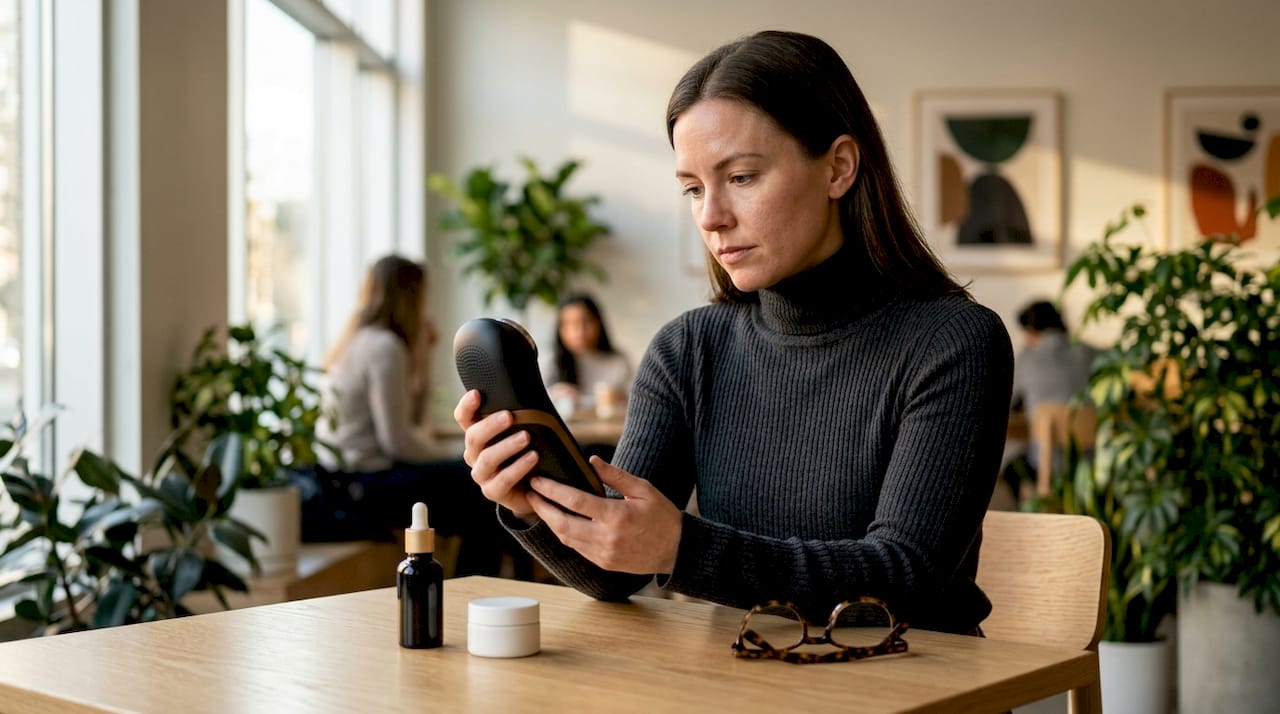
LED masks cover the full face simultaneously and are the most popular format for home skin rejuvenation. They deliver consistent light exposure across the treatment area and are convenient for daily or near-daily use. The key variable between masks is irradiance: a mask with low power output will require much longer sessions to deliver a therapeutic dose.
Handheld devices offer targeted treatment for specific areas such as the forehead, cheeks, or neck. They are useful for spot treatment but less practical for full-face protocols. Large panel devices, more common in clinical settings, deliver the highest irradiance and cover the greatest area per session.
When evaluating any device, check for:
- Published wavelength in nanometres (not just “red” or “blue”)
- Irradiance figures in mW/cm² from independent testing
- Safety certifications from recognised regulatory bodies
- Clear treatment protocol guidance from the manufacturer
- Return policy and warranty terms
Home-use photon therapy devices have improved considerably in recent years, but the gap between consumer and clinical irradiance levels remains real. Many consumer devices underperform due to low irradiance, requiring longer or more frequent sessions to approach clinical effects. That is not a reason to avoid them. It is a reason to read the specifications carefully before purchasing.
How should you use photon therapy at home for best results?
Consistency is the single most important factor in photon therapy outcomes. Visible skin texture improvements typically require months of regular sessions, and people who quit after two or three weeks rarely see meaningful change. Treating photon therapy like a skincare routine rather than a one-off procedure is the correct mindset.
Follow these steps for effective home use:
- Cleanse first. Remove all makeup, SPF, and skincare products before each session. Anything on the skin surface can block or scatter light before it reaches the target tissue.
- Match wavelength to goal. Use red light (630–670nm) for collagen and texture. Use blue light (around 415nm) for active acne. Use near-infrared for deeper inflammation or muscle recovery.
- Follow the manufacturer’s session duration. Do not assume longer is better. Excessive fluence can have a biphasic effect, meaning it stops being beneficial above a certain dose threshold.
- Treat consistently. Aim for at least three to five sessions per week during an initial course of treatment. Reduce to maintenance frequency once results are established.
- Protect skin afterwards. Apply SPF during the day after sessions. Photon therapy increases cellular activity, and sun exposure immediately after can counteract the repair process.
Pro Tip: Pair photon therapy with a skin-brightening topical applied after each session. The increased cellular activity following treatment may enhance absorption of active ingredients.
Photon therapy is contraindicated for people taking photosensitising medications, those with active skin cancers, or people with certain light-sensitive conditions. If you are pregnant or have a diagnosed skin condition, consult a dermatologist before starting any light therapy protocol. For mature skin specifically, cosmetic safety guidance recommends starting with shorter sessions and building up gradually.
Key takeaways
Photobiomodulation is a clinically validated, non-invasive treatment that stimulates collagen production and reduces inflammation through targeted red and near-infrared light, with results requiring consistent multi-week protocols.
| Point | Details |
|---|---|
| Core mechanism | Red light displaces nitric oxide from cytochrome c oxidase, raising ATP production and triggering skin repair. |
| Wavelength selection | Red (630–700nm) targets surface skin; near-infrared (800–900nm) penetrates deeper tissue. |
| Treatment commitment | Clinical evidence supports 30 or more sessions for measurable skin complexion and collagen improvement. |
| Device quality matters | Irradiance and fluence determine results; always check published mW/cm² figures before buying. |
| Safety profile | PBM causes no DNA damage or immunosuppression, making it safe for regular use at therapeutic doses. |
Why I think photon therapy deserves more scientific respect than it gets
The conversation around light therapy for skin has been muddied by overclaiming on one side and dismissiveness on the other. I have spent years watching people either expect miracles from a cheap LED mask or write off the entire category because a single session did nothing. Both positions miss the point.
The biology here is genuinely well-established. Cytochrome c oxidase as a photoacceptor, the ATP production pathway, the downstream collagen signalling: these are not speculative mechanisms. They are documented in peer-reviewed dermatology literature. The clinical term photobiomodulation exists precisely to distinguish this from UV therapies, which work through DNA disruption rather than mitochondrial energy stimulation.
What I find underappreciated is how much device quality and protocol adherence determine outcomes. The treatment itself works. The question is whether the device you are using delivers enough irradiance at the right wavelength, and whether you are consistent enough over a long enough period. Most people who report no results either used an underpowered device or stopped too early.
My honest view is that photon therapy sits best as a complement to a well-designed skincare routine, not a replacement for professional treatments in cases of significant photoaging. For mild to moderate rejuvenation, regular maintenance, and acne management, the evidence is strong enough to take seriously. The people who get the most from it are those who treat it like a long-term investment rather than a shortcut.
— Adam
Glowera’s photon therapy devices for home use
Glowera curates a selection of LED light therapy devices built to clinical wavelength standards, covering red, blue, and near-infrared outputs for targeted skin rejuvenation at home.
Every device in the Glowera range comes with published wavelength and irradiance specifications, so you can match the technology to your specific skin goals before you buy. The collection includes LED masks for full-face treatment and panel devices for broader coverage, all sourced from internationally recognised beauty technology brands. Glowera delivers across Saudi Arabia with expert support available for protocol guidance. Browse the full beauty tech range to find the right device for your skin.
FAQ
What is photon therapy for skin?
Photon therapy, or photobiomodulation, uses red and near-infrared light at wavelengths of 630–900nm to stimulate mitochondrial activity in skin cells, promoting collagen production and reducing inflammation without heat or UV radiation.
How does photon therapy work on skin cells?
Red light displaces nitric oxide from cytochrome c oxidase in the mitochondria, increasing ATP production and triggering cellular repair, collagen synthesis, and anti-inflammatory signalling pathways.
Is photon therapy safe for regular use?
A systematic review and clinical consensus confirm that PBM causes no DNA damage or immunosuppression at therapeutic doses, making it safe for regular use. People on photosensitising medications should consult a dermatologist first.
How many sessions does photon therapy take to show results?
A study with 112 participants showed significant skin improvement after 30 consistent sessions. Visible changes in texture and collagen density typically require months of multi-weekly treatments rather than days.
Can photon therapy help with acne?
Clinical evidence confirms LED-based photon therapy is effective for acne and inflammatory skin conditions. Blue light at approximately 415nm targets acne-causing bacteria, while red light reduces the surrounding inflammation.