Choosing the right beauty device for your skin type is the single most important factor in getting real results from at-home skincare technology. The term “beauty device” covers a broad category of professional-grade tools, including LED light therapy masks, microcurrent devices, EMS facial toners, and radiofrequency units, each designed to interact with skin at a cellular level. Matching the wrong technology to your skin type does not just reduce results. It can actively damage your skin barrier, trigger breakouts, or cause irritation. This guide gives you a science-backed framework to assess your skin type accurately, understand which device technologies suit it best, and use those devices safely.
How to choose the right beauty device for your skin type: start with accurate skin assessment
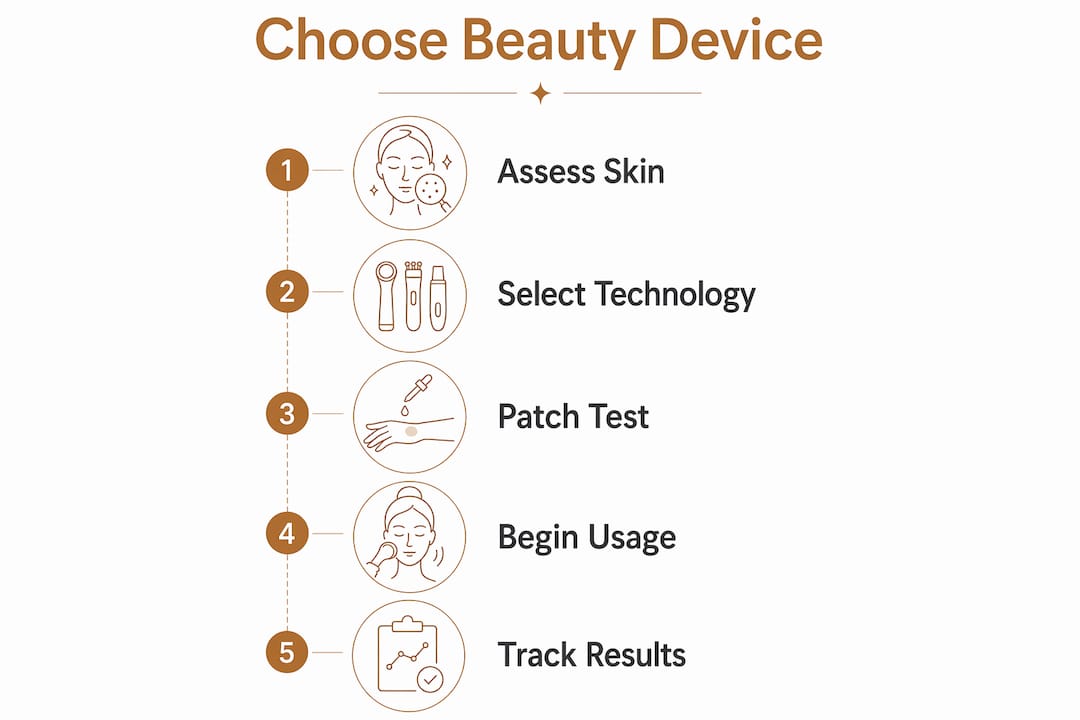
The foundation of any good skin care device recommendation is an accurate skin type assessment. Guessing your skin type based on how it looks in the mirror on any given morning leads to poor device choices. Your skin changes with hormones, seasons, age, and environment, so a reliable baseline test matters.
The 30-minute cleanse test
The most reliable at-home method is the 30-minute cleanse test. Wash your face with a gentle, fragrance-free cleanser, then wait exactly 30 minutes without applying any product. After 30 minutes, observe your skin closely.
- Oily skin produces visible shine across the forehead, nose, and chin (the T-zone), sometimes across the cheeks too.
- Dry skin feels tight, may show flaking, and looks dull with no shine at all.
- Combination skin shows shine in the T-zone but feels tight or normal on the cheeks.
- Sensitive skin may show redness, feel itchy, or react to the cleanser itself.
- Normal skin feels comfortable, balanced, and shows no extreme shine or tightness.
Repeat this test every three to four months. Hormonal shifts, climate changes, and ageing all alter your skin type over time, which directly affects device compatibility and skin response. A device that worked well for your combination skin in winter may need adjusting when your skin turns oilier in summer.
Pro Tip: Before using any new device, always patch test on a small area of your jaw or inner wrist for 24 hours. This is non-negotiable for sensitive skin types.
What device technologies work best for each skin type?
Understanding the core technologies helps you match the right tool to your skin’s specific needs. The four main categories are LED light therapy, microcurrent, EMS, and radiofrequency. Each works differently and suits different skin profiles.
LED light therapy
LED therapy uses specific wavelengths of light to trigger biological responses in skin cells. Blue LED at 415nm reduces inflammatory acne lesions by 70% over 8 weeks, making it the most effective at-home option for oily and acne-prone skin. It targets the bacteria responsible for breakouts without heat or abrasion.
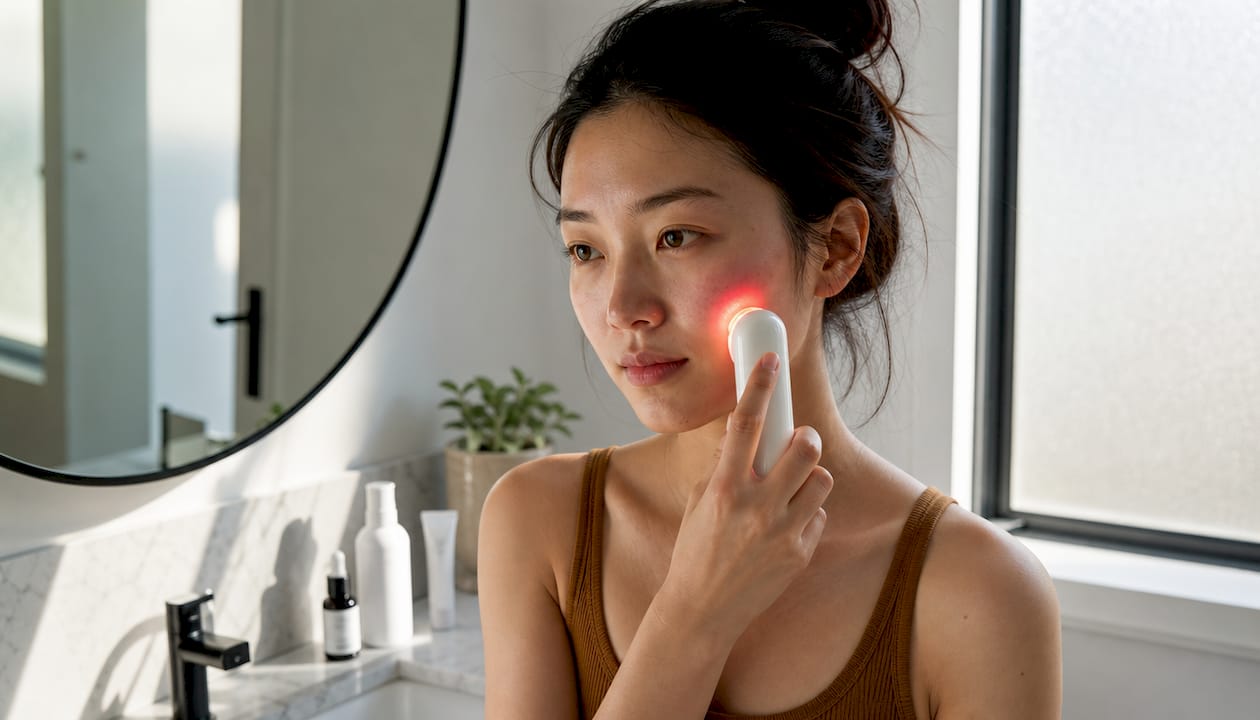
Red LED works differently. Red LED therapy increases collagen by 31% and elastin by 25% over 12 weeks, which makes it the preferred choice for dry, mature, or dehydrated skin. The wavelengths penetrate deeper into the dermis, stimulating repair and improving firmness. Dry skin absorbs these hydrating wavelengths particularly well because it lacks the sebum layer that can partially block penetration. You can explore LED therapy devices that offer both blue and red light options to address multiple concerns.
Microcurrent
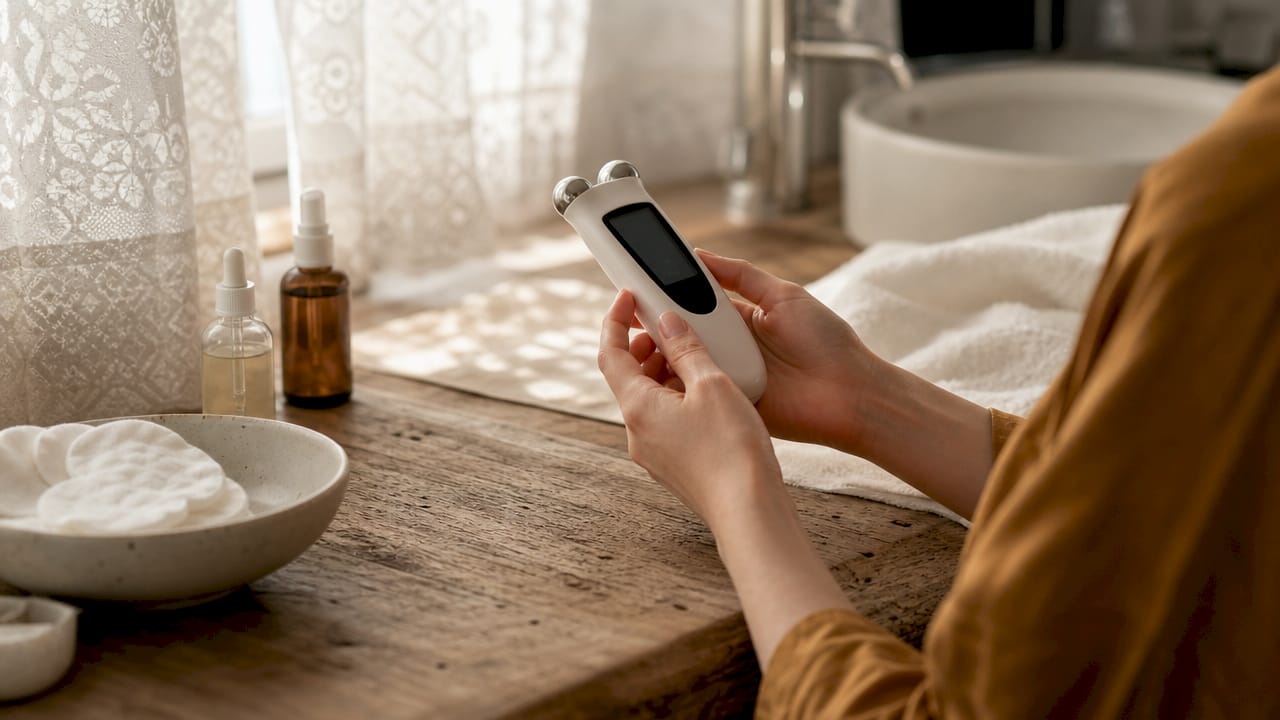
Microcurrent devices deliver low-level electrical currents that mimic the body’s own bioelectrical signals. Microcurrent raises ATP production in skin cells by up to 500%, which accelerates cellular repair, tightens muscles, and improves facial contour. This technology suits most skin types, including sensitive skin, because the current levels are extremely low. It is particularly effective for ageing or loss-of-firmness concerns. Read more about choosing a microcurrent device to understand which features matter most.
EMS and radiofrequency
EMS (electrical muscle stimulation) targets the facial muscles beneath the skin, producing a toning and contouring effect. It suits normal, combination, and mature skin types well. An EMS facial device guide explains how the technology works and what results to expect over a consistent programme.
Radiofrequency (RF) heats the deeper layers of skin to stimulate collagen production. It is most effective for mature or dry skin showing laxity. Professional insights into radiofrequency skin tightening confirm that results build gradually over several weeks of consistent use.
Pro Tip: If you have sensitive skin, start with LED therapy before trying microcurrent or RF. LED carries the lowest risk of irritation and gives your skin time to adapt to device use.
| Technology | Best skin types | Primary benefit | Avoid if |
|---|---|---|---|
| Blue LED | Oily, acne-prone | Reduces acne bacteria | Photosensitive skin |
| Red LED | Dry, mature, dehydrated | Boosts collagen and hydration | Active skin infections |
| Microcurrent | Most types, including sensitive | Lifts, tones, repairs cells | Pacemaker users |
| EMS | Normal, combination, mature | Contours and tones muscles | Rosacea flare-ups |
| Radiofrequency | Dry, mature, lax skin | Stimulates deep collagen | Pregnancy |
How to use beauty devices safely based on your skin type
Knowing which device suits your skin type is only half the answer. Using it correctly determines whether you see results or cause harm.
-
Set intensity to the lowest level first. Every device should begin at its minimum setting, regardless of your skin type. Sensitive and dry skin types should stay at low to medium intensity throughout their routine. Oily skin can tolerate slightly higher settings because the sebum layer acts as a partial buffer, but this does not mean higher is better.
-
Follow frequency guidelines strictly. High-frequency treatments on oily skin should be limited to 2–3 sessions weekly to avoid disrupting the skin’s natural barrier. Dry and sensitive skin types benefit from fewer sessions, typically two per week, with rest days in between.
-
Avoid high-heat devices on sensitive or dry skin. Sensitive skin should start with low-intensity LED devices and avoid high-heat tools to prevent irritation, redness, and long-term barrier damage. RF devices, in particular, require careful temperature management for these skin types.
-
Always apply a conductive serum or gel before microcurrent or EMS use. Dry skin especially needs this layer to prevent friction and allow the current to travel evenly across the face.
-
Consult a dermatologist before using RF or high-intensity devices if you have a history of rosacea, eczema, or active inflammatory conditions.
“The most effective at-home device routine is not the most intense one. It is the one that respects your skin’s current condition, adapts to its changes over time, and builds results through consistency rather than force.”
Common mistakes and myths about at-home beauty devices
The biggest myth in at-home beauty technology is that more sessions or higher intensity produce faster results. Consistency, not intensity, is the main factor for effective at-home device results. Dermatologists consistently point to steady, moderate use as the path to visible improvement, not aggressive overuse.
- Myth: Using a device daily speeds up results. Daily use of high-frequency devices on oily skin risks microbiome disruption and rebound oil production. The skin needs recovery time between sessions to process the cellular signals the device delivers.
- Myth: Your skin type never changes. Skin type shifts with age, hormonal cycles, medication, and climate. A device routine built for your 30-year-old combination skin may not suit your 40-year-old dry skin. Reassess your skin type at least twice a year.
- Myth: Premium devices always outperform budget options. The device’s fit to your skin type matters far more than its price. A well-matched entry-level LED mask delivers better results than a premium RF device used on the wrong skin type.
- Myth: Skipping patch tests is fine if the device is “gentle.” No device is universally gentle. Patch testing remains essential regardless of how a product is marketed.
Pro Tip: Keep a simple skin journal for the first eight weeks of any new device routine. Note your skin’s response after each session. This makes it far easier to spot patterns and adjust intensity or frequency before problems develop.
Key takeaways
Matching your beauty device to your skin type is the single most reliable way to achieve safe, visible results at home.
| Point | Details |
|---|---|
| Assess skin type accurately | Use the 30-minute cleanse test and reassess every three to four months. |
| Match technology to skin type | Blue LED suits oily skin; red LED and RF suit dry or mature skin best. |
| Follow frequency guidelines | Limit high-frequency sessions to 2–3 times weekly for oily skin to protect the skin barrier. |
| Start low, build gradually | Always begin at the lowest device intensity and increase only when skin shows no adverse reaction. |
| Consistency beats intensity | Regular, moderate sessions deliver better results than aggressive or frequent treatments. |
Why personalised device selection is the future of at-home skincare
I have spent years watching people invest in premium beauty devices and then wonder why they see no results. In almost every case, the device itself was not the problem. The mismatch between the technology and the person’s actual skin type was. A red LED mask is a genuinely effective tool. But if you use it on already oily, acne-prone skin without pairing it with blue light, you are not addressing the root issue.
What I find genuinely exciting right now is the shift towards AI-driven personalised settings in newer devices. These systems read real-time skin condition data and adjust intensity, wavelength, or current accordingly. That is not a gimmick. It solves the core problem: skin changes, and most people do not notice until something goes wrong.
My honest advice is this. Combine professional treatments with at-home maintenance rather than treating devices as a replacement for clinical care. A dermatologist session every few months, paired with a well-matched home device routine, produces results that neither approach achieves alone. Prioritise safety and gradual adaptation over speed. The people who get the best results from at-home devices are not the ones who use them most aggressively. They are the ones who use them most consistently and correctly.
— Adam
Glowera’s range for every skin type and concern
Glowera curates a selection of premium beauty devices chosen specifically for their clinical backing and suitability across different skin types. Whether your concern is acne, loss of firmness, dehydration, or uneven tone, there is a device in the range matched to it.
The LED light therapy collection covers both blue and red light options, with devices suited to oily, dry, and sensitive skin. The microcurrent range includes options for lifting and cellular repair across multiple skin types. Glowera also provides expert support to help you match the right device to your specific skin concerns, so you are not left guessing. Authentic products, Saudi Arabia delivery, and real guidance make Glowera the practical first stop for anyone serious about at-home skincare technology.
FAQ
How do I know which beauty device suits my skin type?
Use the 30-minute cleanse test to identify your skin type accurately, then match it to the appropriate technology. Oily skin suits blue LED; dry or mature skin benefits most from red LED or radiofrequency.
Can I use multiple beauty devices on the same skin type?
Yes, but introduce one device at a time and allow four to six weeks before adding another. Combining technologies like microcurrent and red LED can be effective for mature skin when used on separate days.
How often should I use a beauty device on sensitive skin?
Start with one to two sessions per week at the lowest intensity setting. Sensitive skin should avoid high-heat tools and benefit most from low-intensity LED therapy as a starting point.
Does skin type affect how well a beauty device works?
Skin type directly affects device absorption and results. Dry skin absorbs hydrating wavelengths better, while oily skin requires higher penetration settings to overcome the sebum barrier, though overuse risks microbiome disruption.
What is the most common mistake people make with at-home beauty devices?
Overuse is the most common mistake. Experts emphasise consistent, moderate usage as the key to results, not more frequent or stronger sessions, which can damage the skin barrier over time.