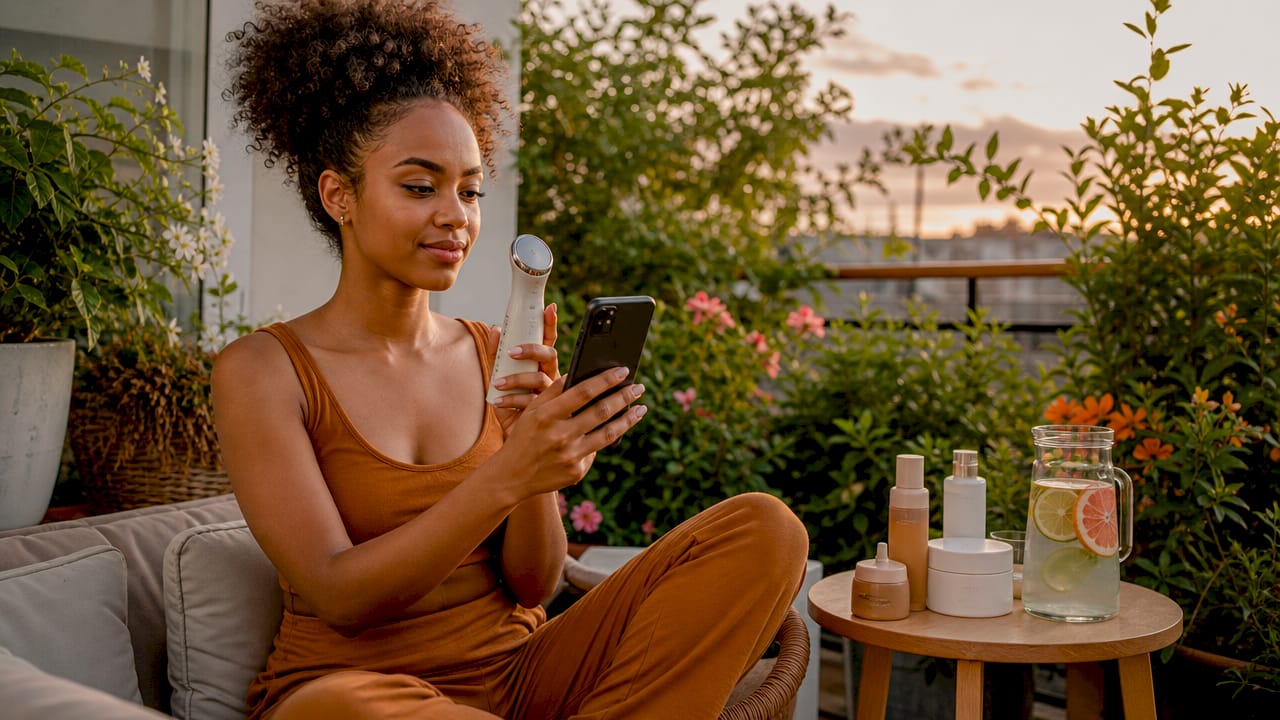
IoT in beauty devices is defined as a network of physical tools embedded with sensors and wireless connectivity that collect, exchange, and act on skin data to personalise your skincare routine. The term IoT stands for Internet of Things, a concept that has moved well beyond factory floors and smart home speakers into your bathroom cabinet. Connected beauty devices now track UV exposure, assess your skin barrier, and push tailored product recommendations to your phone. Understanding how IoT impacts beauty means understanding why your next skincare tool may know your skin better than you do.
What does IoT mean for beauty devices and how does it work?
IoT in beauty devices refers to physical tools with sensors and connectivity that collect, exchange, and act on data, enabling active, data-driven skincare management. This is not simply a device that vibrates or emits light on a timer. A connected beauty device reads your skin, sends that data to software, and adjusts its behaviour based on what it finds.
The process begins with embedded sensors. These sensors measure variables such as hydration levels, sebum production, skin temperature, and UV exposure. The data they capture is far more granular than anything a traditional beauty tool could provide.

That data then travels via wireless connectivity, most commonly Low Energy Bluetooth, to a paired smartphone app or cloud server. The app processes the information and returns a recommendation, a treatment setting, or a progress report. Shiseido’s Optune device is one of the clearest real-world examples: it uses a smartphone app to analyse your skin each morning and then dispenses a personalised serum blend based on that day’s reading.
What technologies sit inside a connected beauty device?
The core components of any IoT beauty device are sensors, a communication module, processing capability, and software. Each layer has a specific job.
- Sensors capture raw biological data from the skin surface, including hydration, oiliness, and UV index readings.
- Low Energy Bluetooth (BLE) transmits that data to your phone with minimal battery drain. BLE connectivity is the communication standard of choice because it offers stable connectivity and compatibility with both iOS and Android.
- Edge computing handles basic processing on the device itself, reducing latency for real-time feedback.
- Cloud computing manages heavier AI analysis, storing historical skin data and running pattern recognition across larger datasets.
- AI algorithms interpret the data and generate recommendations, from adjusting treatment intensity to suggesting a different moisturiser for humid weather.
Pro Tip: When evaluating a connected beauty device, check whether it processes data locally or relies entirely on cloud connectivity. Devices with edge computing capability work even when your Wi-Fi signal is poor, which matters for daily consistency.
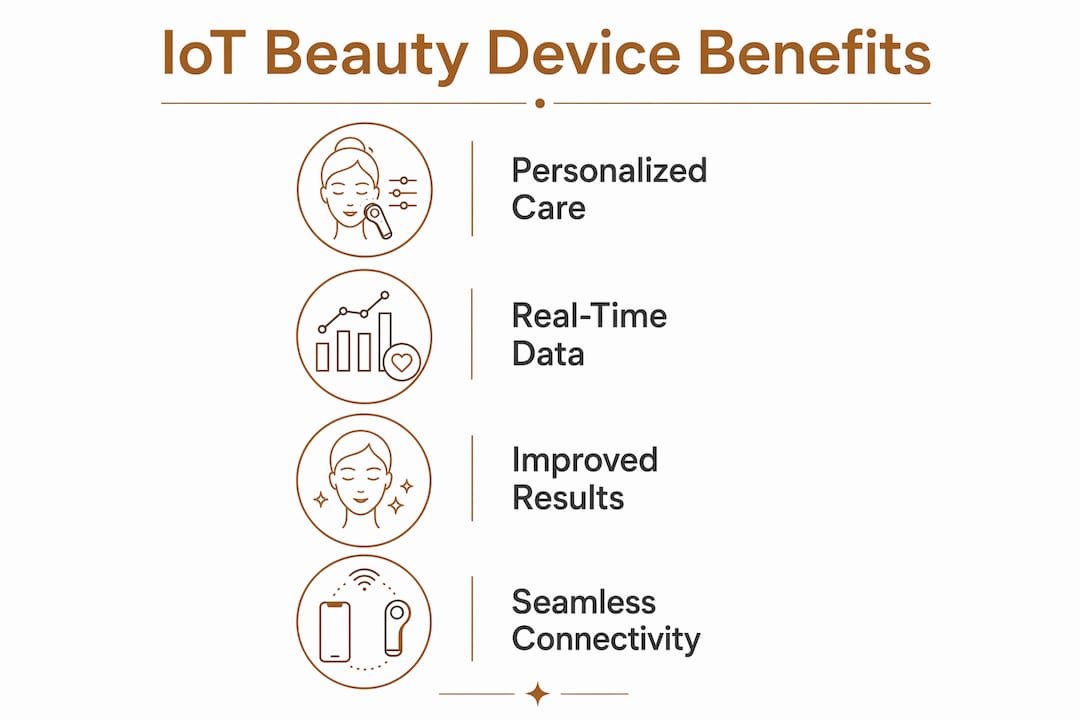
What benefits do IoT beauty devices actually deliver?
The most significant benefit of IoT in beauty tech is personalisation that updates in real time. Traditional devices treat every person the same. A connected device treats you differently on a Tuesday after a long flight than it does on a Sunday morning at home.
Personalised skincare that adapts daily
IoT beauty devices assess your skin condition dynamically, not just once at the point of purchase. Shiseido’s Optune, for example, analyses factors including stress levels, weather, and skin oiliness before each use. The device then selects from a range of serum combinations. This kind of adaptive skin analysis is only possible because the device collects new data every session.
Real-time monitoring and measurable progress
- UV exposure tracking alerts you when cumulative sun exposure reaches a threshold, prompting you to reapply SPF or seek shade.
- Skin barrier assessment measures transepidermal water loss, giving you an objective reading of how compromised your skin barrier is on any given day.
- AI-driven treatment suggestions adjust device settings automatically, so you are not guessing at the right intensity level.
- Progress tracking logs your skin condition over weeks and months, letting you see whether a new product or routine is producing measurable change.
- Social sharing and community features let you compare results with other people using the same device, turning private skincare into a shared, measurable experience.
People increasingly demand that their IoT beauty devices include data sharing features, turning skincare into an interactive, community-driven activity. This shift matters because social accountability is one of the strongest drivers of long-term routine adherence.
IoT sensors deployed in beauty manufacturing have cut production downtime by up to 70%, according to industry reporting on brands like L’Oréal using IBM Watson IoT for smart factory management. That operational efficiency translates directly into more consistent product supply and faster iteration on device hardware.
What challenges and limitations exist with IoT beauty devices?
IoT beauty tech carries real limitations that consumers should understand before purchasing. The technology is genuinely impressive, but the gap between laboratory performance and daily bathroom use remains wide.
The most persistent problem is the mismatch between technical accuracy and practical integration. Developers often prioritise technical accuracy over fitting the device into real user routines, which causes abandonment after the initial novelty fades. A device that requires a ten-step setup each morning will not survive contact with a busy schedule.
- Complex setup puts off people who are not comfortable with technology, shrinking the potential audience significantly.
- Maintenance requirements, such as cleaning sensors and updating firmware, add friction that traditional tools do not have.
- Algorithmic fairness is a documented concern. Industry analysts warn that without coordinated efforts on fairness, IoT in cosmetic health risks performing less accurately on diverse skin tones, amplifying existing disparities in beauty tech.
- Data privacy is a genuine risk. Continuous skin monitoring generates sensitive biometric data, and not every brand is transparent about how that data is stored, shared, or sold.
“Sociotechnical optimisation requires aligning device hardware capabilities, AI algorithm performance, user workflow, and social environments for effective cosmetic IoT adoption.” — Frontiers in Medicine, 2026
The industry is responding. Researchers and developers are increasingly applying sociotechnical systems thinking, which means designing for the human context of use, not just the hardware specification. The goal is a device that fits your life rather than demanding your life fits around it.
How do IoT beauty devices compare to traditional beauty tools?
Traditional beauty tools and connected beauty devices serve the same broad goal, but they operate in fundamentally different ways. The comparison below makes the distinction concrete.
| Feature | Traditional beauty tool | IoT beauty device |
|---|---|---|
| Functionality | Single function, fixed settings | Multiple functions, adaptive settings |
| Personalisation | None | Real-time, data-driven |
| Feedback | None | App-based insights and progress tracking |
| Connectivity | None | Bluetooth, Wi-Fi, cloud |
| Skin data collection | None | Continuous sensor monitoring |
| Typical price range | Lower | Higher, reflecting added technology |
| Future upgrades | Not possible | Possible via software updates |
The price difference is real, but so is the functional gap. A standard LED mask emits light at a fixed wavelength for a fixed duration. A connected LED device, such as those in the CurrentBody Skin range, can log session data, track cumulative treatment time, and remind you when your next session is due. That is not a marginal improvement. It is a different category of tool entirely.
The scalability of IoT devices is also worth noting. A traditional device is finished the day it leaves the factory. An IoT device can receive software updates that add new features, improve AI accuracy, or address newly identified skin concerns. You are buying a platform, not just a product.
Key takeaways
IoT beauty devices are defined by their ability to collect real-time skin data, process it with AI, and deliver personalised skincare recommendations that adapt to your skin’s daily condition.
| Point | Details |
|---|---|
| Core definition | IoT beauty devices use sensors and connectivity to collect and act on skin data continuously. |
| Key technology | Low Energy Bluetooth transmits data to apps with minimal battery drain, enabling daily use. |
| Primary benefit | Real-time personalisation adjusts treatments to your skin’s current condition, not a fixed profile. |
| Main limitation | Algorithmic bias and complex setup remain barriers to equitable, widespread adoption. |
| Versus traditional tools | IoT devices offer adaptive settings, progress tracking, and software upgrades that fixed tools cannot. |
Why ease of use will decide the future of IoT beauty tech
The technology inside connected beauty devices is genuinely impressive. What concerns me more is whether it will survive contact with real life.
I have watched the beauty tech category grow from novelty gadgets into devices with serious clinical backing. The pattern I keep seeing is this: a device launches with extraordinary sensor accuracy and a beautifully designed app, and then six months later it sits unused on a shelf. The problem is almost never the technology. It is the friction. If a device takes longer to set up than the treatment itself, people stop using it.
The sociotechnical research on IoT beauty adoption confirms what I have observed anecdotally. Successful devices are those that fit into existing routines rather than demanding new ones. The brands getting this right are designing for the 6am bathroom moment, not the product demo.
The social sharing features interest me most for long-term engagement. Skincare has always been personal, but making progress visible and shareable changes the psychology of consistency. That said, I would urge caution on data privacy. Before you hand over continuous biometric data to any brand, read the privacy policy. The data your skin generates is genuinely sensitive, and the industry’s standards here are still catching up with the technology.
My honest view is that IoT beauty devices represent the most significant shift in at-home skincare since the introduction of powered cleansing brushes. But the devices that will matter in five years are the ones that earn a permanent place in your morning routine, not just your Instagram grid.
— Adam
Glowera’s range of connected beauty devices
Glowera curates a selection of premium connected beauty devices for people who want results backed by technology, not guesswork.
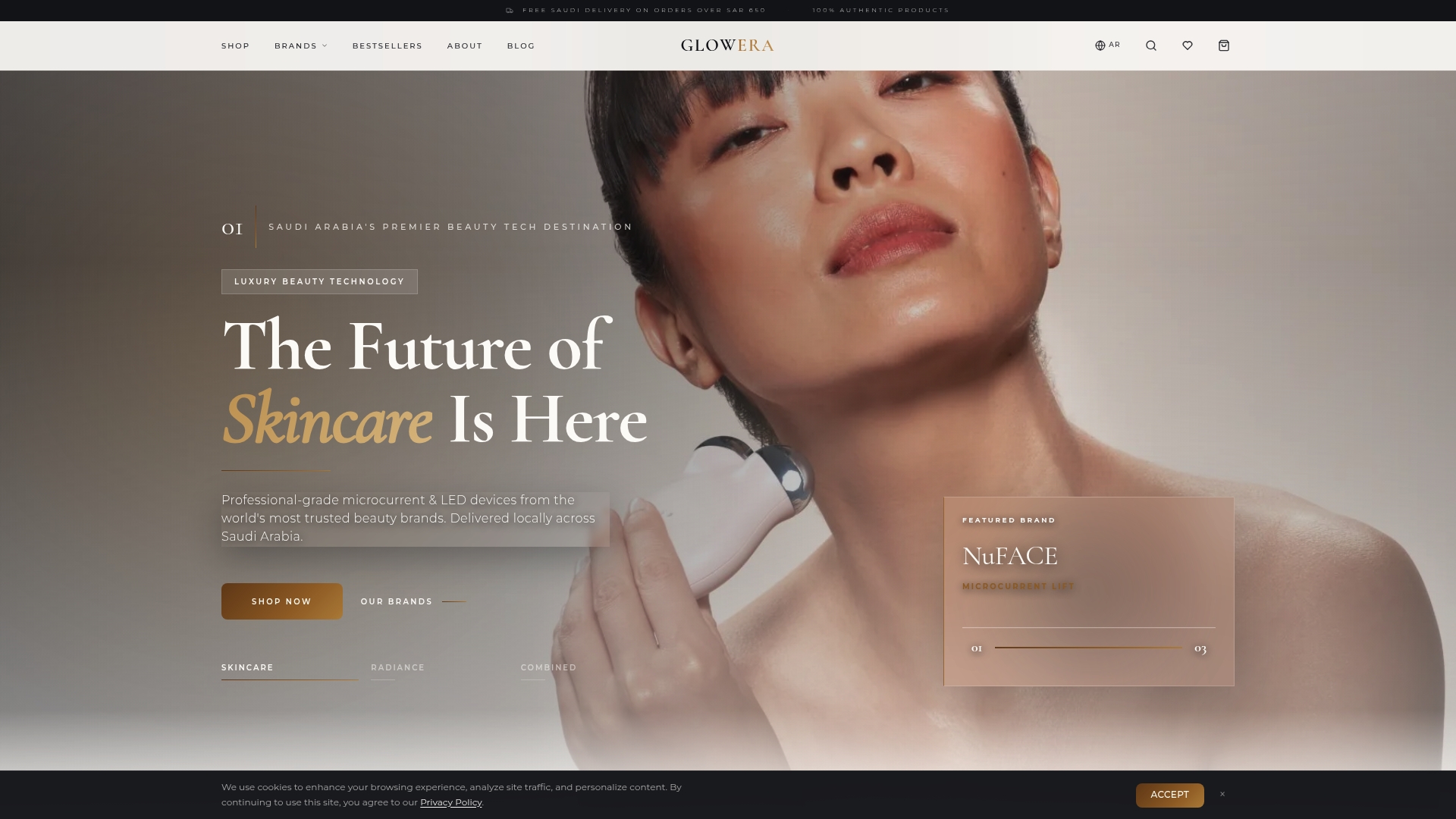
The Glowera catalogue includes LED light therapy devices, microcurrent facial tools, and app-connected skincare devices from internationally recognised brands, all available with delivery across Saudi Arabia. Every product on the platform is authentic, and the team provides expert guidance to help you choose the right device for your skin type and goals. If you are ready to move beyond single-function tools, browse the full range at Glowera and find a device that works as hard as you do.
FAQ
What does IoT stand for in beauty devices?
IoT stands for Internet of Things. In beauty devices, it refers to tools embedded with sensors and wireless connectivity that collect and exchange skin data to personalise your skincare routine.
How do IoT beauty devices connect to your phone?
Most IoT beauty devices use Low Energy Bluetooth (BLE) to connect to a paired smartphone app. BLE is preferred because it uses minimal battery power while maintaining a stable, reliable connection for daily use.
Are IoT beauty devices accurate for all skin tones?
Not consistently. Industry research confirms that some AI algorithms in IoT beauty devices perform less accurately on darker skin tones, reflecting a broader issue of algorithmic fairness that the industry is actively working to address.
What is the difference between a smart beauty device and a traditional one?
A traditional beauty device operates at fixed settings with no data collection. A smart, IoT-enabled device uses sensors to read your skin, adjusts its settings in real time, and tracks your progress through a connected app.
Is my skin data safe with IoT beauty devices?
Data privacy varies by brand. Connected beauty devices collect sensitive biometric information, so you should review each brand’s privacy policy before use to understand how your data is stored, used, and shared.