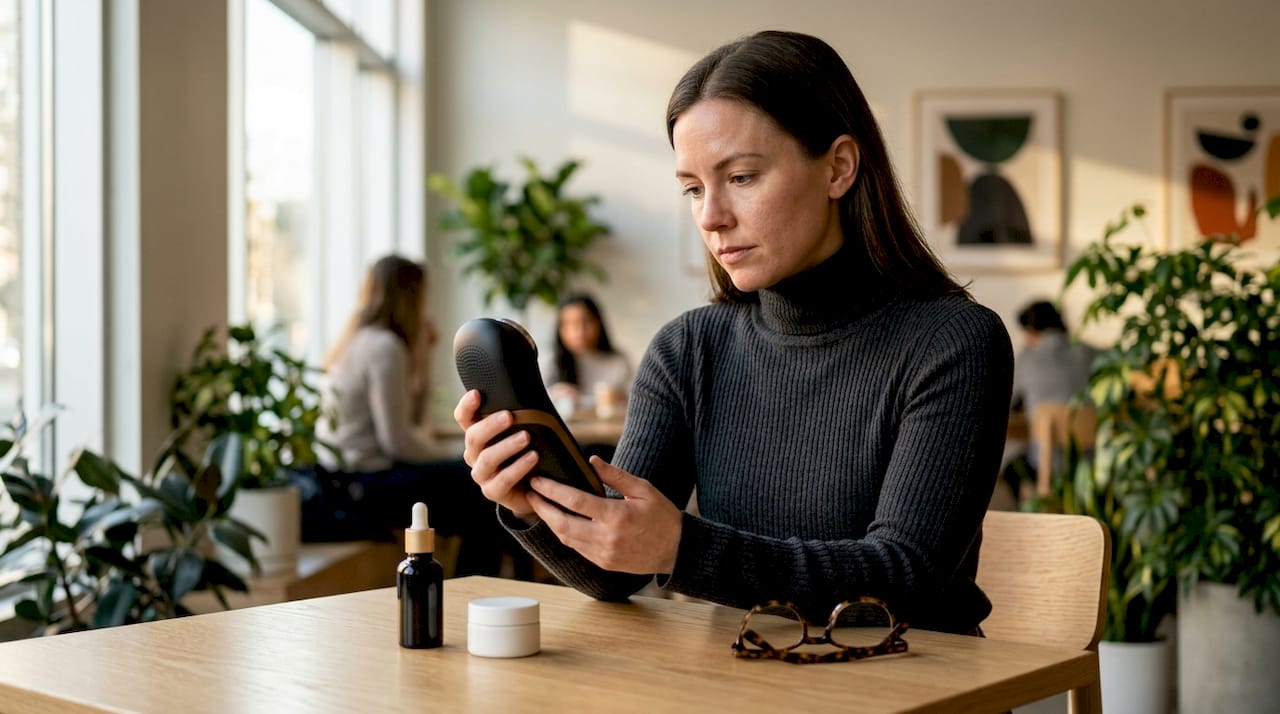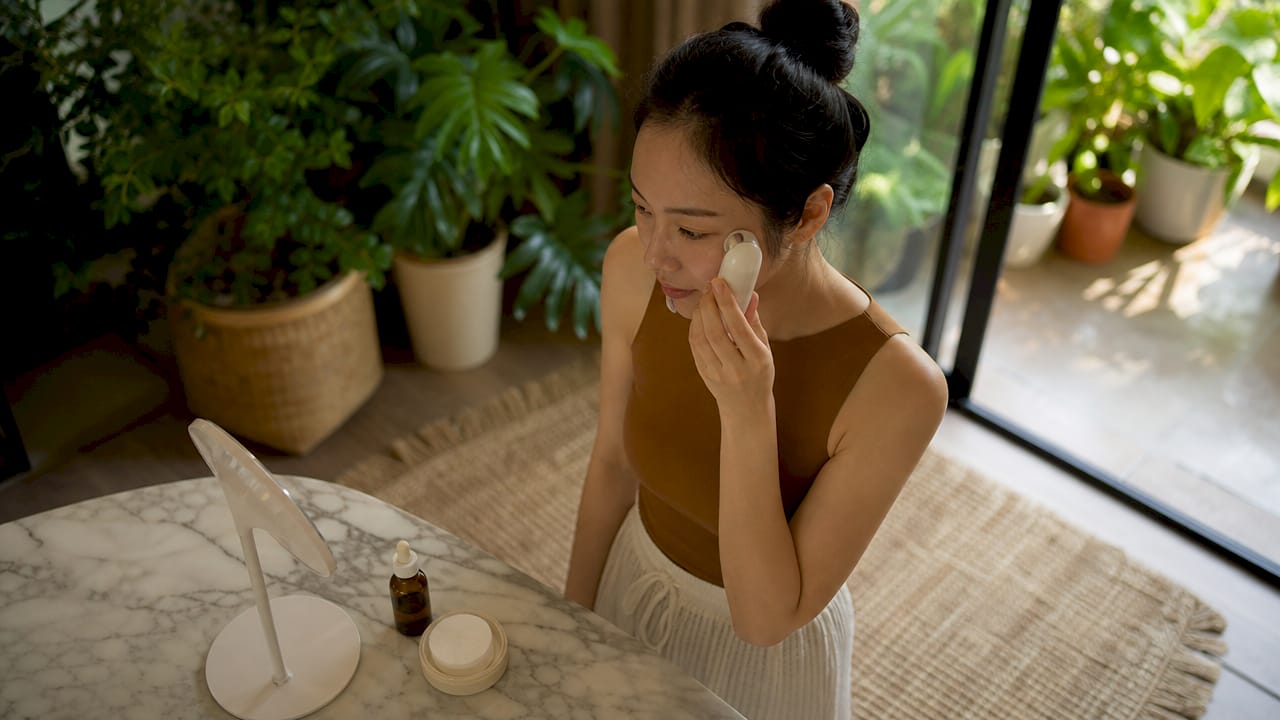
A haptic feedback beauty device is a skincare tool that uses tactile vibration patterns to guide treatment accuracy and improve routine consistency through real-time physical cues. Unlike audio alerts or screen prompts, these vibrations communicate directly through touch, making them harder to miss and easier to act on. Beauty brands report a 412% engagement lift using haptic-integrated device strategies compared to non-tactile interfaces. That figure signals a fundamental shift in how skincare technology communicates with the person holding it. Glowera stocks several devices in this category, and understanding the technology helps you choose the right one.
How does a haptic feedback beauty device work?
Haptic technology in beauty devices converts digital signals into physical sensations using small internal motors or actuators. When the device detects a change in skin contact, pressure, or position, it triggers a specific vibration pattern to communicate that change. Tactile sensations communicate immediate state changes more effectively than visual or audio cues, which can be ignored or missed entirely. This is why premium skincare devices are moving away from beeping alerts and towards calibrated vibration patterns.
Types of haptic signals used in skincare devices
Different vibration patterns carry different meanings. A well-designed device uses at least two distinct signal types:
- Micro-pulses: Short, sharp vibrations that confirm a button press or zone completion. They feel like a light tap and signal that an action has registered.
- Rhythmic feedback: A repeating pulse pattern that runs during active treatment, telling you the device is working correctly and you are holding it at the right angle.
- Adaptive intensity feedback: Vibrations that change strength based on real-time skin contact data. If you press too hard or lift the device, the intensity shifts to prompt correction.
- Pause signals: A distinct stop-vibration pattern indicating the device has paused because conditions are outside the optimal range.
The NanoHydra Pro demonstrates this clearly. It vibrates if held outside a 10–20 cm range and pauses entirely above 30 cm until you reposition, ensuring product application stays effective throughout the session.
The role of sensors and on-device AI
Sensors embedded in the treatment head detect skin contact, pressure, and movement speed. The device’s processor reads this data and selects the appropriate haptic response in real time. Increasingly, on-device machine learning drives this process locally, without sending biometric data to the cloud. That local computation approach protects your privacy while making the feedback more personalised with each use. You can read more about how beauty device algorithms personalise treatment to understand how this layer of intelligence develops over time.
Pro Tip: If your device feels like it is vibrating constantly without variation, that is a sign the haptic system is not well calibrated. Quality devices use distinct patterns for different events, not a single continuous buzz.
What are the benefits of haptic feedback in skincare routines?
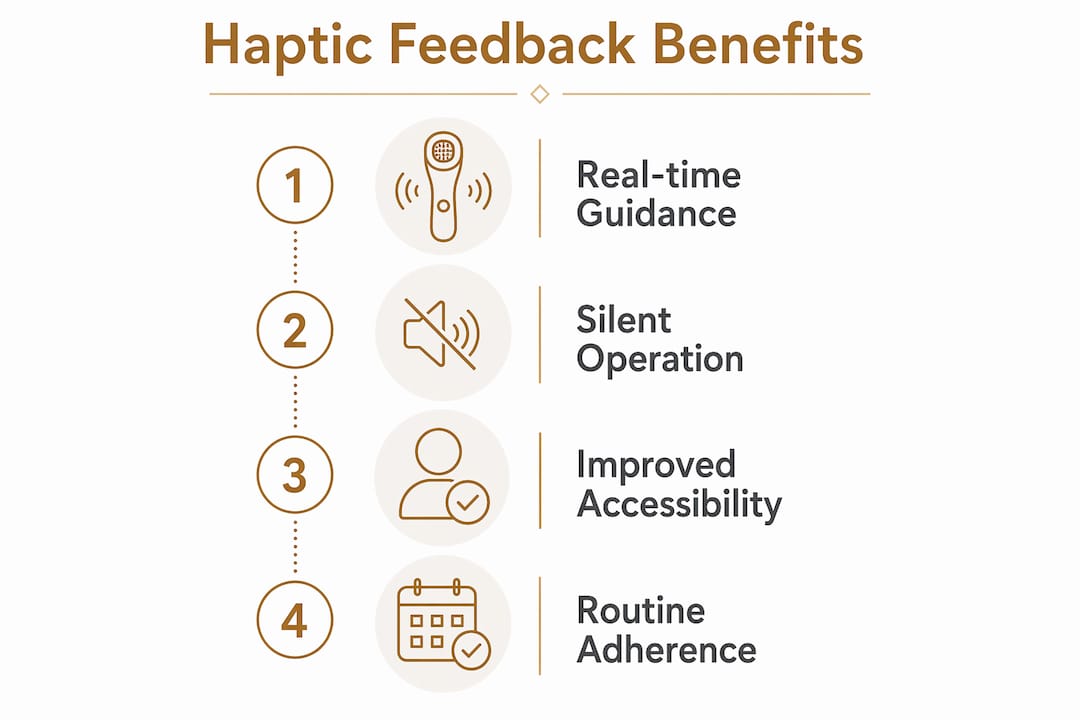
Haptic feedback skincare devices deliver four concrete advantages over standard devices: real-time positional guidance, silent operation, improved accessibility, and stronger routine adherence.
1. Real-time guidance without looking at a screen
The most direct benefit is positional coaching. When a device vibrates to tell you that you have moved too fast or drifted off the treatment zone, you correct immediately without breaking your focus. This is particularly useful during microcurrent treatments, where consistent contact and speed directly affect results. Devices that rely solely on app notifications introduce a delay. Haptic signals are instant.
2. Silent operation for discreet and relaxed use
The NIRA Pro 3 replaced audible beeping alerts with a silent vibration mode and nine power levels, making it suitable for shared living spaces, travel, and evening routines. Noise-free operation also supports relaxation during treatment, which matters for stress-sensitive skin conditions. Practitioners note that haptics enable a calm, eyes-closed treatment experience, beneficial during laser or mist-based sessions where bright lights and sound are unwelcome.
3. Accessibility for people with mobility challenges
This benefit is underreported but significant. Motion stabilisation combined with haptics enables people with arthritis, tremors, or reduced hand mobility to achieve consistent results that would otherwise require a professional appointment. The Lancôme innovation team describes inclusive design as central to accessible beauty technology, not an afterthought. This approach broadens who can benefit from at-home professional-grade devices.
4. Stronger routine adherence
Tactile cues keep you engaged with the process in a way that passive devices do not. When a device communicates progress through your hand, you stay present throughout the routine. The 412% engagement lift reported by beauty brands using haptic-integrated strategies reflects this directly. Higher engagement translates to more consistent use, and consistent use is what produces visible skin improvements over time.
Design nuances and challenges in haptic beauty device development
Not all haptic systems are equal. The difference between a well-designed haptic device and a poorly designed one comes down to signal clarity, calibration, and sensor reliability.
Interaction feedback versus process confirmation
Premium devices distinguish between two types of haptic communication. Interaction feedback covers discrete events: a button press, a zone completion, a mode change. Process confirmation covers ongoing operation: the steady rhythm that tells you the device is active and correctly positioned. Mixing these two signal types, or using the same vibration for both, creates confusion. You stop trusting the device because you cannot tell what it is trying to say.
Avoiding user fatigue through calibrated micro-pulses
Constant vibration is counterproductive. Experts advise that calibrated micro-pulses maintain engagement without overwhelming the senses. A device that buzzes non-stop trains you to ignore it, defeating the purpose entirely. Rhythmic patterns with deliberate pauses communicate more information and feel less intrusive during a 10-minute routine.
- Signal variety: Use at least three distinct vibration patterns to avoid habituation.
- Intensity calibration: Feedback should be perceptible but not startling, especially at higher device power settings.
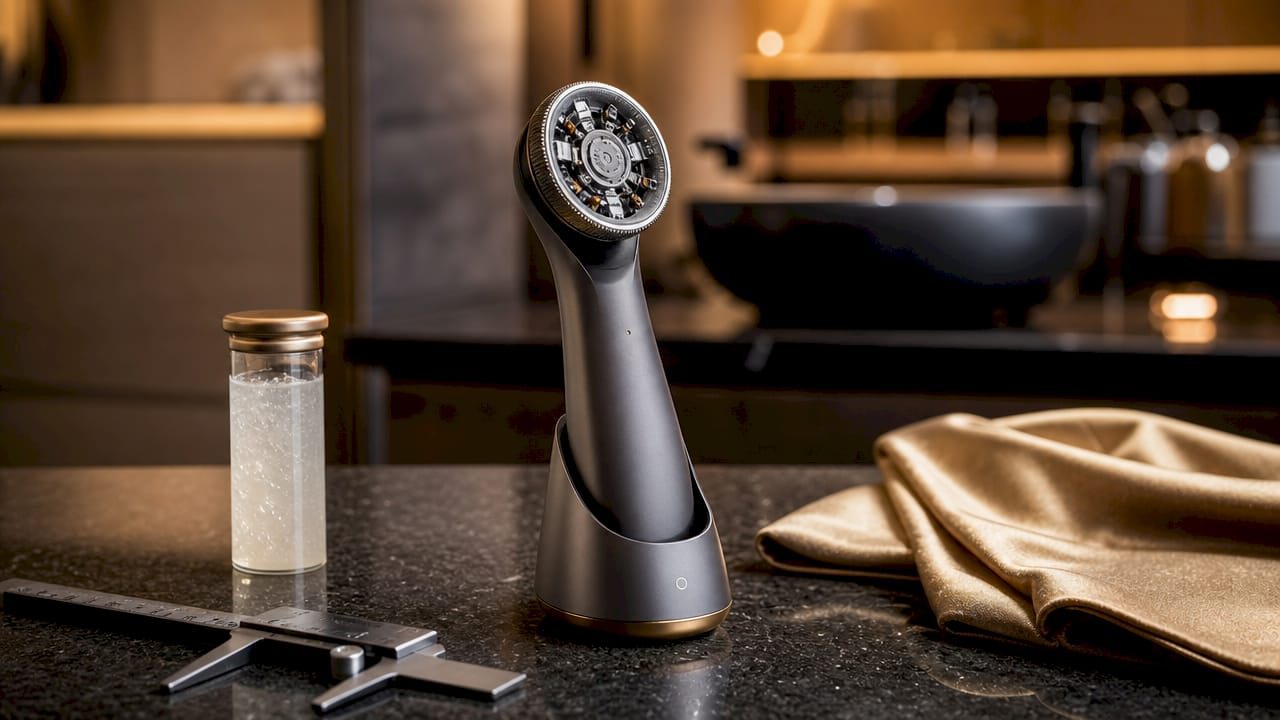
- Sensor cleanliness: Residue on the treatment head impairs sensor sensitivity, leading to inaccurate feedback and weaker treatment results. Clean the sensor surface after every session.
- Privacy by design: On-device AI models process skin data locally, removing the need for cloud transfers and protecting biometric information.
Pro Tip: Wipe the treatment head with a dry microfibre cloth before each session. Even a thin layer of residual serum can reduce sensor accuracy and cause the device to underreport contact, making the haptic guidance less reliable.
How to choose and use haptic feedback devices effectively
Choosing the right device requires evaluating the quality of its haptic system, not just its treatment technology.
- Check for multiple signal types. A device with only one vibration pattern offers limited guidance. Look for devices that distinguish between zone completion, active operation, and error states.
- Assess power and intensity range. More power settings give you finer control over both treatment intensity and haptic strength. The NIRA Pro 3’s nine power levels are a useful benchmark for what a quality range looks like.
- Confirm sensor placement. Sensors positioned at the treatment tip provide the most accurate contact data. Sensors placed further back on the body of the device introduce lag between skin contact and haptic response.
- Integrate it into a fixed routine. Haptic guidance works best when you use the device consistently. Irregular use means the adaptive feedback system has less data to work with, and you benefit less from its personalisation features.
- Maintain the sensor surface. Clean the treatment head after every session. Sensor residue reduces sensitivity and directly weakens haptic intensity, which misleads you about treatment progress.
| Evaluation criterion | What to look for |
|---|---|
| Signal variety | At least three distinct vibration patterns |
| Power range | Multiple intensity levels for both treatment and feedback |
| Sensor position | Tip-mounted sensors for real-time contact accuracy |
| AI personalisation | On-device processing for privacy and adaptive feedback |
| Maintenance ease | Smooth, cleanable sensor surface with no crevices |
For a broader view of how smart beauty devices use sensors to guide treatment, that guide covers the full sensor landscape across device categories.
Key takeaways
Haptic feedback beauty devices are the most effective way to maintain treatment precision and routine consistency at home, because tactile vibrations communicate in real time in a way that screens and audio alerts cannot match.
| Point | Details |
|---|---|
| Core definition | A haptic feedback beauty device uses tactile vibrations to guide skincare treatment in real time. |
| Engagement impact | Beauty brands report a 412% engagement lift with haptic-integrated devices versus non-tactile alternatives. |
| Accessibility benefit | Haptics combined with motion stabilisation make professional-grade results accessible to people with mobility challenges. |
| Design quality matters | Calibrated micro-pulses and distinct signal types prevent user fatigue and maintain reliable guidance. |
| Sensor maintenance | Cleaning the treatment head after every session preserves sensor accuracy and haptic effectiveness. |
Haptics in beauty tech: what I have actually observed
The conversation around haptic feedback in beauty devices tends to focus on engagement statistics and feature lists. What those discussions miss is how fundamentally haptics change the relationship between a person and their device.
Most skincare tools are passive. You use them and hope you are doing it correctly. A well-designed haptic system turns that passive experience into a dialogue. The device tells you when you are right, when you have drifted, and when the treatment is complete. That shift from passive to responsive is not a minor upgrade. It changes how much you trust the device, and trust drives consistency.
What I find genuinely significant is the accessibility angle. The Lancôme HAPTA device demonstrated that haptic guidance combined with motion stabilisation can extend professional-quality skincare to people who previously could not manage handheld devices reliably. That is not a niche application. Arthritis alone affects a substantial portion of adults over 50, and most beauty tech ignores them entirely.
The next meaningful advance will come from on-device AI that learns your specific movement patterns and adjusts haptic intensity accordingly, without ever sending your data anywhere. That combination of personalisation and privacy is where the category is heading. Devices that achieve it will feel less like tools and more like trained assistants. The beauty tech innovation driving this shift is already visible in 2026 device releases, and it will only accelerate.
— Adam
Advanced haptic beauty devices at Glowera
Glowera curates a selection of premium beauty tech devices that integrate haptic feedback with professional-grade treatment technologies, available with delivery across Saudi Arabia.
The K-Beauty tech range at Glowera includes devices that combine tactile guidance with microcurrent, LED therapy, and EMS technologies, giving you real-time feedback during every session. Pairing a haptic-enabled device with a targeted serum or moisturiser from the Glowera skincare range amplifies results, because the haptic system helps you apply both the device and the product with consistent technique. Every device comes with authentic product verification and local support, so you are not navigating aftercare alone.
FAQ
What is a haptic feedback beauty device?
A haptic feedback beauty device is a skincare tool that uses tactile vibration patterns to provide real-time guidance during treatment. It communicates positioning, zone completion, and device status through touch rather than sound or screen alerts.
How does haptic feedback improve skincare results?
Haptic feedback keeps you correctly positioned and moving at the right speed throughout a treatment session. Consistent technique, guided by real-time tactile cues, produces more reliable results than unguided use.
Are haptic beauty devices suitable for people with mobility challenges?
Yes. Motion stabilisation combined with haptic guidance makes these devices accessible to people with arthritis, tremors, or reduced hand control, enabling consistent results without professional assistance.
Why do some haptic devices feel more effective than others?
The difference lies in signal calibration. Devices using multiple distinct vibration patterns for different events communicate more clearly than those using a single continuous buzz, which users quickly learn to ignore.
How do I maintain the haptic sensors on my device?
Clean the treatment head with a dry microfibre cloth after every session. Residue from serums or moisturisers reduces sensor sensitivity and weakens haptic intensity, making the guidance less accurate over time.