Not every skincare device on the market is what it claims to be. Many shoppers assume that if a product looks the part and carries impressive-sounding claims, it will deliver results safely. That assumption is where things go wrong. Understanding why authentic skincare devices matter is about more than brand loyalty or price. It is about whether the technology inside your device matches the science it is supposed to follow, whether it is safe for home use, and whether your skin sees any real benefit at all.
Table of Contents
- Key takeaways
- Why authentic skincare devices matter: the full picture
- Safety risks you cannot afford to ignore
- The science behind real results
- Skin longevity and the psychological case for genuine tools
- How to identify and use authentic devices
- My honest take on authentic devices
- Discover genuine skincare technology at Glowera
- FAQ
Key takeaways
| Point | Details |
|---|---|
| Authenticity affects results | Genuine devices use clinically validated parameters that deliver measurable skin improvements over time. |
| Safety is not guaranteed by appearance | Non-authentic devices risk scarring, pigmentation, and inflammation due to unregulated power outputs and needle lengths. |
| Consistent use drives outcomes | Authentic red light and microcurrent devices require weeks of regular use, not intensity, to produce lasting change. |
| Psychological benefits are real | Intentional skincare rituals with genuine tools measurably reduce cortisol and support emotional wellbeing. |
| Buying smart protects you | Verifying regulatory markings, manufacturer transparency, and realistic claims helps you avoid harmful imitations. |
Why authentic skincare devices matter: the full picture
The beauty device market is on track to reach $85 billion by mid-2026, and the sheer volume of products flooding that space makes it increasingly difficult to separate genuine technology from convincing imitations. So before examining why authenticity matters, it helps to understand what is actually on offer.
The main device categories you will encounter are LED light therapy, microcurrent, microneedling, and IPL (intense pulsed light). Each one targets a specific skin layer or biological process:
- LED therapy works at the surface and mid-dermal level, using specific light wavelengths to stimulate cellular repair and collagen production.
- Microcurrent devices deliver low-level electrical currents to facial muscles, supporting tone and structure beneath the skin.
- Microneedling tools create controlled micro-channels in the epidermis to trigger the skin’s natural healing and renewal response.
- IPL devices use broad-spectrum light to address pigmentation, redness, and hair reduction at deeper tissue levels.
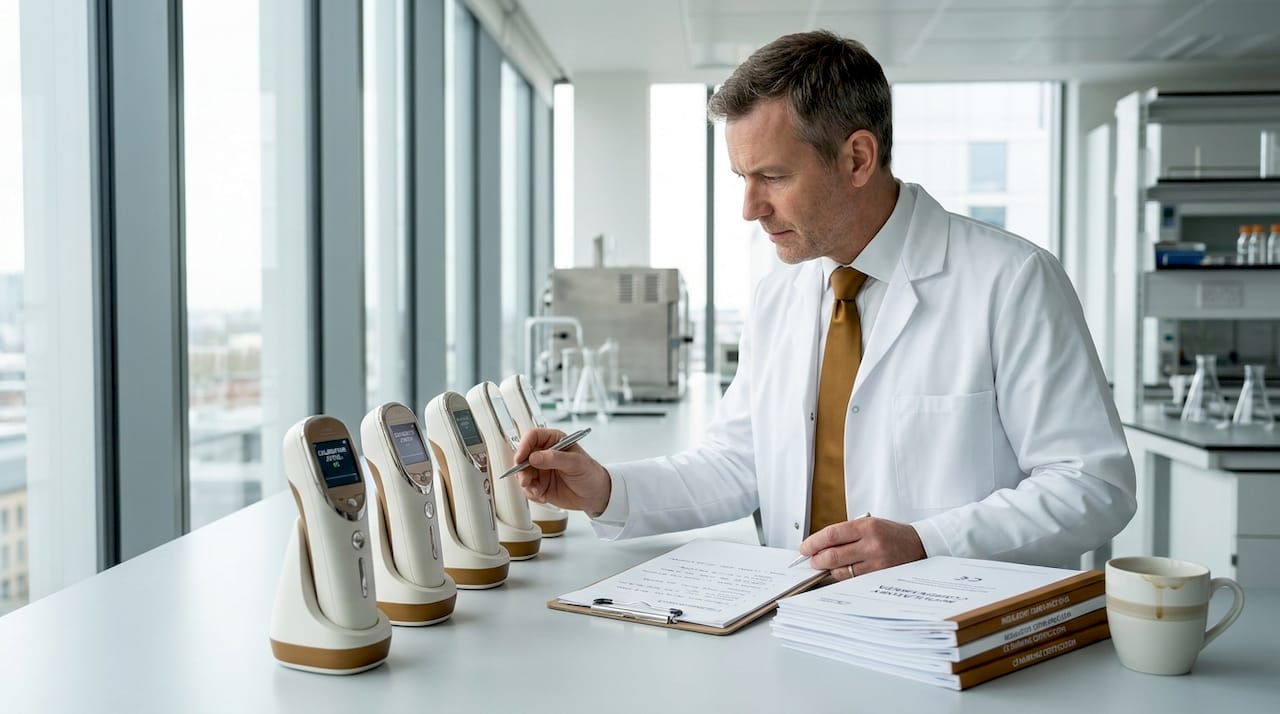
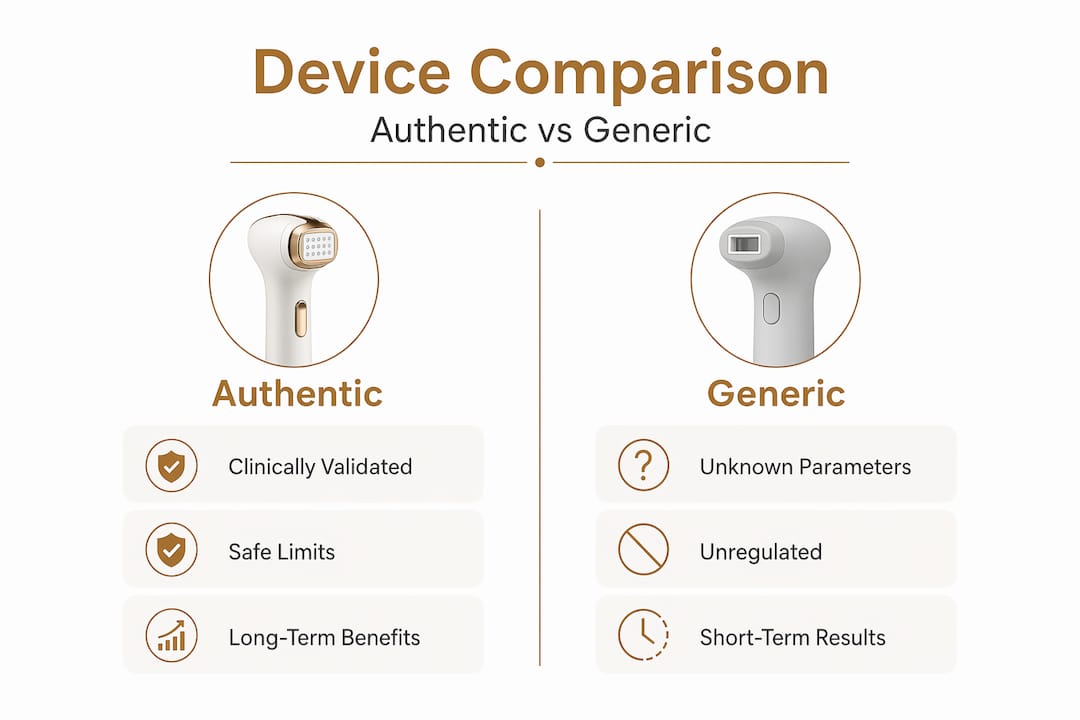
Authenticity in this context has a precise meaning. A genuine device uses clinically validated energy levels, operates within regulated safety parameters, and is manufactured to consistent quality standards. It does what the technology is designed to do. A non-authentic or poorly made device may copy the exterior while using incorrect wavelengths, unstable energy outputs, or substandard components that either produce no effect or cause harm. The difference is not cosmetic. It is built into the physics of the device itself.
Pro Tip: When researching a device, look beyond the marketing copy and check whether the product cites specific wavelengths, energy outputs, or clinical trial references. Vague language like “advanced light technology” without any specifics is a red flag.
Safety risks you cannot afford to ignore
The most common misconception about at-home skincare devices is that they are inherently low-risk because they are sold for consumer use. That is not accurate. Device-related skin damage almost always results from user error, which is frequently caused by devices that do not provide adequate guidance, use unregulated settings, or simply do not function as labelled.
The risks are well-documented and worth taking seriously:
- Skin inflammation from overuse or incorrect frequency settings
- Post-inflammatory hyperpigmentation from improper IPL use on unsuitable skin tones
- Scarring and infection from microneedling devices with excessively long needles used at home
- Barrier damage from devices emitting unstable energy levels
On the subject of microneedling, the clinical guidance is specific. At-home microneedling devices should use needle lengths of 0.2 to 0.3 mm. Anything longer is a professional treatment requiring controlled clinical conditions. Non-authentic devices routinely ignore this, offering needle depths that are unsafe for unsupervised home use. The result is not better results. It is scarring and prolonged inflammation that sets your skin back months.
Authentic devices limit energy output intentionally. This is not a compromise. Professional-grade devices in clinical settings operate at higher intensities because they are used by trained practitioners with controlled protocols. At-home versions are calibrated for safety without supervision, which means gradual but sustainable progress rather than aggressive, risky interventions. That calibration is only reliable in genuine products built to those specifications.
The science behind real results
The benefits of authentic skincare devices are not anecdotal. They are grounded in specific clinical parameters that manufacturers of genuine devices are designed to meet.
| Device type | Clinical parameter | Expected benefit |
|---|---|---|
| Red light therapy | 630 to 850 nm wavelength | Collagen stimulation, improved texture |
| Microcurrent | Low-frequency electrical pulse | Facial muscle toning, lifted appearance |
| Microneedling (home) | 0.2 to 0.3 mm needle depth | Skin renewal, minor texture improvement |
| IPL | Filtered broad-spectrum light | Pigmentation reduction, hair removal |
For red light therapy specifically, authentic devices must operate within the 630 to 850 nm wavelength range to penetrate deep enough to stimulate fibroblasts and drive collagen synthesis. Devices outside this range, or those that use inconsistent output levels, simply do not reach the right tissue depth. Visible results from red light therapy also require consistent use over eight to twelve weeks, not sporadic sessions. A genuine device used properly will outperform an imitation used intensively every time.
The same principle applies to microcurrent. The technology works by mimicking the body’s own bioelectric signals to re-educate facial muscles over time. Effective devices match the electrical current precisely to the tissue layer being targeted. There is a meaningful difference, as the beauty device market research confirms, between devices targeting the skin surface and those reaching the muscular structure underneath. Cheap imitations typically only address the former while claiming to do both.
“The real value of skincare devices depends on clinical diagnosis, appropriate dose, and precise placement. These are conditions that unsupervised consumers rarely achieve without well-designed authentic tools guiding them.”
For those wanting a deeper comparison of how technologies differ, Glowera’s guide to comparing beauty device technologies breaks down what each device type actually targets.
Skin longevity and the psychological case for genuine tools
There is a broader shift happening in the skincare world that makes the importance of genuine skincare even more relevant. The longevity skincare movement is moving the conversation away from quick-fix anti-ageing and towards building skin that is resilient, healthy, and protected over the long term. Authentic devices fit naturally into this philosophy. Imitations do not.
The benefits of this approach extend beyond what you see in the mirror. Consistent skincare rituals reduce cortisol and increase serotonin, dopamine, and oxytocin. Research has found that as little as four minutes of intentional daily touch and ritual measurably improves mood and lowers stress responses. When your skincare routine uses genuine tools that you trust and understand, that ritual becomes more intentional. The psychological return is real and measurable.
“Authentic skin care rituals activate relaxation responses studied in clinical psychology, reducing stress hormones and boosting mood-regulating neurotransmitters.”
This matters because it reframes why genuine skincare matters. You are not just investing in collagen production or tighter skin. You are building a consistent, science-supported practice that benefits your skin and your mental state simultaneously. A device that you are uncertain about, or that has already caused a reaction, undermines both of those outcomes.
The key distinctions of this longevity approach, supported by authentic devices, include:
- Prioritising gradual, cumulative results over one-off intensive treatments
- Choosing devices with transparent clinical validation rather than aspirational claims
- Treating skincare as preventive maintenance rather than crisis management
- Pairing devices with products suited to your skin type to support, not stress, the barrier
You can read more about the role of genuine tools in long-term skin health in Glowera’s guide on at-home facial rejuvenation.
How to identify and use authentic devices
Knowing why authentic skincare devices matter is useful. Knowing how to find them is practical. Here is what to look for before you buy and once you start using a device:
- Check for regulatory markings. In the UK and EU, look for CE marking. In Saudi Arabia and the Gulf region, SFDA registration is a meaningful indicator of product review and approval.
- Verify manufacturer transparency. Authentic brands publish specific device parameters: wavelength ranges, energy outputs, needle depths, and clinical study references. If none of those appear anywhere, that is informative.
- Assess the claims. Realistic timelines and clear safety instructions are hallmarks of genuine products. If a device promises clinic-equivalent results in one week at home, the claim should not be trusted.
- Match the device to your skin concern. A red light device will not tone your facial muscles. A microcurrent tool will not address pigmentation. Choosing the right category for your specific need is part of using any device effectively.
- Follow use guidelines precisely. Overuse is as problematic as underuse. Authentic manufacturers provide evidence-based protocols because they have tested them. Those protocols exist to protect you.
Pro Tip: Before adding a new device to your routine, patch-test it on a small area for the first two to three sessions. Even well-designed authentic devices can interact differently with individual skin types, and starting slowly gives you useful information without risk.
Pairing your device with appropriate science-backed skin renewal practices compounds your results over time and supports the skin’s recovery between sessions.
My honest take on authentic devices
I have seen enough cautionary stories to form a clear view on this. When someone approaches skin concerns with a device they bought based solely on price or a persuasive social media post, the outcome is rarely neutral. It tends either to be nothing at all, which is disappointing but harmless, or it is a reaction that sends them backwards by months and leaves them more sceptical of any device.
What I have noticed is that the people who see the best results are not necessarily using the most powerful devices. They are using appropriate ones consistently. The science on this is straightforward. Effective results are not about high intensity. They come from consistent treatment that respects the skin’s recovery time and dosing limits.
The psychological dimension also matters more than the industry typically acknowledges. There is something genuinely different about using a device you understand and trust within a routine you have built deliberately. It changes the quality of the ritual, not just the output. I think that sustained intentionality is part of what makes the results stick.
My position is this: an authentic device used at the right frequency, on the right skin concern, with realistic expectations is one of the most worthwhile long-term skincare investments you can make. The advantages of authentic beauty devices only materialise when the device actually does what it is designed to do. And that starts with whether the device itself is genuine.
— Adam
Discover genuine skincare technology at Glowera
If you are ready to move beyond guesswork, Glowera curates a selection of authentic LED therapy devices and microcurrent tools from internationally recognised brands, all verified for regulatory compliance and supported by detailed usage guidance. Every product in the range is chosen with clinical validation in mind, not just aesthetic appeal.
For those exploring K-beauty technology, Glowera’s K-beauty tech collection brings together devices from trusted Korean skincare brands known for precision engineering and dermatologist-endorsed formulations. All orders ship within Saudi Arabia with local customer support to help you choose the right device for your specific skin goals. When why genuine skincare matters becomes the question, Glowera’s approach is to answer it with products that have the credentials to back up their claims.
FAQ
What makes a skincare device authentic?
An authentic skincare device uses clinically validated parameters, carries appropriate regulatory approvals such as CE or SFDA markings, and provides transparent information about its energy output, wavelengths, or treatment depth. Manufacturers of genuine devices publish realistic timelines and safety protocols rather than exaggerated promises.
Are non-authentic skincare devices dangerous?
They can be. Poorly made devices with unregulated needle lengths, incorrect wavelengths, or unstable energy outputs have been linked to scarring, post-inflammatory pigmentation, and skin barrier damage. The risk increases when devices lack safety guidelines, as user error becomes far more likely without proper dosing information.
How long do authentic skincare devices take to show results?
Results depend on the device type and consistency of use. Red light therapy typically requires eight to twelve weeks of regular sessions to produce visible collagen and texture improvements. Microcurrent devices also show cumulative results over several weeks. Authentic devices set these realistic expectations clearly, whereas imitations often claim faster outcomes.
Do at-home devices work as well as professional treatments?
At-home authentic devices are calibrated to lower energy outputs than clinical equipment, which makes them safe for unsupervised use but means results develop more gradually. Used consistently within manufacturer guidelines, genuine home devices deliver real and lasting improvement, though they differ from single-session professional treatments in pace rather than validity.
How do I know if a device I already own is genuine?
Check for a specific wavelength or energy output listed in the product specifications, verify any regulatory markings against official databases, and look up the manufacturer’s clinical references. If the product documentation is vague, the brand is difficult to trace, or the claims are unrealistic, those are indicators worth taking seriously before continued use.